










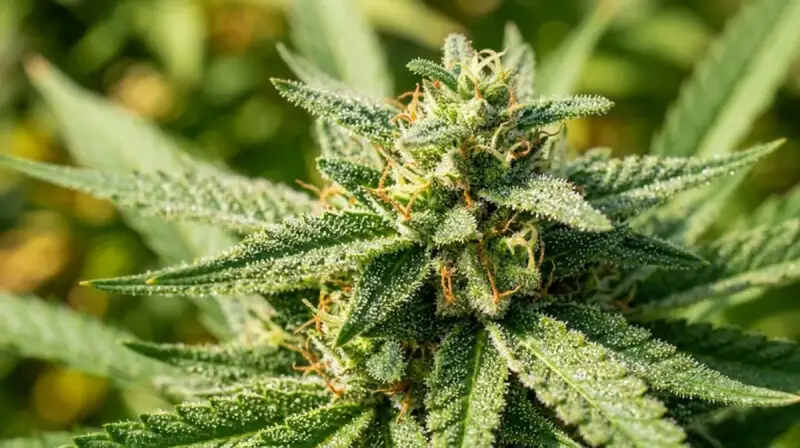
The relationship between CBD use and drug test results depends entirely on the type of CBD product consumed. CBD itself is not what drug tests look for. Standard tests screen for THC-COOH, the metabolite produced when your liver processes THC. Whether CBD causes a positive result depends on whether your product contains any THC at all — and whether that THC is accurately labeled.
- Standard drug tests screen for THC-COOH (11-nor-9-carboxy-THC), not CBD — CBD itself cannot trigger a positive result.
- CBD isolate is chemically pure cannabidiol with no THC; it cannot produce THC-COOH and will not cause a positive drug test.
- Full-spectrum CBD at high daily doses can accumulate enough trace THC to produce a positive urine test result.
- Mislabeled CBD products are a documented risk: FDA testing has found a significant percentage of CBD products contain more THC than labeled.
- Broad-spectrum CBD has THC removed but may contain trace amounts depending on extraction quality — verify with a COA.
- If you face drug testing for employment, athletics, probation, or parole, only verified CBD isolate with a COA provides meaningful safety.
What Drug Tests Actually Test For
Workplace and pre-employment urine drug screens are designed to detect 11-nor-9-carboxy-THC (THC-COOH), the primary inactive metabolite produced by the liver when it processes delta-9-THC. This test does not detect CBD, CBG, CBN, or any other cannabinoid. The question of whether CBD causes a positive drug test is therefore really a question of whether a specific CBD product contains enough THC to generate detectable THC-COOH.
CBD Isolate: Zero Risk
CBD isolate is produced by extracting CBD from hemp biomass and then purifying it to remove all other compounds — including THC, terpenes, flavonoids, and minor cannabinoids. The result is 99%+ pure cannabidiol with non-detectable THC content.
Because CBD isolate contains no THC, consuming it generates no THC-COOH. There is no metabolite to accumulate, no threshold to approach, and no mechanism by which a positive test result can occur. From a drug testing perspective, CBD isolate is inert. The caveat is product integrity: the isolate must actually be what it claims to be, which is why a third-party COA (certificate of analysis) is essential.
Full-Spectrum CBD Risk: The Math
Full-spectrum CBD products retain all compounds from the hemp plant, including up to 0.3% THC (the legal limit for hemp under the 2018 Farm Bill). This sounds minimal, but daily accumulation matters.
Consider a consumer taking 33 mg of full-spectrum CBD oil daily with a product at the maximum legal 0.3% THC content:
- 33 mg product × 0.3% THC = ~0.1 mg THC per dose
- Over 30 days: ~3 mg cumulative THC exposure
- THC-COOH is fat-soluble and accumulates in adipose tissue over this period
- For a person with higher body fat percentage, this level of daily exposure can produce urine THC-COOH concentrations approaching or exceeding 50 ng/mL
This is a worst-case scenario for a properly labeled product at high doses. At lower doses (10–15 mg/day) with accurate labeling, the risk is substantially lower but not zero.
Broad-Spectrum CBD: Reduced But Not Zero Risk
Broad-spectrum CBD is processed to remove THC while retaining other hemp cannabinoids and terpenes. When properly manufactured, it should contain non-detectable THC. However, the “non-detectable” threshold varies by manufacturer and extraction method. Some broad-spectrum products contain trace THC at levels not detectable by standard manufacturing QC but potentially significant with sustained high-dose consumption.
A COA from an accredited third-party laboratory showing THC below the limit of detection (< 0.001%) provides meaningful assurance. Without this documentation, broad-spectrum CBD offers less protection than CBD isolate for drug-tested individuals.
Risk by Product Type
| Product Type | THC Content | Daily Dose at Risk | Risk Level |
|---|---|---|---|
| CBD Isolate | Non-detectable (< 0.001%) | No risk at any dose | Zero |
| Broad-spectrum (COA verified) | Non-detectable (COA confirmed) | Very high doses over long periods | Very Low |
| Broad-spectrum (unverified) | Trace (unknown exact amount) | 100+ mg/day over weeks | Low-Moderate |
| Full-spectrum (properly labeled) | Up to 0.3% | 30+ mg/day over 4+ weeks | Moderate |
| Full-spectrum (mislabeled) | 0.3–1%+ (undisclosed) | Any regular dose | High |
| CBD flower (hemp) | Varies, up to 0.3% | Any regular use | High |
The Mislabeling Problem
The CBD supplement industry operates with significantly less regulatory oversight than licensed cannabis dispensaries. FDA testing programs have identified a substantial percentage of CBD products on the market that contain more THC than their labels indicate — in some cases far more. This is not a theoretical risk; it is a documented quality control failure in the unregulated supplement market.
A product labeled as “THC-free” or “0.0% THC” without a supporting COA from an accredited third-party laboratory should be treated with skepticism if drug testing is a concern. Manufacturer self-certification is not equivalent to third-party lab verification.
False Positives: Immunoassay Cross-Reactivity
Initial immunoassay drug screens can produce occasional false positives due to cross-reactivity with compounds structurally similar to THC-COOH. Some studies have noted that CBD itself may produce cross-reactive responses in certain immunoassay formats at very high concentrations. However, any positive immunoassay result is followed by a confirmatory GC-MS test, which is highly specific to THC-COOH and eliminates virtually all immunoassay false positives.
In practice, a confirmed positive drug test result from CBD use is almost always attributable to actual THC metabolite accumulation, not immunoassay cross-reactivity with CBD.
High-Risk Situations: When Zero Tolerance Is Required
Certain situations demand absolute certainty rather than managed risk:
- Employment drug testing: Employers can terminate for a positive test regardless of legality or CBD use. “It was just CBD” is not a recognized defense in most workplace drug policies.
- Athletics (WADA): The World Anti-Doping Agency removed CBD from its prohibited list but did not remove THC. Full-spectrum CBD products can cause a positive WADA test. Athletes should use only verified isolate.
- Probation and parole: Drug tests in criminal justice contexts have no tolerance for positive results. Any CBD product except verified isolate with a COA should be avoided entirely.
- Federal employees and contractors: Federal drug-free workplace policies apply regardless of state cannabis laws. Only verified isolate with confirmed non-detectable THC is appropriate.
Reading a COA Before Consuming CBD
A certificate of analysis (COA) is a lab report from an accredited third-party testing facility confirming the cannabinoid profile of a specific product batch. When evaluating a COA before using CBD if you face testing:
- Verify the testing lab is ISO 17025 accredited or equivalent
- Check that the COA is for the specific batch number on your product, not a generic sample
- Confirm the THC result shows “ND” (non-detectable) or < 0.001% for isolate products
- For full-spectrum, note the exact THC percentage and calculate your daily THC intake against the accumulation math above
- Check the COA date — a COA more than 12 months old may not reflect current production quality