










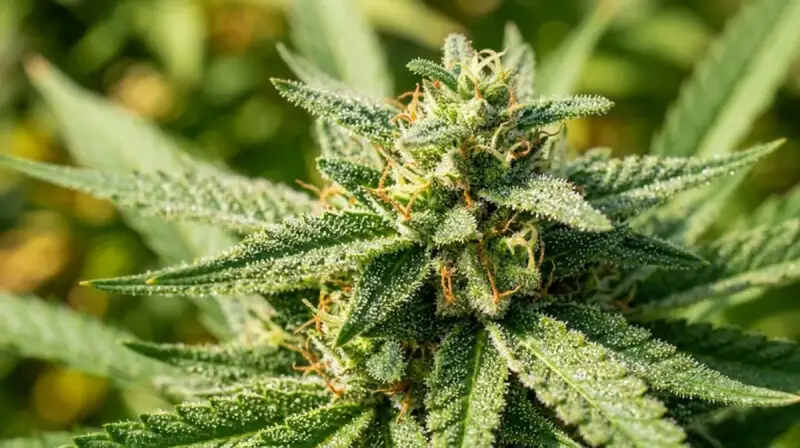
- 24 states plus Washington D.C. have legalized recreational cannabis for adults 21+
- 14 states have medical-only programs; most require physician certification and a state registry card
- Colorado and Washington were the first to legalize via ballot initiative in November 2012
- Minnesota (2023) and Delaware (2023) are the most recently legalized recreational states
- Average recreational tax rate: approximately 21%; average possession limit: 1–2 oz
- Most recreational states permit 6 home-grown plants (some limit to 3 mature plants)
- Cannabis remains a Schedule I federal substance; state legality does not override federal law
How Cannabis Legalization Works in the US
Cannabis policy in the United States is determined at the state level through three primary mechanisms: ballot initiatives (citizens vote directly on a proposed law), legislative action (state legislature passes a bill signed by the governor), or a hybrid approach (legislature refers a measure to voters). Most early legalizations — Colorado, Washington, Oregon, Alaska, California — came through ballot initiatives, which bypassed often-resistant legislatures. More recent legalizations, including New York (2021), New Mexico (2021), and Delaware (2023), came through legislative action.
Each state structures its legal market independently: tax rates, possession limits, home cultivation rules, social equity provisions, licensing structures, and product regulations all differ. This creates significant variation in consumer experience, price, and product availability across state lines.
Recreational Cannabis States: Possession Limits and Key Rules
| State | Legalized | Possession Limit | Home Grow | Excise Tax |
|---|---|---|---|---|
| Alaska | 2014 | 1 oz | 6 plants (3 mature) | $50/oz wholesale |
| Arizona | 2020 | 1 oz | 6 plants | 16% |
| California | 2016 | 1 oz | 6 plants | 15% + local taxes |
| Colorado | 2012 | 1 oz | 6 plants (3 mature) | 15% + 15% special |
| Connecticut | 2021 | 1.5 oz | 3 mature, 3 immature (2023+) | up to 20% |
| Delaware | 2023 | 1 oz | No home grow | 15% |
| Illinois | 2019 | 30g | Medical patients only (5 plants) | 10–25% (by potency) |
| Maine | 2016 | 2.5 oz | 3 mature, 12 immature | 10% |
| Maryland | 2022 | 1.5 oz | 2 plants | 9% |
| Massachusetts | 2016 | 1 oz (public), 10 oz (home) | 6 plants | 10.75% |
| Michigan | 2018 | 2.5 oz | 12 plants | 10% |
| Minnesota | 2023 | 2 oz | 8 plants (2 mature) | 10% |
| Missouri | 2022 | 3 oz | 6 plants | 6% |
| Montana | 2020 | 1 oz | 2 mature, 2 seedlings | 20% |
| Nevada | 2016 | 1 oz | 6 plants (>25 miles from dispensary) | 15% |
| New Jersey | 2020 | 6 oz | No home grow | Sales tax only |
| New Mexico | 2021 | 2 oz | 6 plants (3 mature) | 12% |
| New York | 2021 | 3 oz | 3 mature, 3 immature (home only) | 9% + local |
| Ohio | 2023 | 2.5 oz | 6 plants (3 mature) | 10% |
| Oregon | 2014 | 1 oz (public), 8 oz (home) | 4 plants | 17% |
| Rhode Island | 2022 | 1 oz | 3 mature, 3 immature | 10% |
| Vermont | 2018 (possess), 2022 (retail) | 1 oz | 6 plants (2 mature) | 14% |
| Virginia | 2021 (possess), 2023 (retail) | 1 oz | 4 plants | 21% |
| Washington | 2012 | 1 oz | No home grow | 37% |
| Washington D.C. | 2014 | 2 oz | 6 plants (3 mature) | No retail (gifting economy) |
Medical-Only Cannabis States
Fourteen states permit cannabis use for qualifying medical patients but have not legalized adult recreational use. In most of these states, patients must obtain a physician’s certification documenting a qualifying condition, register with the state health department, and carry a state-issued medical cannabis card. Common qualifying conditions include cancer, chronic pain, PTSD, epilepsy, multiple sclerosis, Crohn’s disease, and terminal illness.
| State | Program Since | Patient Possession | Home Grow |
|---|---|---|---|
| Alabama | 2021 | Up to 70-day supply | No |
| Arkansas | 2016 | 2.5 oz per 14 days | No |
| Florida | 2016 | Up to 35-day supply per dispensary visit | No |
| Georgia | 2015 | 20 fl oz low-THC oil only | No |
| Hawaii | 2000 | 4 oz per 15 days | 10 plants |
| Iowa | 2014 | Low-THC products only (4.5g THC/90 days) | No |
| Louisiana | 2015 | Up to 2.5 oz per 14 days | No |
| Mississippi | 2020 | 3 oz per month | No |
| New Hampshire | 2013 | 2 oz per 10 days | No |
| North Dakota | 2016 | 3 oz per 30 days | No |
| Oklahoma | 2018 | 3 oz on person, 8 oz at home | 6 mature, 6 seedlings |
| South Dakota | 2020 | 3 oz per 14 days | No |
| Utah | 2018 | 2 oz per 30 days | No |
| West Virginia | 2017 | 30-day supply | No |
States Where Cannabis Remains Illegal
In states without medical or recreational programs, cannabis possession, distribution, and cultivation are criminal offenses. Penalties vary widely based on amount and prior record:
- Idaho — Possession of any amount is a misdemeanor (up to 1 year, $1,000 fine); more than 3 oz can be charged as felony trafficking
- Wyoming — First offense possession is a misdemeanor; subsequent offenses escalate to felony level
- Kansas — Possession of any amount: Class B misdemeanor (first offense), Class A misdemeanor (second), felony (third+)
- South Carolina — Possession of 1 oz or less: misdemeanor up to 30 days; over 1 oz: felony
- Indiana — Possession of any amount: Class B misdemeanor; limited CBD only for seizure patients
- Tennessee — Possession 0.5 oz or less: misdemeanor; over 0.5 oz: felony
Federal Preemption: Why State Law Doesn’t Override Federal Law
Cannabis remains classified as a Schedule I controlled substance under the federal Controlled Substances Act (CSA) — the same category as heroin and above cocaine (Schedule II). The federal government does not actively prosecute individual users in legal states under the Cole Memorandum framework (though this framework is a policy memo, not law, and could be revoked). However, the federal prohibition has major practical consequences:
- Banking — Most banks will not service cannabis businesses due to federal law, forcing a largely cash-based industry
- Interstate commerce — Cannabis cannot legally cross state lines even between two legal states
- Federal employment — Federal employees and contractors may be terminated for cannabis use regardless of state law
- Housing — Federal housing tenants can be evicted for cannabis use; HUD programs prohibit it
- Immigration — Non-citizens can face deportation or visa denial for cannabis-related activity, even in legal states
- Firearms — Federal law prohibits cannabis users from purchasing or possessing firearms; ATF Form 4473 explicitly asks about cannabis use
Social Equity Provisions: Who Benefited from the War on Drugs
Legalization advocates have consistently pushed for social equity programs to address the disproportionate impact of cannabis enforcement on Black and Hispanic communities. Several states have implemented meaningful provisions:
California requires that 60% of cannabis tax revenue allocation prioritize communities disproportionately impacted by the war on drugs. Automatic expungement of prior cannabis convictions is built into state law.
Illinois created a cannabis business development fund and mandates that 25% of cannabis licenses go to social equity applicants. The Restore, Reinvest, and Renew (R3) program directs revenue to high-poverty communities.
New York’s Marihuana Regulation and Taxation Act (MRTA) reserved the first retail licenses exclusively for individuals with prior cannabis convictions or family members with convictions — the most aggressive social equity structure of any state at the time of passage.
Recent Legalizations: Minnesota and Delaware (2023)
Minnesota legalized adult-use cannabis through the legislature in May 2023, becoming the 23rd state. The law allows possession of up to 2 oz in public and 2 lbs at home, home cultivation of 8 plants (2 mature), and includes automatic expungement provisions. Retail sales began in early 2025 after the Minnesota Cannabis Management Board completed licensing.
Delaware became the 24th state when Governor John Carney signed House Bill 1 in April 2023, allowing possession of up to 1 oz for adults 21+. Notably, Delaware’s law does not permit home cultivation, making it one of the more restrictive recreational frameworks. Retail licensing began in 2024.
What Federal Legalization Would Mean
Full federal legalization or descheduling would fundamentally transform the US cannabis industry:
- Cannabis companies could access normal banking services, reducing cash-handling risks and costs
- The 280E tax provision (which prevents cannabis businesses from deducting normal business expenses) would be eliminated, dramatically improving industry profitability
- Interstate commerce would open, allowing efficient supply chains and likely lower consumer prices
- Federal research funding through NIH and FDA could accelerate clinical trials for medical applications
- Veterans could access cannabis through VA healthcare
- Millions of prior federal cannabis convictions could be eligible for expungement
The SAFE Banking Act (addressing financial services) and the Cannabis Administration and Opportunity Act (full legalization framework) have been introduced in Congress multiple times. The Biden administration’s 2023 announcement initiating a rescheduling review from Schedule I to Schedule III represented the most significant federal shift in decades, though rescheduling to Schedule III would not fully legalize cannabis or address interstate commerce.
Next States Most Likely to Legalize
States with the strongest momentum for near-term recreational legalization based on polling, legislative activity, and ballot initiative campaigns:
- Florida — Adult-use initiative received over 57% support in November 2024 but fell short of the 60% supermajority required under Florida law
- Pennsylvania — Democratic governor Josh Shapiro has strongly advocated for legalization; legislature remains divided
- Wisconsin — Polling consistently shows 60%+ support; ballot initiative possible if legislature allows referral
- Nebraska — Medical cannabis passed via ballot in 2024, setting a pathway for future recreational effort
- North Carolina — Senate passed a medical bill; recreational movement growing