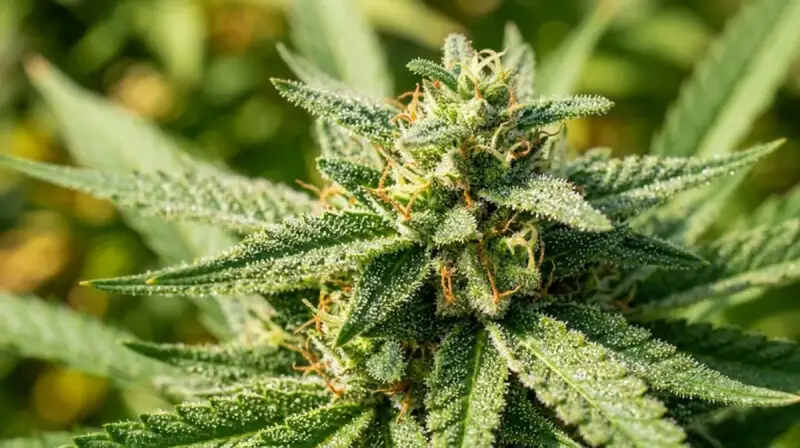
CBD oil and flower representing anxiety treatment considerations" style="position:absolute;inset:0;width:100%;height:100%;object-fit:cover;z-index:0;" fetchpriority="high">
CANNABIS & MENTAL HEALTH
Cannabis and Anxiety: When It Helps and When It Makes It Worse
THC is biphasic for anxiety — low doses calm, high doses amplify. CBD works consistently. Understanding the dose-response curve is the difference between using cannabis for anxiety relief and triggering a panic attack.
7 Key Findings
THC has a biphasic (U-shaped) dose-response for anxiety: 2.5–7.5mg THC reduces anxiety through CB1 modulation and amygdala suppression; doses above 10–15mg significantly increase anxiety in most users
CBD is consistently anxiolytic via 5-HT1A serotonin receptor activation — unlike THC, CBD reduces anxiety across the dose range, with clinical evidence at 300–600mg doses
The majority of cannabis-related anxiety and panic attacks occur because users consumed too much THC — this is the most common adverse cannabis experience in emergency settings
Strains high in CBD (1:1 CBD:THC or higher ratios) provide significantly more manageable anxiety relief than high-THC-only products for anxiety-prone users
limonene and linalool terpenes both have anxiolytic properties (serotonin/GABA pathways respectively) — choosing strains with these dominant terpenes alongside CBD reduces anxiety risk
Genetic predisposition matters: individuals with a variant in the CNR1 gene (CB1 receptor) are significantly more anxiety-prone with cannabis — family history of anxiety disorders is a meaningful risk factor
Cannabis can mask underlying anxiety short-term while increasing long-term baseline anxiety through tolerance and withdrawal — daily heavy use is associated with increased anxiety disorder rates in longitudinal studies
THC’s Biphasic Anxiety Effect
The relationship between THC and anxiety is not linear — it’s a U-shaped dose-response curve. At low doses, THC reliably reduces anxiety. At high doses, it reliably induces it. This is one of the best-replicated findings in clinical cannabis pharmacology, and it explains why cannabis’s reputation for causing anxiety exists alongside its widespread use as an anxiety remedy.
The mechanism operates through CB1 receptors in the prefrontal cortex and amygdala. At low THC concentrations, CB1 activation in the prefrontal cortex enhances its top-down regulatory control over the amygdala — the brain’s fear and threat-detection center. This suppresses amygdala reactivity to threat signals and produces the subjective experience of calm.
At higher concentrations, THC directly activates CB1 receptors in the amygdala itself. Rather than suppressing amygdala activity, this causes the amygdala to fire more intensely — producing heightened threat perception, racing thoughts, paranoia, and the physical symptoms of anxiety (rapid heartbeat, tight chest, shallow breathing). The prefrontal control is overwhelmed.
The anxiety window runs from approximately 30 to 90 minutes post-inhalation — the period when blood THC levels are at peak. Most cannabis-related anxiety resolves as THC levels decline. The same peak-anxiety window for edibles runs 60–180 minutes post-ingestion but can persist longer due to the extended action of 11-hydroxy-THC.
Why does the same dose affect people so differently? Several factors determine individual sensitivity:
CB1 receptor density: Individuals naturally vary in CB1 expression levels — higher density may amplify both positive and negative THC effects
CNR1 gene variant: Polymorphisms in the CNR1 gene (which encodes the CB1 receptor) are associated with significantly higher anxiety susceptibility at standard THC doses
Baseline anxiety state: Pre-existing anxiety disorders markedly lower the threshold at which THC triggers adverse effects
Set and setting: Unfamiliar environments, social stress, and pre-existing worry amplify anxiety response to any THC dose
CBD for Anxiety: The Evidence Base
CBD’s anxiolytic mechanism is entirely different from THC’s. Rather than acting primarily through CB1 receptors (which drives both THC’s therapeutic and adverse effects), CBD’s anxiety reduction is primarily mediated through 5-HT1A serotonin receptors — the same receptor target as buspirone, an anti-anxiety medication. CBD is a partial agonist at 5-HT1A, producing serotonergic activity that reduces anxiety without euphoria or intoxication.
The clinical evidence base for CBD and anxiety is strongest at doses far above what most over-the-counter products contain:
Bergamaschi et al. (2011): 600mg CBD significantly reduced anxiety in patients with Social Anxiety Disorder during a simulated public speaking test, outperforming placebo and matching the effect of a pharmacological anxiolytic
Linares et al. (2019): Dose-response study showing 300mg CBD had optimal anxiolytic effect in healthy volunteers; both 150mg and 600mg were less effective, suggesting a complex dose-response
Shannon et al. (2019): Retrospective chart review of 72 psychiatric patients — 79% reported reduced anxiety scores within the first month of CBD supplementation (doses 25–175mg)
The clinical doses in these studies (300–600mg) are dramatically higher than the 10–30mg typically found in retail CBD gummies and oils. At sub-100mg doses, the evidence for CBD’s anxiolytic effect in clinical anxiety disorders is weak — though many users report subjective benefit, possibly via placebo, mild serotonergic activity, or pharmacokinetic factors (peak CBD levels vary significantly by individual).
Sublingual vs. oral delivery for acute anxiety: Sublingual CBD (oil held under the tongue for 60–90 seconds) has faster onset (15–30 minutes) than swallowed capsules or gummies (45–90 minutes). For acute anxiety management, sublingual is preferred. For daily maintenance dosing, oral capsules provide more consistent blood levels.
Choosing the Right Product for Anxiety
Selecting a cannabis product for anxiety management requires matching the CBD:THC ratio to the user’s anxiety sensitivity, tolerance level, and desired outcome.
CBD:THC Ratio Guide for Anxiety
Ratio
Profile
Best For
Intoxication Level
Anxiety Risk
1:1 (CBD:THC)
Equal CBD and THC
Mild anxiety, cannabis-experienced users
Moderate
Low–moderate
4:1 (CBD:THC)
CBD dominant with mild THC
Anxiety management with functional effect
Mild
Low
10:1+ (CBD:THC)
Strongly CBD-dominant
Severe anxiety, THC-sensitive individuals
Minimal to none
Very low
Microdose THC (2.5mg)
Low-dose THC only or with CBD
Those who need THC effect but are anxiety-prone
Very mild
Very low
CBD Isolate
Pure CBD, no THC
Zero tolerance for THC; drug-tested individuals
None
None
Product form also matters. For anxiety management, sublingual tinctures and vaporized flower/concentrates offer faster onset and more controllable dosing than edibles. The 2-hour onset delay of edibles makes titration extremely difficult for anxiety — you cannot easily adjust dose mid-effect once an edible has been consumed.
Terpenes That Reduce Anxiety
Terpenes are the aromatic compounds in cannabis that give strains their distinctive smell. Several terpenes also have documented anxiolytic activity through independent mechanisms, and selecting cannabis products with anxiety-reducing terpene profiles can meaningfully lower the risk of THC-induced anxiety.
Limonene is the most studied anxiolytic terpene. The dominant terpene in citrus peels, limonene activates 5-HT1A serotonin receptors — the same receptor as CBD’s primary anxiolytic mechanism. In preclinical models, limonene consistently reduces anxiety-like behavior. Cannabis strains high in limonene (typically 0.5–1.5% by weight) include Super Lemon Haze, Lemon Skunk, and many OG Kush phenotypes. The citrus aroma is itself a reliable indicator of significant limonene content.
Linalool is the predominant terpene in lavender and a significant component of many cannabis strains. It modulates GABA-A receptors — the same receptor system targeted by benzodiazepine anti-anxiety medications — producing mild anxiolytic and sedative effects. Strains with prominent linalool include Lavender, Do-Si-Dos, and many Hindu Kush-derived indicas. The floral, slightly soapy aroma is characteristic.
Alpha-pinene is notable for its potential to counteract THC-induced cognitive impairment through acetylcholinesterase inhibition. While not primarily anxiolytic, pinene supports alertness and prevents the disorientation and thought-racing that often accompanies anxiety responses to THC. It’s abundant in Jack Herer and many sativa-dominant strains.
Beta-caryophyllene (BCP) is the only terpene known to directly activate cannabinoid receptors — specifically CB2 receptors, which are expressed in immune cells and peripheral nervous tissue. CB2 activation has anti-inflammatory and indirect anxiolytic effects via modulation of the HPA (hypothalamic-pituitary-adrenal) stress axis. BCP is the active component in black pepper that provides emergency anxiety reduction when inhaled or chewed during a cannabis-induced panic response.
Cannabis-Induced Anxiety: What to Do
Cannabis-induced anxiety is temporary, dose-dependent, and will resolve completely on its own. It has never directly killed anyone. Despite this, the subjective experience — racing heart, paranoid thought loops, derealization, physical panic — can feel severe in the moment. Having a protocol in place before you consume high-potency products dramatically reduces the risk and duration of adverse effects.
Immediate interventions:
CBD rescue dose: Administer 20–50mg CBD sublingually as soon as anxiety begins. CBD competes for CB1 receptor binding and partially antagonizes THC’s effects. Multiple studies and anecdotal reports confirm this reduces THC-induced anxiety within 15–30 minutes. Keep a high-potency CBD tincture available whenever consuming THC.
Black pepper technique: Smell or gently chew 2–3 whole black peppercorns. Black pepper contains 3–5% beta-caryophyllene by weight. The olfactory signal combined with BCP’s CB2 activation provides rapid grounding and mild anxiety reduction. Neil Young is widely credited with popularizing this technique.
Environment: Move to a quiet, familiar, comfortable place. Remove yourself from crowds, loud music, bright lights, and unfamiliar people. These sensory inputs amplify amygdala reactivity under THC’s influence.
Breathing: Slow, diaphragmatic breathing directly activates the parasympathetic nervous system and counteracts the sympathetic arousal (fight-or-flight) driving anxiety symptoms. Inhale for 4 counts, hold for 4, exhale for 6–8. Repeat continuously.
Do not fight it: Attempting to mentally suppress or deny the anxiety amplifies it through hypervigilance. Acceptance — acknowledging that you are experiencing temporary pharmacological effects that will resolve — is the most effective psychological approach.
Timeline to resolution: For inhaled cannabis (smoked or vaped), peak THC levels drop 50% within 30 minutes of consumption. Anxiety typically resolves within 1–3 hours. For edibles, resolution may take 4–8 hours due to the longer half-life of 11-hydroxy-THC. Drinking water, eating a light meal, and sleeping are all supportive measures. Emergency rooms are not typically necessary for cannabis anxiety alone; however, if chest pain is severe or you have underlying cardiovascular conditions, seeking medical evaluation is appropriate.
Long-Term Use and Anxiety: The Research
The acute biphasic anxiety relationship is well-understood. The long-term relationship is more complex and more concerning for regular users who consume cannabis to manage anxiety.
Multiple longitudinal studies have found that daily or near-daily cannabis use is associated with increased rates of anxiety disorders over time. The Dunedin cohort study, which followed over 1,000 individuals from birth, found that heavy adolescent cannabis use was associated with elevated anxiety disorder rates at age 26, even after controlling for baseline anxiety. The directionality — whether cannabis causes anxiety or anxious individuals self-medicate with cannabis — remains debated, but evidence suggests bidirectionality.
Tolerance and the masking effect: CB1 receptors downregulate with chronic THC exposure. Regular users need progressively more THC to achieve the same anxiolytic effect. Meanwhile, baseline endocannabinoid tone decreases as the exogenous cannabinoid supply suppresses natural production of anandamide. The result is that baseline anxiety actually increases between uses — and is only temporarily suppressed by the next cannabis dose. This creates a use pattern resembling dependence rather than treatment.
Withdrawal anxiety: Stopping cannabis after daily heavy use produces a withdrawal syndrome that includes rebound anxiety, often more intense than pre-use baseline. This typically peaks at days 2–5 and resolves within 2–3 weeks. The anxiety withdrawal is clinically recognized in Cannabis Use Disorder (CUD) criteria. Users attempting to reduce or stop use should expect this and ideally taper rather than abruptly ceasing.
Cannabis vs. Pharmaceutical Anxiety Treatment: Key Differences
Factor
Cannabis (CBD-dominant)
SSRIs
Benzodiazepines
Onset of action
Acute (sublingual: 15–30 min)
Chronic (2–6 weeks)
Acute (30–60 min)
Evidence level (anxiety)
Moderate (clinical studies at 300–600mg CBD)
Strong (FDA-approved)
Strong (acute use)
Dependence risk
Low (CBD); moderate (THC-dominant)
Low (discontinuation syndrome)
High (physical dependence)
Impairment risk
High (THC); None (CBD)
None to low
High (cognitive/motor)
Long-term anxiety impact
May increase with heavy THC use
Neutral to positive
Tolerance/rebound anxiety
The clinical consensus: CBD-dominant cannabis products have a meaningful role in anxiety management as an adjunct or alternative for patients who prefer plant-based medicine, particularly for acute situational anxiety. High-THC products used regularly for anxiety management carry significant long-term risk and should be used with caution under medical supervision. Anyone with a diagnosed anxiety disorder considering cannabis for treatment should discuss this with a physician experienced in cannabis medicine before beginning use.
Frequently Asked Questions
Does cannabis help with anxiety?
Cannabis has a biphasic relationship with anxiety. Low-dose THC (2.5–7.5mg) and CBD (across dose ranges) both reduce anxiety. However, high THC doses (10mg+) significantly increase anxiety in most users. The product type, ratio, and dose are the critical factors — not whether you use cannabis.
Why does weed make some people anxious?
High THC doses cause amygdala hyperactivity and overwhelm the prefrontal cortex’s regulatory capacity, producing anxiety and paranoia. Genetic factors (CNR1 variants), pre-existing anxiety disorders, and individual CB1 receptor density all significantly affect the anxiety threshold. Set and setting amplify or reduce the effect.
What is the best cannabis for anxiety?
CBD-dominant products (10:1 CBD:THC or higher) are safest for anxiety-prone users. A 1:1 or 4:1 CBD:THC ratio works well for cannabis-experienced users. Look for strains high in limonene and linalool terpenes. Microdosing THC at 2.5mg is effective for those who need THC effect but are anxiety-sensitive.
How do you stop a cannabis-induced anxiety attack?
Take 20–50mg CBD sublingually immediately. Chew or smell black pepper (beta-caryophyllene). Move to a quiet, familiar environment. Use slow 4-4-6 diaphragmatic breathing. Do not fight the experience — accept it as temporary. Effects resolve within 1–3 hours for inhaled cannabis, 4–8 hours for edibles.
Reviewed by our editorial team — cannabis researchers, policy analysts, and medical writers with expertise across clinical research, dispensary operations, and US cannabis law. Content is fact-checked and updated regularly.











 CBD oil and flower representing anxiety treatment considerations" style="position:absolute;inset:0;width:100%;height:100%;object-fit:cover;z-index:0;" fetchpriority="high">