










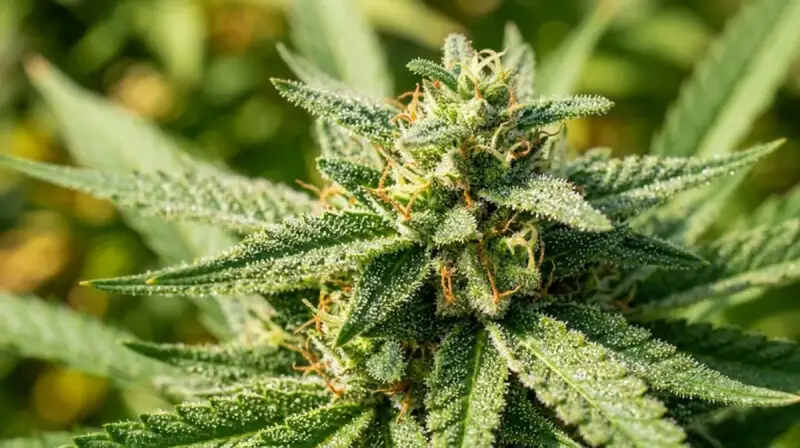
- Autoflowering cannabis derives its light-independent flowering from Cannabis ruderalis — a wild subspecies native to Central Asia and Russia that evolved to flower based on age rather than light cycle.
- Autoflowers complete the full seed-to-harvest cycle in 60–90 days, enabling multiple outdoor harvests per season and simplified indoor cultivation with no light schedule changes.
- Photoperiod plants require a shift to 12/12 light cycle to trigger flowering and produce significantly higher yields per plant — 500g to 1kg+ outdoors under optimal conditions.
- Autoflowering plants cannot be cloned effectively because they age from seed regardless of vegetative state; photoperiod plants can be cloned and kept in perpetual vegetative growth indefinitely.
- Modern autoflowering genetics have dramatically improved, with some strains now testing above 25% THC — substantially closing the potency gap that defined earlier auto varieties.
- The optimal light schedule for autoflowers is debated: 18/6 or 20/4 is the most widely recommended compromise between energy efficiency and maximized growth.
- Grower profile is the decisive factor: beginners and stealth growers benefit most from autoflowers; commercial operators and yield-focused growers typically prefer photoperiod cultivation.
The Origin of Autoflowering Cannabis: Cannabis Ruderalis
To understand what makes autoflowering cannabis unique, you need to understand its genetic origin. Cannabis ruderalis is a wild subspecies of cannabis believed to have originated in central Russia, Kazakhstan, Siberia, and other parts of Central Asia. Unlike its cannabis relatives — the tropical and subtropical Cannabis indica and Cannabis sativa — ruderalis evolved in an environment characterized by extremely short growing seasons. At latitudes above 50 degrees north, summer growing windows can be as brief as 60–70 days before killing frosts arrive. A plant that waited for photoperiod signals (12 hours of darkness) to trigger flowering — as indica and sativa do — would simply not have time to complete its reproductive cycle before winter killed it.
Natural selection therefore favored a genotype in ruderalis that abandoned photoperiodic flowering entirely. Ruderalis plants begin flowering automatically at a fixed age — typically around 3–4 weeks after germination — regardless of how many hours of darkness they receive. This trait is determined by an internal biological clock mechanism that is poorly understood at the molecular level but appears to involve a circadian rhythm component independent of phytochrome-based light detection.
In its wild form, Cannabis ruderalis is a small, weedy plant with minimal THC content and thin flower development — not at all the potent, resinous cannabis that cultivators desire. Its value lies entirely in that single genetic trait: the ability to flower without photoperiodic stimulus. By crossing ruderalis with high-quality indica and sativa varieties and backcrossing over multiple generations to stabilize the autoflowering trait while improving cannabinoid profiles and yield, breeders have created the modern autoflowering category. See our growing guides for cultivation technique specifics for both types.
How Photoperiod Cannabis Detects Light Changes
Photoperiod cannabis varieties — the traditional indica and sativa plants — rely on specialized photoreceptors called phytochromes to detect changes in light quality and duration. Specifically, they respond to the ratio of red to far-red light and to the duration of uninterrupted darkness. As day length decreases below a species-specific critical threshold (typically around 12 hours of darkness), the plant’s phytochrome system triggers a hormonal cascade that initiates the transition from vegetative growth to reproductive flowering.
This photoperiodic system gives growers enormous control over the growth cycle. By maintaining artificial long-day conditions (18 hours of light) indefinitely, indoor growers can keep photoperiod plants in a perpetual vegetative state, allowing them to grow to any desired size, be trained into optimal shapes, and be cloned for propagation. The switch to 12/12 (12 hours light, 12 hours dark) triggers flowering on demand. This level of control is simply not available with autoflowering varieties, which flower on their own schedule regardless of what you do with the light.
Full Comparison: Autoflowering vs Photoperiod
| Characteristic | Autoflowering | Photoperiod | Advantage |
|---|---|---|---|
| Flowering trigger | Age-based (internal clock) | Light cycle change (12/12) | Auto: simpler |
| Seed-to-harvest time | 60–90 days | 4–6 months indoor; seasonal outdoor | Auto: much faster |
| Typical plant height | 40–100 cm | 60–300 cm+ (depends on veg time) | Auto: stealth & compact |
| Outdoor yield / plant | 50–250g | 200g–1kg+ | Photo: higher yield |
| Indoor yield (g/m²) | 150–400g/m² | 300–600g/m²+ | Photo: higher yield |
| Max THC potential | Up to 25%+ (modern genetics) | Up to 30%+ (top genetics) | Photo: slightly higher ceiling |
| Cloning | Not practical (ages from seed) | Highly effective; propagate indefinitely | Photo: major advantage |
| Training (LST/topping) | Gentle LST only; topping risky | All techniques (topping, LST, SCROG, SOG) | Photo: more training options |
| Difficulty level | Beginner-friendly | Intermediate to advanced | Auto: easier |
| Outdoor harvests/year | 2–4+ (climate dependent) | 1 per season | Auto: more harvests |
| Light schedule (indoor) | 18/6 or 20/4 throughout | 18/6 veg, then 12/12 for flowering | Auto: no schedule change needed |
Autoflowering Advantages in Detail
Speed: 60–90 Days Seed to Harvest
The speed of autoflowering varieties is their defining advantage. A typical auto completes germination, vegetative growth, full flowering, and ripening in 60 to 90 days from seed. Some fast-finishing autoflowering strains are advertised at 55 days, while more complex genetics may extend to 100 days. This stands in stark contrast to photoperiod plants, which typically require 4–6 months indoors and are strictly tied to seasonal harvest outdoors. The speed advantage translates directly into practical benefits: indoor growers can complete 4–5 full harvests per year in the same space where a photoperiod grower completes 2–3. Outdoor growers in northern Europe or northern North America, where the growing season limits photoperiod harvests to October, can run two or three auto harvests between May and October.
Simplicity: No Light Schedule Management
Indoor photoperiod cultivation requires managing two distinct light regimes — typically 18/6 for vegetative growth and 12/12 for flowering. This adds complexity, requires a timer, and can cause problems if the dark period is interrupted by any light source during flowering (which can cause the plant to re-vegetate or develop hermaphrodite traits). Autoflowering plants sidestep this entirely. You set your lights, and the plant does the rest. This makes autos particularly suitable for growers using simple setups in closets, small tents, or other spaces where light-proofing is difficult.
Compact Size for Discreet Growing
Most autoflowering varieties remain under 80–100 cm in height even at harvest, making them suitable for small grow spaces, low-ceiling tents, and outdoor grows where discretion is important. Some dwarf auto varieties stay under 40–50 cm. This compactness, combined with the absence of an extended vegetative phase, means autos can be grown in 5–15 liter containers with relatively modest light requirements.
Photoperiod Advantages in Detail
Higher Yield Potential and Scalability
The extended vegetative phase of photoperiod plants is not a bug — it is a feature. Time spent in vegetative growth is time the plant spends developing root mass, stem thickness, and canopy area. Larger roots and canopy mean the plant can support larger, denser flower development during the flowering phase. A photoperiod plant vegged for 8 weeks and then flowered for 10 weeks can produce 500g, 700g, or even over 1kg outdoors under good conditions — a yield impossible for an autoflowering plant in a single life cycle. For commercial growers where yield per square meter and cost per gram determine profitability, this yield advantage is decisive.
Cloning: Perpetual Propagation
The ability to clone photoperiod plants is one of the most significant practical advantages in any cultivation operation of scale. A photoperiod mother plant held in vegetative state under 18/6 light can provide cuttings (clones) indefinitely. Each clone is genetically identical to the mother, meaning you can propagate a proven high-yielding, high-potency, disease-resistant phenotype forever without buying new seeds. This is fundamental to commercial cannabis production, where genetic consistency across hundreds or thousands of plants is essential for product standardization. Medical producers, in particular, rely on clonal cultivation to ensure cannabinoid and terpene profiles remain consistent from batch to batch.
Advanced Training Techniques
Photoperiod plants can withstand and benefit from aggressive training techniques that autoflowers generally cannot. High-stress training (HST) methods including topping (removing the apical meristem to create two main colas), FIMming (a partial topping variant), and supercropping (intentional stem bending to break internal fibers and create wider branching) all cause stress and recovery periods that consume time — time that photoperiod plants have because the grower controls when flowering begins. Autoflowers have no recovery time; every stress-related setback directly compresses their already limited vegetative window. Screen of Green (SCROG) training, which creates a flat canopy of even bud sites, works well with photoperiods but can be complicated with autos given their variable timing. Related growing techniques are covered in our LST guide and SCROG guide.
Light Schedule Optimization for Autoflowers
Because autoflowers do not respond to photoperiod changes for flowering, growers have more freedom in choosing a light schedule — and more debate about what is optimal. The key question is: how much light per day maximizes growth and yield without causing stress or excessive energy cost?
| Schedule | Light Hours | Pros | Cons | Best For |
|---|---|---|---|---|
| 18/6 | 18 hrs | Energy efficient; dark period allows plant recovery | Slightly lower yield vs 20/4 | Most growers; cost-conscious |
| 20/4 | 20 hrs | More photosynthesis time; good yield results | Higher energy cost than 18/6 | Yield-focused auto growers |
| 24/0 | 24 hrs | Maximum photosynthesis potential | High energy cost; may stress some genetics; mixed evidence | Experimental; genetics-dependent |
| Seasonal outdoor | Varies | Free energy; natural light spectrum | Schedule depends on latitude; weather variability | Outdoor autos; multiple harvests |
The 18/6 versus 20/4 debate is primarily an energy cost versus yield trade-off. The additional 2 hours of light in 20/4 does translate to measurable but modest yield increases for most genetics. The choice of 24/0 is more controversial — some genetics perform well under continuous light, others show signs of stress (internode stretching, yellowing, irregular growth). Most experienced auto growers settle on 18/6 for its balance of efficiency and results.
Which to Choose: Grower Profile Guide
The right choice between autoflowering and photoperiod depends almost entirely on your specific situation. Here is a direct framework for decision-making based on the most common grower profiles.
- First-time grower: Start with autoflowers. The simplified light management, compact size, and forgiving timeline make autos significantly easier to succeed with on a first grow.
- Limited space (closet, small tent): Autoflowers. Most auto varieties stay under 80cm and are designed for small-space cultivation.
- Outdoor grower in northern climate (UK, northern Europe, northern US/Canada): Autoflowers. Multiple harvests per season and the ability to start in May and finish before autumn are significant advantages.
- Outdoor grower in southern climate (California, Spain, Morocco, equatorial regions): Photoperiod. Long growing seasons enable full expression of the plant’s yield potential.
- Commercial producer or yield maximizer: Photoperiod with clonal propagation. The yield per plant, genetic consistency from cloning, and ability to scale production are decisive.
- Medical patient seeking a specific proven strain: Photoperiod (if available as clone). Clonal propagation ensures consistent cannabinoid and terpene profiles that cannot be guaranteed from seed.
- Stealth grower needing fast, discreet production: Autoflowers. Fast finishing, compact size, and no light-schedule management reduce detection risk and operational complexity.
WATCH: Autoflowering vs Photoperiod — Grower Comparison