Barcelona Cannabis Social Clubs: The Spanish Model Explained
Barcelona has developed Europe's most sophisticated cannabis social club scene within a creative legal framework. Here is how the clubs work, why they exist, and what makes Barcelona's model unique.
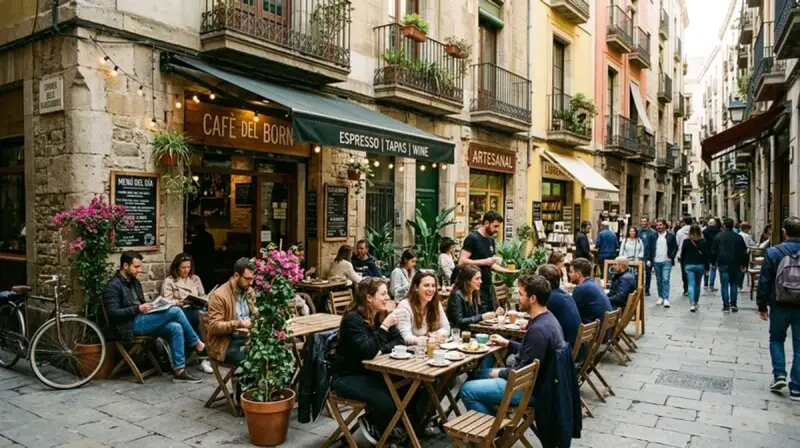
Barcelona's Born district — home to many of the city's cannabis social clubs operating under the Spanish association model.
Spanish Cannabis Law and the Association Loophole
Spain never prohibited cannabis with the severity of other European nations. The Spanish Penal Code of 1995 decriminalised personal cannabis use and cultivation in private spaces. Crucially, Spanish courts have interpreted “private” to include closed, non-profit associations operating for their members — as long as the association does not sell cannabis commercially, profit from it, or provide it to non-members. This legal interpretation created the cannabis social club model: a non-profit association in which members collectively cultivate cannabis, pool resources to cover costs, and share the product among themselves. The club does not sell cannabis; it distributes a shared collective production to its members. Courts, including Spain's Supreme Court in several rulings, have accepted this model as consistent with the private use decriminalisation when implemented correctly. The distinction between this Spanish approach and Dutch tolerance is significant: Amsterdam coffeeshops are licensed commercial retailers; Barcelona clubs are legally structured as private associations. Read about the Amsterdam model in our Amsterdam coffeeshop history guide.
How Barcelona Cannabis Social Clubs Work
A legitimate Barcelona cannabis social club operates as a registered, non-profit civil association under Spanish association law. Membership requires an existing member to sponsor a new applicant — clubs cannot advertise publicly or recruit on the street, which is why you cannot simply walk in. Members pay annual or monthly membership fees that cover the club's operational costs including cultivation, premises, staff and administration. Members receive a monthly allocation of cannabis corresponding to their stated personal consumption needs, assessed at registration. The club maintains records of production and distribution to demonstrate that supply matches membership consumption without surplus destined for external sale. Quality clubs operate with full transparency and are registered with local business authorities. They may also provide consumption facilities: lounge areas, vaporisers, consumption equipment, often food and drink service, music and events. The best clubs resemble well-designed members clubs with a specific purpose rather than anything resembling the street drug dealing their legal framework is designed to replace. For practical visitor guidance, see our Barcelona travel guide.
The Legal Grey Zone and Catalonia's Regional Policy
The Barcelona social club model operates in a legal grey zone that local, regional and national authorities have handled inconsistently. Catalonia, Spain's semi-autonomous region that includes Barcelona, passed a Cannabis Associations Law in 2017 that created a formal regulatory framework for clubs: registration requirements, premises standards, membership caps (usually 650 maximum), and age verification. This was the first formal regional regulation of cannabis associations in Spain and provided significantly more legal clarity for clubs operating in Catalonia than elsewhere. However, Spain's Constitutional Court partially suspended the Catalan law in 2019 following a challenge from the national government, creating renewed uncertainty. Despite legal turbulence at the regulatory level, hundreds of clubs continue operating in Barcelona with minimal law enforcement interference. The city government has generally taken a pragmatic approach consistent with Barcelona's reputation as one of Europe's most progressive urban cultures.
Barcelona vs Amsterdam: Two Models Compared
The Barcelona social club and Amsterdam coffeeshop represent two distinct approaches to cannabis access that reflect their national legal contexts. Amsterdam coffeeshops are licensed by municipal government, open to any adult over 18 (tourists included in Amsterdam), purchase cannabis from suppliers (now moving toward licensed suppliers), and operate commercially. Barcelona clubs are private associations, closed to non-members, legally non-commercial, and collectively cultivate their supply. The Barcelona model is more discreet, more community-oriented and less accessible to visitors but theoretically more legally defensible as an extension of private use rights. Both models have demonstrated that adult cannabis access can be regulated without the public health catastrophes prohibition advocates predicted. The two models have informed legal frameworks around the world including Uruguay's pharmacy model, Germany's 2024 cannabis club provisions, and social equity licensing frameworks in US states. Compare with the full picture in our cannabis legalisation movement guide.
Cannabis social clubs operate in a legal grey zone. Personal cannabis use in private is decriminalised in Spain. Clubs exploit this by operating as private associations sharing collectively cultivated cannabis among members. No commercial sale occurs. Courts have accepted this model when properly implemented, though regulatory clarity varies.
How do you join a Barcelona cannabis club?
You must be invited by an existing member — clubs cannot publicly recruit or advertise. Your sponsor presents you at the club, you register as a member, provide ID showing you are over 18 or 21 (depending on club rules), sign membership documents, and pay membership fees. The process takes 30–60 minutes.
Can tourists join Barcelona cannabis clubs?
Technically yes, but you need an existing member to invite you. Many clubs restrict membership to Spanish residents to maintain their legal status as private associations. Some clubs accept international visitors with a local sponsor. Walk-in access is not possible at legitimate clubs.
How much cannabis can you receive at a Barcelona club?
Members declare a monthly personal consumption amount at registration, typically between 10 and 60 grams per month. This amount is the maximum monthly allocation. Members pick up their allocation at the club in one or multiple visits. Large quantities cannot be taken home in most clubs.
What makes Barcelona's club scene different from Amsterdam?
Barcelona clubs are private associations, not commercial retailers. They are closed to walk-in visitors without membership. The atmosphere is more like a private members club than a retail shop. Quality tends to be very high and genetics are diverse. The city has a sophisticated, culturally diverse scene with clubs ranging from minimalist lounges to design-forward spaces.