










Bogotá Cannabis Travel Guide
Bogotá is a city of 8 million people at 2,600 metres elevation — the second-highest capital city in South America after Quito. Its cannabis story is one of the most significant in Latin American history: Colombia’s Constitutional Court decriminalized personal possession in 1994, almost a decade before Portugal’s more-famous reform and nearly three decades before most of the world followed. The city has since developed a significant cannabis culture in its northern neighbourhoods, an internationally prominent legal medical cannabis industry that exports to Europe and Australasia, and a CBD retail market centred on the progressive consumer districts. For cannabis travellers, Bogotá combines a genuinely interesting legal context with a city that has transformed from one of the world’s most dangerous to one of South America’s most vibrant cultural destinations. The altitude — 2,600 metres means noticeably amplified cannabis effects — is the practical factor that distinguishes it most sharply from sea-level destinations.
- Legal Status: Personal possession up to 20g decriminalized — Constitutional Court Sentencia C-221/94; no criminal prosecution of personal possession
- Dosis Personal: 20g cannabis flower is the personal use threshold; above this, supply presumption applies
- Ley Zanahoria: Police can confiscate cannabis even under 20g without filing charges; inconsistently applied; bribe risk in some areas
- Medical Cannabis: Legal since Law 1787 (2016); Colombia is a major global exporter to Germany, UK, Australia
- Sale/Supply: Illegal; no licensed recreational retail market; commercial grey market exists in tourist areas
- Price: Among the lowest in the world — $1–3 USD/gram typical for street-level commercial quality
- Altitude: 2,600m (8,530 ft) — cannabis effects significantly amplified; reduce dose by 25–30% vs. sea-level baseline
- Airport: El Dorado International (BOG) — federal facility, strict; do not attempt to travel with cannabis
- Expat vs. tourist treatment: Long-term expats face different police dynamic than short-term tourists; tourist zones in the north are generally more tolerant
Colombia’s 1994 Decriminalization: The Constitutional Court Ruling
Colombia’s cannabis decriminalization has a specific and legally significant history. In 1994, the Constitutional Court of Colombia issued Sentencia C-221/94, ruling that criminalization of the possession of small amounts of drugs for personal use violated Article 16 of the Colombian Constitution — the guarantee of the right to the free development of personality. The ruling established the concept of the dosis personal: possession of up to 20 grams of cannabis and 1 gram of cocaine for personal use was to be treated as a health matter rather than a criminal one.
This ruling was genuinely radical for its era — 1994 preceded Portugal’s 2001 decriminalization by seven years and predated essentially all of the cannabis reform wave that swept North America and Europe in the 2010s. However, Colombia’s decriminalization has had a more complicated history than Portugal’s because subsequent legislation attempted to reinstate criminalization. A 2009 constitutional amendment sought to criminalize personal possession; courts found this unconstitutional. The net result is that the 1994 decriminalization has held as legal principle for three decades through multiple attempts to overturn it.
For tourists, the operative practical reality: small personal amounts in progressive northern neighbourhoods are broadly tolerated. Police generally do not pursue personal possession cases against tourists carrying under 20g in Zona Rosa, Chapinero, or Usaquén. The risk of criminal prosecution for personal amounts under the threshold is genuinely low. However, the ley zanahoria (literally “carrot law” — a reference to keeping the population healthy through sobriety) gives police authority to confiscate cannabis even from individuals within the decriminalized threshold without filing charges. This power is used inconsistently and creates space for informal payment demands.
| Legal Framework | Year | What It Established |
|---|---|---|
| Constitutional Court C-221/94 | 1994 | Personal possession up to 20g cannabis decriminalized — constitutional right |
| Law 30/1986 (Statute of Narcotics) | 1986 | Original prohibition framework; still applies to supply |
| Constitutional Amendment 2009 | 2009 | Attempted to recriminalize personal possession — later found unconstitutional |
| Decree 2467/2015 | 2015 | Framework for medical cannabis licensing established |
| Law 1787/2016 | 2016 | Medical cannabis fully legalized; INVIMA licensing for production and export |
| Decree 811/2021 | 2021 | Expanded export framework; allowed dried flower export to international markets |
Colombia’s Medical Cannabis Industry: A Global Exporter
The 2016 legalization of medical cannabis under Law 1787 launched Colombia into the top tier of global legal cannabis production within just a few years. Colombia’s natural advantages are compelling: the country straddles the equator, providing consistent year-round light cycles ideal for cannabis cultivation; Andean elevation creates temperature variation that can enhance cannabinoid production; established agricultural infrastructure from coffee, cut flowers, and other export crops; and labor costs significantly lower than North American or European producers.
Colombian cannabis companies including Khiron Life Sciences, Clever Leaves, and PharmaCielo have received international investment and export to Germany (the world’s largest medical cannabis import market), the United Kingdom, Australia, Portugal, and Brazil. Colombian exports have been particularly significant for the German market since Germany began accepting international medical cannabis imports. Decree 811 (2021) was a landmark moment — it allowed Colombia to export dried cannabis flower, not just extracts, dramatically expanding the export market.
The irony is frequently noted by Colombian cannabis advocates: a country historically associated in Western consciousness with the illegal drug trade has become one of the world’s most significant legal cannabis exporters. The shift represents a genuine reorientation of the Colombian agricultural sector and is a source of real economic pride in the industry.
Bogotá Neighbourhood Guide for Cannabis Visitors
Zona Rosa and the Parque de la 93 area in Chapinero Alto form the heart of Bogotá’s upscale nightlife district and are among the safest areas of the city. The density of bars, restaurants, clubs, international hotels, and international visitors in these areas creates an environment where cannabis use is common and broadly tolerated. The Zona Rosa’s commercial core (Calle 82 to Calle 93, Carrera 11 to Carrera 15) has a visible cannabis culture without being obtrusive.
Chapinero, extending north from downtown toward Zona Rosa, is Bogotá’s most overtly progressive neighbourhood — the centre of the city’s LGBTQ+ community, with independent cafés, bookshops, alternative bars, and cannabis culture. Several CBD shops have established along Carrera 13 and the surrounding streets. The neighbourhood feels different from Zona Rosa’s upscale commercial character — more genuinely local, more bohemian, with a younger and more politically engaged energy.
Usaquén, at the northern extreme of the city, has a village character entirely at odds with Bogotá’s scale. A colonial-era town centre absorbed into the city’s northward growth, it is now home to upscale restaurants, art galleries, and weekend markets. Its relaxed character makes it popular for daytime outdoor cannabis use among locals and visitors. The Sunday flea market in the colonial square is one of Bogotá’s great visitor experiences.
Parque Nacional, the largest park in central Bogotá between La Candelaria and Chapinero, has historically been a gathering point for cannabis culture in the city. The park’s extensive tree cover and mixed social character make it a natural outdoor cannabis space. Standard urban park precautions apply; use the park during daylight with awareness of surroundings.
La Candelaria, the historic centre, is Bogotá’s architectural and cultural core — the Museo del Oro (Gold Museum, among the finest in the world), Catedral Primada, and Plaza de Bolívar are all here. Tourist infrastructure is strong in the daytime but the neighbourhood requires standard urban caution after dark. Cannabis use here is less visible and less tolerated than in the northern neighbourhoods.
Altitude: Bogotá’s Most Important Cannabis Variable
Bogotá’s elevation of 2,600 metres (8,530 feet) is the first thing most visitors notice — the thin air causes breathlessness during physical exertion and headaches in the first 24–48 hours of acclimatization. Cannabis significantly amplifies altitude effects, and this is the most practically important piece of information for cannabis tourists in Bogotá.
At altitude, the partial pressure of atmospheric oxygen is lower, and blood oxygen saturation drops from the sea-level baseline of 98–99% to 94–96% or lower in the first hours. Cannabis has vasodilatory effects and influences heart rate and circulation; the combination of reduced blood oxygen and cannabis produces markedly stronger effects than identical doses at sea level. This is a consistent report from cannabis consumers at Bogotá’s elevation, at Médellin (1,500m), and at other high-altitude cannabis destinations like Boulder (1,655m) and Mexico City (2,240m).
Practical recommendations for altitude cannabis use in Bogotá:
- Reduce initial dose by at least 25–30% compared to your sea-level baseline
- Stay well hydrated throughout your stay — altitude is significantly dehydrating regardless of cannabis
- Give yourself 24–48 hours to acclimatize before significant cannabis consumption — do not combine altitude sickness symptoms with cannabis intoxication
- If you experience palpitations, significant anxiety, or dizziness, the combination of altitude and cannabis may be the cause — sit or lie down, breathe slowly, CBD can help moderate THC effects if available
- First-time Bogotá visitors from sea level should start with lower-THC products before experimenting with higher potency options
Safety and Practical Tips for Bogotá
General safety: Bogotá has transformed significantly in safety over the past two decades. The northern neighbourhoods — Zona Rosa, Parque de la 93, Chapinero, Usaquén — are genuinely safe and comfortable for tourists with standard urban precautions. Use app-based rides (Uber, InDriver) rather than hailing cabs — express kidnapping involving unofficial taxis has historically been the primary safety risk for foreigners. Don’t display expensive phones, cameras, or jewellery on the street. After dark in the historic centre and less-trafficked areas, standard heightened caution applies.
Cannabis vs. cocaine risk profile: Colombia has historically had a cocaine culture that operates on entirely different risk parameters. Police and legal consequences for cocaine possession are substantially more serious than for cannabis under the decriminalization framework. The visibility and tolerance for cannabis in Bogotá’s tourist zones does not extend to cocaine or other substances. Cocaine-related crime and criminal infrastructure in Bogotá carries risks completely unrelated to cannabis tourism; avoid any social context associated with the harder drug market.
Airport: El Dorado International Airport (BOG) is a strict federal facility. Do not attempt to travel with cannabis through El Dorado in either direction. Colombian airport security and customs are thorough; tourism police and federal narcotics enforcement operate throughout the terminal.
Recent Developments
Colombia’s cannabis sector continues to evolve. The Gustavo Petro administration that took office in 2022 has been broadly supportive of cannabis industry development and export expansion. Decree 811 (2021) opened dried flower exports; subsequent regulatory updates have attempted to streamline licensing for domestic producers targeting the international medical market.
Discussion of recreational cannabis legislation has continued in the Colombian Congress without producing enacted law. The decriminalization from 1994 remains the operative framework for personal possession. CBD retail has expanded significantly in Bogotá’s northern neighbourhoods, providing a legal access point for cannabis-adjacent products that is accessible to tourists without the ambiguity of the grey commercial market.
Marcus Webb — ZenWeedGuide Senior Editor
Marcus has researched cannabis policy in Colombia, Mexico, and Uruguay across multiple visits and covers the specific practical considerations — including altitude effects — that distinguish high-elevation Latin American destinations from sea-level cannabis markets.
Frequently Asked Questions
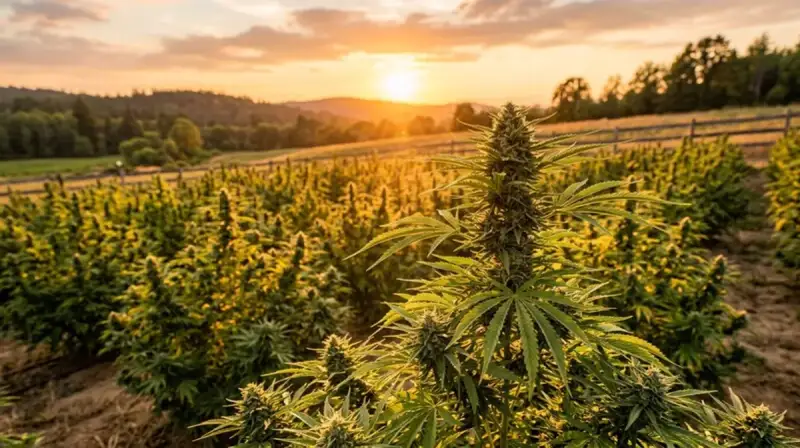
Bogotá’s cannabis history — from the 1994 Constitutional Court ruling to the country’s emergence as a global medical cannabis exporter — makes it one of Latin America’s most significant cannabis travel destinations. Remember: the altitude amplifies everything.