











Trainwreck Strain Guide
Trainwreck is one of the foundational sativa-dominant hybrids of American cannabis history. Developed in the Arcata region of Humboldt County, California during the 1970s, it stands at the intersection of the three major cannabis lineages: Mexican sativa, Thai sativa, and Afghani indica. The result is a strain that delivers the intense cerebral euphoria and creative energy of its sativa parents with a physical relaxation component that prevents the wired, anxious ceiling that pure sativas can produce. Its terpinolene-dominant terpene profile generates a sharp pine-lemon-spice aroma unlike almost any other cultivar in the dispensary market, and its THC ceiling of 25% ensures that the “trainwreck” name still holds decades after it was coined.
- Genetics: Mexican Sativa × Thai Sativa × Afghani Indica (three-way cross, Arcata CA, 1970s)
- Type: Sativa-dominant hybrid — 80% sativa / 20% indica
- THC Range: 18–25% | CBD: <1%
- Primary Terpene: Terpinolene — responsible for the distinctive pine-lemon-spice profile
- Secondary Terpenes: Myrcene, Ocimene
- Main Effects: Intense euphoric head rush, creative energy, physical relaxation, mood elevation
- Medical Uses: PTSD, depression, chronic pain, ADHD, fatigue
- Grow Difficulty: Moderate — significant stretch, heavy resin, rewards experienced growers
- Aroma: Sharp pine, lemon, spicy earth, fresh resinous forest
- Side Effects: Paranoia risk at high doses due to terpinolene dominance and high THC ceiling
Genetics & Origin: Arcata, California and the Three-Way Cross
Trainwreck’s origin in the mountains and hills surrounding Arcata, California in the 1970s places it squarely within the Northern California breeding culture that would shape American cannabis genetics for the next five decades. The Humboldt County region — warm summers, coastal fog, forested hillsides, and a culture of outdoor cultivation that predated commercial cannabis by a generation — was the ideal incubation environment for the kind of long-horizon selective breeding that Trainwreck represents.
The three-way cross is its defining genetic feature: Mexican Sativa genetics from Oaxacan or Michoacan landraces contributed the cerebral energy and elongated structure; Thai Sativa genetics from Southeast Asian landraces added intensity, psychoactivity ceiling, and the distinctive uplifting quality that characterises the Thai lineage; and Afghani Indica genetics — the same landraces that underpinned Afghani and most of the indica family — contributed the physical relaxation, resin production, and structural density that make Trainwreck’s buds so visually impressive. The balance achieved in that original Arcata breeding — keeping the Afghani grounding without losing the sativa lift — is what distinguishes Trainwreck from the multitude of less successful three-way attempts of the same era.
The name is attributed to a local story: a train derailment near the Arcata grow site, though the name also serves as a functional description of the strain’s onset. “You’re hit like a trainwreck” was the original consumer-level description, and it has been accurate for fifty years. The strain entered broader circulation through the Humboldt County cannabis trade in the 1980s and achieved national recognition through the medical cannabis dispensaries of California in the 1990s and 2000s. Today it is a fixture of American dispensary menus and a parent strain of significant influence.
Cannabinoid & Terpene Profile
Trainwreck is one of the few high-profile strains where terpinolene, rather than myrcene or caryophyllene, sits at the top of the terpene hierarchy. This is a defining characteristic that explains both its distinctive aroma and its particular effect signature. Terpinolene is associated with uplifting, energetic effects but also with increased anxiety risk at high doses — the double-edged quality that makes Trainwreck simultaneously a top choice for daytime use and a strain requiring dose awareness. Explore our full terpene library for detailed terpene science.
| Compound | Type | Typical Range | Aroma Contribution | Effect Contribution |
|---|---|---|---|---|
| THC | Cannabinoid | 18–25% | — | Primary psychoactivity, euphoria, pain modulation |
| CBD | Cannabinoid | <1% | — | Minor anxiety buffering; largely absent in this cultivar |
| CBG | Cannabinoid | 0.1–0.4% | — | Potential anti-inflammatory; focus support |
| Terpinolene | Primary Terpene | 0.5–1.2% | Pine, lemon-citrus, fresh wood, faintly floral | Uplifting, energetic; anxiety risk at high dose |
| Myrcene | Secondary Terpene | 0.2–0.5% | Earthy, herbal, musky | Potentiates THC; grounding physical component |
| Ocimene | Secondary Terpene | 0.1–0.3% | Sweet, floral, slightly tropical | Uplifting; antifungal properties; pleasant counterpoint to terpinolene |
The terpinolene dominance places Trainwreck in a small and distinctive group of strains — along with Jack Herer, Dutch Treat, and Ghost Train Haze — that share this aromatic character. Research on terpinolene is less extensive than on caryophyllene or myrcene, but preclinical studies (Letizia et al., 2003, Food and Chemical Toxicology) confirm its anxiolytic properties at low concentrations and its role in sedation at moderate doses in animal models, supporting the anecdotal biphasic quality experienced by Trainwreck users. The myrcene component is what provides the physical relaxation that balances the terpinolene-driven cerebral intensity, keeping the experience grounded despite the 80/20 sativa ratio.
Effects: Onset, Peak, and Duration
Trainwreck is famous for the speed and intensity of its onset — earning its name from users who experienced the initial wave as something genuinely overwhelming. Understanding the timeline by consumption method is essential for new users, as the difference between inhaled and oral onset is one of the most common causes of accidental overconsumption. See our full effects guide for baseline cannabis pharmacology.
| Method | Onset | Peak | Duration | Key Consideration |
|---|---|---|---|---|
| Smoked / Combusted | 2–5 min | 15–30 min | 2–3 hours | Fastest onset; easiest to titrate dose; full terpene expression |
| Vaporised (dry herb) | 3–8 min | 20–40 min | 2–3.5 hours | Temperature selection affects terpene delivery; 185–210°C recommended |
| Concentrate / Dab | Under 2 min | 5–20 min | 2–4 hours | Extremely intense onset; only for high-tolerance users; paranoia risk elevated |
| Edible (oral) | 30–120 min | 90–180 min | 4–8 hours | 11-OH-THC metabolite; much stronger body component; do not redose before 2 hours |
Phase 1: The Trainwreck Onset (0–15 min)
The strain earns its name in the first fifteen minutes. Onset is abrupt and unmistakable: a wave of pressure moves through the head, vision sharpens, and mood elevates rapidly toward euphoria. For users familiar with sativa-dominant effects, this is an intensified version of the standard cerebral rush — faster, brighter, and more physically felt than most. First-time users or those coming from indica-dominant experience should expect something categorically different. The initial phase is invigorating rather than sedating, and the mental quality is one of sudden clarity and heightened awareness rather than pleasant cloudiness.
Phase 2: Creative Energy Peak (15–60 min)
The peak settles into a state that experienced users describe as the most productive headspace in their dispensary rotation. Creative thinking accelerates. Conversations become more engaging. Physical energy is elevated but manageable — there is none of the jittery, uncomfortable energy that some pure sativas produce. The Afghani indica genetics make their contribution here: the body is relaxed enough to be comfortable, reducing the edge that would otherwise make 25% THC sativa-dominant effects difficult to sustain. This is a balance point achieved through the three-way genetic architecture that took the original Arcata breeders years to stabilise.
Phase 3: Sustained Elevation with Softening (60 min+)
As the peak intensity fades, Trainwreck does not crash into sedation — it sustains a pleasant elevated headspace for another hour or two, gradually softening toward baseline. Higher doses will produce more pronounced physical relaxation in this phase and can tip into genuine sedation, which accounts for some of its medical utility for insomnia and pain management. The overall duration for moderate doses via inhalation is 2–3 hours, during which the experience moves from intense euphoria through creative peak to a longer, gentler elevated state.
Medical Applications
Trainwreck has one of the most diverse medical application profiles of any sativa-dominant strain, covering mood disorders, pain management, cognitive conditions, and PTSD. Its combination of cerebral euphoria, physical relaxation, and heavy resin production makes it effective across a wider range of conditions than strains with a more narrow effect profile. For detailed condition guidance, see our medical cannabis section.
| Condition | Evidence Level | Mechanism | Recommended Dose Range | Notes |
|---|---|---|---|---|
| PTSD / Trauma | Moderate (observational + RCT) | CB1-mediated fear extinction; nightmare suppression via REM disruption | 5–10mg THC; low-moderate dose inhalation | Fraser 2014 (NDTR): significant nightmares & hyperarousal reduction; high-dose risk of anxiety |
| Depression | Moderate (observational) | Dopamine + serotonin modulation; limonene + terpinolene mood elevation | 5–15mg THC equivalent | Piper 2017 (Journal of Affective Disorders): acute mood improvement in depressed patients; tolerance risk with daily use |
| Chronic Pain | Strong (multiple RCTs) | CB1/CB2 nociceptive modulation; anti-inflammatory via myrcene + cannabinoids | 10–20mg THC; CBD co-administration beneficial | Whiting 2015 (JAMA): NNT 5–11 for neuropathic pain; higher THC strains show greater pain reduction |
| ADHD / Focus | Preliminary (observational) | Dopaminergic modulation; paradoxical calming at low dose | Low dose only: 2.5–5mg THC | Cooper 2017 (European Neuropsychopharmacology): mixed evidence; dose-critical — higher doses worsen focus |
| Fatigue / Low Energy | Anecdotal (strong patient consensus) | Terpinolene-driven CNS activation; dopamine release | 3–10mg THC, morning/daytime use | Sativa-dominant terpene profile makes this one of the most cited dispensary choices for fatigue management |
Growing Trainwreck
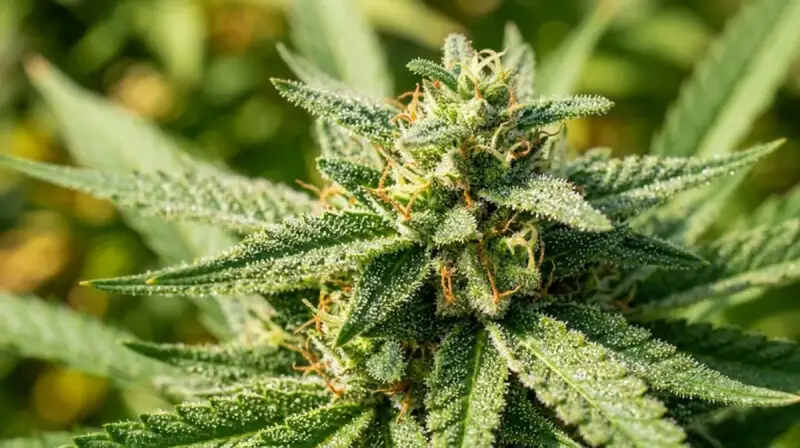
Trainwreck is a moderately demanding strain that rewards growers who respect its sativa-dominant architecture. The primary management challenges are the significant stretch during early flower (up to 2× vegetative height), heavy feeding requirements during peak flower, and the need for robust support structures for its resin-heavy colas. For growing fundamentals, see our cannabis growing guides.
| Parameter | Indoor | Outdoor | Notes |
|---|---|---|---|
| Flowering Time | 8–10 weeks | Mid-to-late October | Terpene peak at week 9; do not harvest early |
| Yield | 400–500 g/m² | 500–700 g per plant | Outdoor in warm, low-humidity climate (NorCal-type conditions optimal) |
| Height | 90–150cm (topping and LST essential) | 150–250cm | Aggressive topping at week 3–4 veg; ScrOG recommended indoors |
| Feeding | Heavy nitrogen in veg; reduced mid-flower; P/K push weeks 5–8 | Consistent; sensitive to overwatering | Flush 10–14 days before harvest for clean terpene expression |
| Difficulty | Moderate | Moderate–High | Long season outdoor; needs warm dry September/October |
| Mould Resistance | Moderate — good airflow essential with dense colas | Moderate — late-season humidity is the primary risk | Humidity below 50% RH in final 3 weeks of flower strongly recommended |
The most common mistake with Trainwreck is underestimating the stretch. Growers who flip to 12/12 with plants at their intended final height will find themselves managing a canopy 50–100% taller than planned by week three of flower. Best practice is to flip when plants are at 40–50% of their target final height, or to implement a ScrOG setup that captures the stretch in horizontal growth. Resin production begins early — visible trichome development by week 4 is normal — and the final two weeks before harvest are critical for aromatic development. Temperature drops of 5–8°C during the dark period in the final two weeks can intensify terpinolene and myrcene expression and may encourage light purple colouration in some phenotypes.
Trainwreck vs. Related Sativa-Dominant Strains
Trainwreck occupies a specific position in the sativa-dominant spectrum: more physically balanced than a pure landrace sativa, more cerebrally intense than most commercial hybrids, and with a terpene profile that places it in its own aromatic category. The comparison below uses its closest relatives and competitors. See our strain comparison tool for detailed head-to-head analysis.
| Strain | Type | THC Range | Primary Terpene | Key Difference vs. Trainwreck |
|---|---|---|---|---|
| Trainwreck | Sativa-Hybrid (80/20) | 18–25% | Terpinolene | — |
| Jack Herer | Sativa-Hybrid | 18–23% | Terpinolene | Shares terpinolene dominance; gentler onset; spice vs. pine aroma primary |
| Sour Diesel | Sativa-Hybrid | 19–25% | Caryophyllene | Diesel-citrus vs. pine-spice; longer duration; NYC vs. NorCal character |
| Green Crack | Sativa | 17–25% | Myrcene | More purely energetic; mango profile; less physical component than Trainwreck |
| OG Kush | Hybrid (55/45) | 19–26% | Myrcene | More balanced; stronger indica component; fuel-lemon vs. pine-lemon |
Side Effects & Risk Profile
Trainwreck’s primary risk factor is the combination of high THC content and terpinolene dominance. Terpinolene, unlike myrcene or linalool, does not have a well-established anxiety-buffering effect — it is primarily uplifting, which at high doses can amplify the psychoactive intensity of THC rather than moderating it. This makes Trainwreck one of the strain categories most associated with cannabis-induced anxiety and paranoia in clinical settings, particularly for novice users or those with a personal or family history of anxiety disorders or psychosis.
- Anxiety & Paranoia: Elevated risk at doses above 10–15mg THC, especially without prior tolerance. Low-dose initiation is essential.
- Dry Mouth & Dry Eyes: Common with all high-THC cultivars; manageable with hydration.
- Headache (dehydration-related): Occasional at high doses; drink water before and during use.
- Dizziness: Particularly in the first 10 minutes post-inhalation; seated use recommended for first-time users.
- Racing Heart: THC-mediated tachycardia at high doses; usually self-limiting; concerning only in users with cardiovascular conditions.