










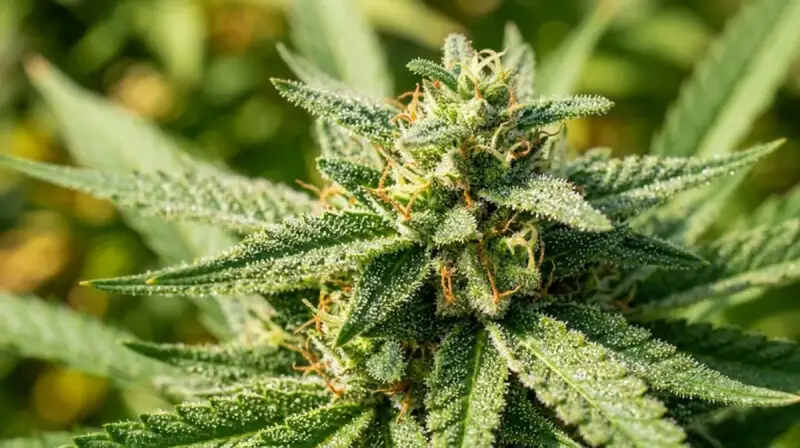
Skunk #1 Overview
Skunk #1 is not simply a cannabis strain — it is a historical watershed. Developed in the 1970s by the Northern California breeding collective Sacred Seeds, Skunk #1 was the result of years of careful selection work combining three genetically and geographically distinct cannabis varieties: the classic Afghani indica from Central Asia, the celebrated Acapulco Gold sativa from the highlands of Mexico, and the potent Colombian Gold from South America. The resulting F1 hybrid was then stabilized through multiple generations of selective breeding until it bred true — producing consistent, predictable plants from seed that formed the backbone of the modern cannabis industry.
The importance of this achievement cannot be overstated. Before Skunk #1, cannabis breeders worked primarily with landrace genetics that were notoriously inconsistent and difficult to cultivate indoors — tall, slow-flowering, and variable in quality. Skunk #1 demonstrated that stable, indoor-friendly hybrids combining the best qualities of multiple genetic lineages were achievable, and in doing so it established the template for modern cannabis breeding that has guided the industry ever since.
When Sacred Seeds member Cultivator’s Choice (later known as Skunkman Sam or David Watson) brought Skunk #1 seeds to the Netherlands in the early 1980s, he essentially catalyzed the Amsterdam coffee shop boom. Dutch breeders immediately recognized the value of stable, potent, consistent genetics that could be reliably grown indoors and used as breeding stock. Sensi Seeds, Positronics, and dozens of other companies built their early catalogs using Skunk #1 as a foundation, and its genetics are present in hundreds of strains available today.
Today, Skunk #1 is both a classic strain in its own right and a genetic heritage that underpins much of the cannabis world. Strains as different as Super Skunk, Shiva Skunk, UK Cheese, and indirectly many OG-family strains trace ancestry to Skunk #1. Growing, experiencing, and studying Skunk #1 is in many ways a study of cannabis history itself.
Cannabinoid & Terpene Profile
Skunk #1 tests between 15% and 19% THC, placing it in the moderate-high range by historical standards but below the extreme potency of many contemporary commercial strains. This potency level reflects the strain’s pre-modern-selection genetic baseline — breeders in the 1970s and 80s were selecting primarily for consistency, growth habits, and aroma rather than maximizing THC content, which became a primary commercial driver in later decades. CBD is typically below 1%.
The cannabinoid content, while moderate by contemporary standards, produces a balanced and satisfying experience that many experienced consumers prefer to higher-THC options for daily use — the effect quality and full-spectrum profile being more important than raw potency numbers.
Myrcene is the primary terpene — contributing the earthy, slightly musky base note that forms the foundation of the Skunk #1 aroma and providing the muscle-relaxant and sedative body effects that prevent the strain from being purely head-oriented. At moderate levels, myrcene contributes physical comfort without heavy sedation, which explains Skunk #1’s balanced day-to-evening versatility.
Caryophyllene is prominent and contributes both the spice-pepper aromatic note and anti-inflammatory CB2 receptor activity. The caryophyllene contribution is one reason Skunk #1 is considered more therapeutically relevant than simple THC percentage would suggest — the full-spectrum analgesic and anti-inflammatory effect profile is broader than a pure THC product of equivalent strength.
Limonene is present from the sativa parents and contributes the mood-elevating, citrus-adjacent quality that distinguishes Skunk #1’s effect from pure indica strains. This terpene is responsible for the mood-brightening onset that characterizes the Skunk #1 experience and makes it more suitable for daytime use than most indica-dominant hybrids.
The characteristic ’skunk’ aroma compound — thiols, particularly 3-methyl-2-butene-1-thiol — is not technically a terpene but rather a sulfur-containing volatile organic compound that interacts with the terpene matrix to create the signature pungent Skunk quality. This compound is present at concentrations barely above the threshold of detection (the human nose detects thiols at parts-per-billion levels) but dominates the aromatic perception of the strain despite its trace presence.
Effects & Experience
Skunk #1 delivers what many cannabis historians describe as the archetypal hybrid experience — the balanced, complete, full-spectrum effect that served as the gold standard for cannabis quality before the race to maximum THC percentages reshaped commercial priorities. It is, in many ways, a perfect introduction to what well-balanced hybrid cannabis can be.
Onset is moderately fast — typically 5 to 15 minutes — with an immediate mood elevation that is warm, happy, and socially engaging. The cerebral component is clear and pleasant rather than racing or overwhelming; it provides a comfortable mental uplift that sharpens social awareness and enhances sensory experience without the intensity or duration of pure sativa landraces.
Within 30 to 45 minutes, the indica Afghani genetics introduce a physical dimension — a comfortable body warmth and muscle relaxation that coexists with the mental clarity rather than overriding it. This is the signature Skunk #1 equilibrium: mental engagement plus physical ease simultaneously, neither overpowering the other, producing a state that is ideal for a remarkably wide range of activities and contexts.
Duration is standard for a well-balanced hybrid — approximately two hours of primary effects with a pleasant, gradual comedown. There is no sharp energy drop, no sudden sedation surge, and no residual brain fog at normal doses. This clean, predictable effect profile is one reason Skunk #1 remains popular with experienced consumers who value consistency and manageability alongside quality.
Side effects at moderate doses are minimal — mild dry mouth and dry eyes are essentially universal, and these are manageable with hydration and eye drops. Anxiety is uncommon at moderate doses due to the balanced terpene profile, making Skunk #1 one of the more accessible strains for anxiety-sensitive individuals who still want moderate-to-high THC effects.
Video Guide: Skunk #1 — History, Effects & Genetics
A comprehensive review of Skunk #1’s genetic history, cultural significance, effect profile, and growing characteristics.
Flavor & Aroma in Detail
Skunk #1’s aroma is among the most culturally significant in cannabis — so emblematic that the word ’skunk’ became globally synonymous with potent cannabis. The aroma is bold, distinctive, and immediately identifiable: a sharp, pungent, slightly sulfurous quality — the ’skunk’ character itself — undercut by rich earthy notes and surprising sweetness that becomes more apparent as the initial pungency settles.
The earthy dimension is substantial — a warm, loamy, almost composted-earth quality that is deeply organic and connects the strain to its soil-grown heritage. This is not the sharp, indoor-grown earthiness of many modern hybrids but something richer and more complex that carries the aromatic memory of its landrace parents.
The sweetness in Skunk #1 is frequently surprising to those expecting only the signature pungent note. The Colombian Gold and Acapulco Gold sativa genetics contribute a tropical fruit sweetness — not the explicit grape or mango of modern sweet strains, but a more subtle, golden-honey-citrus quality that adds dimensionality and prevents the aroma from being purely funky or harsh.
Fresh-ground Skunk #1 releases an aromatic intensity that is remarkable — the volatile terpene and thiol compounds burst free with an assertiveness that demands attention. This is one of the less discrete aromas in cannabis; users should be aware that Skunk #1 carries significantly and will make its presence known in any confined space.
On the palate the flavor is robust and satisfying. The earthy-sweet notes translate directly, with the skunky pungency softening somewhat in smoke or vapor into a more nuanced spice-earth-sweet profile. The exhale is warm and slightly hash-like — a reflection of the Afghani genetics — with a pleasant, clean finish. Experienced cannabis users often describe Skunk #1’s taste as one of the most authentically ’cannabis’ flavors possible, stripped of modern flavor-chasing and expressing the plant’s natural essence.
Medical & Therapeutic Uses
Skunk #1’s balanced effect profile and moderate potency make it broadly useful across medical applications without the side effects and dosing challenges of extreme-potency strains. It represents what might be called a ’workhorse’ medical cannabis — reliable, effective, and accessible across a range of patient profiles.
Stress and mood disorders: The limonene-driven mood elevation and the balanced euphoric onset make Skunk #1 effective for managing everyday stress, mild anxiety, and general mood disorders. The caryophyllene component adds anti-anxiety CB2 activity. The moderate THC content reduces the risk of THC-mediated anxiety amplification that can occur with higher-potency strains in sensitive individuals.
Pain management: The combination of myrcene’s muscle-relaxant properties, caryophyllene’s anti-inflammatory CB2 activity, and THC’s central analgesic effects creates a comprehensive pain relief profile suitable for mild to moderate chronic pain. Skunk #1 is particularly appropriate for patients who need to remain functional during the day — its balanced effects do not impair work or social function at moderate doses.
Appetite stimulation: Skunk #1 produces reliable appetite stimulation and antiemetic effects — important applications for patients dealing with appetite loss, nausea from treatments, or eating disorder-related complications. The relatively gentle onset makes it easier to control dosing than higher-potency alternatives.
Sleep preparation: At higher doses or taken later in the evening when the Afghani body component becomes more prominent, Skunk #1 transitions effectively into a sleep preparation strain. The Afghani-derived physical relaxation deepens as the session progresses, creating natural conditions for sleep onset without the immediate knockout sedation of pure indica strains.
Growing Skunk #1
Skunk #1 is consistently recommended as one of the best strains for beginning and intermediate cultivators. Decades of stabilizing selection work have produced genetics with exceptional resilience, consistency, and adaptability — qualities that make it the ideal learning strain for developing cultivation skills.
Growth habit: Medium height — 80–120 cm indoors — with a symmetrical, evenly branching structure that produces multiple well-developed bud sites without requiring extensive training. Skunk #1 responds well to topping and ScrOG but performs adequately with minimal intervention, making it suitable for both hands-on and more passive cultivation approaches.
Flowering time: 8 to 9 weeks — reliable and consistent across phenotypes. The buds develop a medium-density structure with good resin coverage that becomes more pronounced in the final two weeks of flowering. The aroma intensifies significantly in weeks 6 through 9, and growers should be prepared for the notably strong scent presence — carbon filtration is highly recommended.
Resilience: Skunk #1 tolerates environmental stress, minor nutrient imbalances, temperature fluctuation, and humidity variation better than most modern high-THC strains. It is genuinely beginner-friendly in the sense that mistakes that would damage more sensitive strains are recovered from gracefully. This resilience reflects the robust landrace genetics at its foundation.
Outdoor performance: Skunk #1 is one of the best hybrid strains for outdoor cultivation in temperate climates. It handles cool autumn temperatures, some moisture exposure, and variable sunlight availability far better than most modern hybrids. Harvest typically falls in late September to early October in the Northern Hemisphere, well before serious cold sets in. Outdoor yield can be impressive — 500–700 grams per plant under optimal conditions.
Indoor yield: 400–500 g/m² indoors under good conditions — solid and reliable without requiring the optimization complexity that maximum-yield commercial operations demand. The combination of consistent quality and manageable yield makes Skunk #1 an economically sound choice for personal cultivation.
Consumption Methods
Skunk #1’s versatility in effect is matched by its adaptability across consumption methods. Its moderate potency and balanced effects make it forgiving and appropriate for multiple consumption contexts.
Joint smoking is historically and culturally the most natural delivery method for Skunk #1 — this is the format in which the strain built its reputation in Amsterdam coffee shops and California smoking circles across four decades. The combustion process amplifies the characteristic skunky pungency while the sweet earthiness provides satisfying flavor balance. Rolling Skunk #1 in a quality joint and experiencing it at leisure remains the essential Skunk #1 experience.
Dry herb vaporization at 170–185°C captures the full aromatic complexity — the sweet tropical notes from the sativa genetics emerge more clearly through vaporization than combustion, providing a genuinely different and equally valid experience. The clean vapor delivery is preferred by health-conscious users who appreciate the harm reduction benefit while retaining full cannabinoid and terpene delivery.
Bong and pipe smoking emphasizes the immediate potency of Skunk #1’s effects through large-volume inhalation. Given the balanced terpene profile and moderate THC, this method is accessible even for less experienced users compared to higher-THC strains where the same consumption method could be overwhelming.
Edibles made with Skunk #1 produce the typical oral-route amplification of indica body effects. The moderate THC baseline makes Skunk #1 edibles more predictably dosable than higher-THC options — a 10mg THC edible from Skunk #1 flower is more manageable than the equivalent from a 28% THC strain. Standard low-dose starting protocol applies regardless.
Similar Strains Worth Exploring
Skunk #1’s genetic descendants are some of the most widely cultivated strains in the world. Exploring these shows the range of directions that Skunk #1 genetics can take under additional selective breeding.
Jordan Price has spent over a decade studying cannabis genetics, terpene chemistry, and cultivation practices. Working with dispensaries, seed banks, and patients across North America, Jordan translates complex botanical and pharmacological data into accessible guidance for consumers at every level of experience.