










- THC: 18–22%
- CBD: <1%
- Type: Balanced Hybrid (50/50 sativa-indica)
- Flavors: Sour diesel, sharp pine, earthy herb, subtle sweetness
- Effects: Energetic cerebral uplift, creative focus, transitioning to physical relaxation
- Grow Difficulty: Moderate — vigorous grower, needs canopy management
- Dominant Terpenes: Caryophyllene, Myrcene, Limonene, Pinene
What Is Hemlock Strain?
Hemlock is a well-balanced hybrid strain drawing from two of the most historically significant cannabis genetics in the American market: Chemdog D (also written Chemdawg D) and Triangle Kush. The combination produces a strain that bridges the energetic, cerebral sativa qualities of the Chemdawg line with the grounding, body-focused indica depth of the legendary Florida Triangle Kush — making it one of the more balanced and versatile strains in the diesel-OG category.
Chemdog D is one of the four original Chemdawg phenotypes that emerged from a batch of legendary cannabis circulated at a Grateful Dead concert in the early 1990s. Of the four Chemdog phenotypes (A, B, C, D), Chemdog D is characterized by a particularly sharp, sour diesel aroma and a more pronounced sativa energy component compared to its siblings. It contributed both its fuel-forward terpene character and its energetic onset to the Hemlock cross.
Triangle Kush — named for the geographic triangle formed by Jacksonville, Miami, and Tampa, Florida — is an OG Kush phenotype with deep roots in the Southeast U.S. cannabis culture. It is known for its earthy, pine-forward aroma with fuel undertones, powerful indica body effect, and distinctive trichome density. Triangle Kush has become one of the most sought-after genetic building blocks in modern cannabis breeding precisely because it contributes clean indica weight without muddying the terpene complexity of its crossing partners.
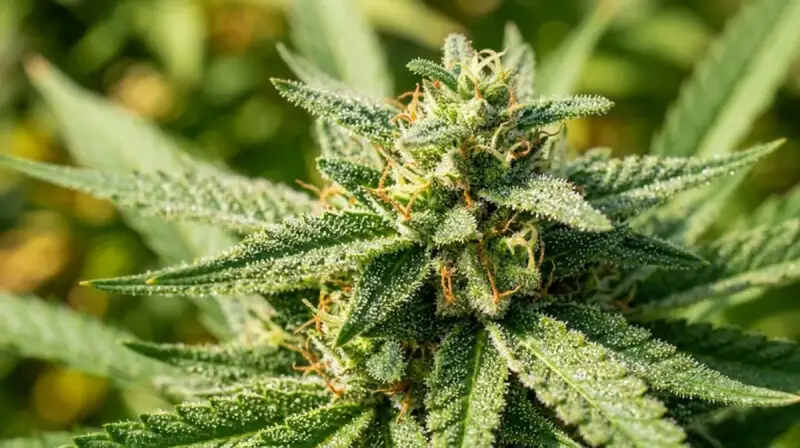
The name “Hemlock” draws on the dark connotations of the toxic plant to suggest potency and intensity, a naming convention not uncommon in the cannabis world where dramatic names are used to signal strength. The strain itself is not toxic, but it is unambiguously potent. The buds present as medium-dense nugs with a bright green base, orange pistils, and a substantial trichome coating that gives them a slightly frosted appearance without the extreme resin density of dedicated dessert hybrids.
Cannabinoid & Terpene Profile
| Compound | Typical Range | Effect Contribution |
|---|---|---|
| THC (Delta-9) | 18–22% | Balanced cerebral-physical euphoria, mood elevation |
| CBD | <1% | Mild anti-inflammatory support, slight THC modulation |
| CBG | 0.3–0.7% | Neuroprotective, focus support, anti-inflammatory |
| Caryophyllene | 0.40–0.70% | Spicy pepper note, CB2 anti-inflammatory |
| Myrcene | 0.30–0.55% | Earthy musk, sedation contribution in second phase |
| Limonene | 0.25–0.50% | Citrus-sour lift, mood elevation, Chemdog D contribution |
| Alpha-Pinene | 0.18–0.38% | Pine sharpness, bronchodilator, memory clarity (Triangle Kush heritage) |
| Terpinolene | 0.08–0.20% | Fresh herbal, floral note; mild uplifting contribution |
Effects & Experience
Hemlock is one of the rare hybrid strains that genuinely delivers a two-distinct-phase experience rather than simply blending sativa and indica qualities into an undifferentiated middle ground. The Chemdog D genetics are responsible for an uplifting, energetic first phase, while the Triangle Kush genetics provide the second act — a physical relaxation that arrives as a gentle landing rather than a sudden crash.
The onset is relatively fast for a hybrid, within 4–6 minutes of smoking. The first sensation is a cerebral clarity and lift — ideas flow more freely, focus sharpens on whatever the user directs attention toward, and mood elevates noticeably. The limonene and caryophyllene work together to produce this uplifting, motivated headspace. For creative work, music, or outdoor activity, this first phase (typically 30–60 minutes) is excellent.
The transition to the relaxation phase is the characteristic Hemlock experience that distinguishes it from pure sativa strains. Rather than maintaining the cerebral energy indefinitely, the Triangle Kush genetics gradually introduce physical warmth and muscle relaxation as the myrcene content activates. The mind softens from sharp-focus mode into a more relaxed, comfortable state. By the 90-minute mark, most users are firmly in the relaxation phase — still comfortable and engaged, but no longer driven toward active pursuits.
At lower doses (0.1–0.25g), the sativa-dominant phase is extended and the relaxation phase is gentle. At higher doses, the transition is accelerated and the physical relaxation becomes more pronounced. Hemlock rarely produces true couch-lock at normal doses, making it appropriate for late afternoon use. Total duration is 2–3 hours.
Flavor & Aroma Profile
The aroma of Hemlock is immediately recognizable to anyone familiar with the Chemdawg-OG family: sour, fuel-forward diesel dominates the initial impression, underscored by a sharp pine character from the Triangle Kush influence. A herbal, almost earthy-sweet middle note prevents the profile from being one-dimensionally harsh. The overall impression is complex, pungent, and deeply familiar to connoisseurs of classic East-West U.S. cannabis genetics.
On the smoke, the diesel character is prominent on the inhale but not overwhelming. The pine-earth notes from Triangle Kush become more prominent mid-smoke, adding depth and grounding the profile. A subtle sweetness — likely from minor terpenes and flavonoids in the Triangle Kush genetics — emerges briefly on the mid-to-late smoke before the exhale delivers a clean, spicy-diesel finish that lingers pleasantly. The smoke is smooth for a diesel-forward strain, a quality inherited from the OG Kush foundation of Triangle Kush.
Vaporizing Hemlock at 172–185°C best preserves the citrus and fresh herbal terpene components. The pine and earthy notes are most apparent at slightly higher temperatures. Concentrates from Hemlock tend to emphasize the diesel-fuel and earthy dimensions, making them a particularly good choice for users who want the classic Chemdawg-OG experience in a more concentrated format.
Medical & Therapeutic Uses
Hemlock’s balanced hybrid profile makes it useful for conditions where both mood support and physical relief are needed, without the full sedation of a pure indica:
Growing Hemlock
Hemlock inherits the vigorous, productive growing characteristics of both parent strains. Chemdog genetics are known for fast vegetative growth and tall, stretchy structures, while Triangle Kush contributes a more compact, branchy habit. The resulting hybrid tends toward medium height with a tendency to stretch during early flowering.
- Flowering: 60–70 days (8.5–10 weeks)
- Yield: 400–460 g/m² under 600W or equivalent
- Temperature: 70–80°F in veg; 65–76°F in flower
- Humidity: 55–65% veg; 40–48% flower; drop to 38–43% in final weeks
- Training: LST and topping help control height; SCROG suitable for larger setups
- Watch for stretch in weeks 1–3 of flower; maintain adequate vertical clearance
- Harvest: early to mid-October in Northern Hemisphere
- Yield: 550–700g per plant with adequate sunlight and space
- Height: 130–180cm outdoors; may need staking for large colas
- Climate: adaptable; handles mild temperature variation well
- Strong Chemdawg scent during late flower; plan accordingly
- Good resistance to common pests; some sensitivity to fungal issues
Chemdog genetics in particular can be sensitive to overfeeding. Hemlock may show nitrogen toxicity (clawed, dark green leaves) if fed too aggressively during vegetative growth. A balanced vegetative nutrient program with moderate nitrogen prevents this. During flowering, transition to a bloom formula with reduced nitrogen and elevated phosphorus from week 3 onward. Flush the final 10–14 days before harvest to ensure clean flavor in the final product.
Hemlock benefits from a 48-hour dark period immediately before harvest to spike terpene production. The Chemdog genetics contribute a significant amount of volatile terpenes that can dissipate if the plant experiences heat stress or excessive light during the final days. Harvest in the early morning when terpene levels are highest, and process or dry in a cool, dark environment to preserve the pungent diesel-pine character.
Consumption Methods
Similar Strains
- Chemdawg — Parent genetics; more sativa-dominant, stronger diesel emphasis
- Triangle Kush — Parent genetics; pure indica expression of the OG-Kush Florida lineage
- Headband — OG Kush x Sour Diesel; similar diesel-pine fuel profile, similar hybrid balance
- Sour Diesel — Related Chemdawg lineage; more energetic and sativa-dominant than Hemlock
- OG Kush — Foundational OG genetics that underpin both of Hemlock’s parents