










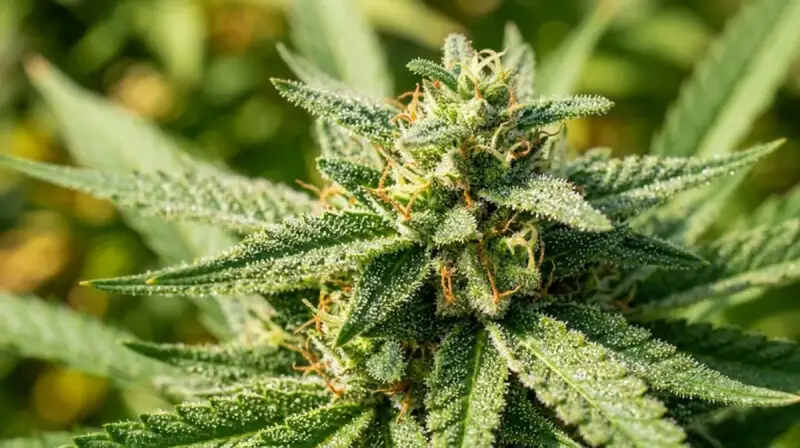
- Origins traced to 1991 Colorado State Fair / Grateful Dead concert — disputed but documented through community accounts
- Widely believed to be the parent of both OG Kush and Sour Diesel — the two most influential American strains
- Sativa-leaning hybrid (55/45) with THC 18–26% — strong cerebral effect with heavy body relaxation
- Primary terpenes: caryophyllene, myrcene, limonene — pungent diesel-chemical-earthy profile
- Multiple preserved phenotypes: #4, D, PBud/Sister, 91 Chemdog
- Medical uses: depression, PTSD, anxiety, and chronic pain
- Moderate-difficult grow; tall training required; 8–9 weeks flower; 450 g/m² indoor yield
Strain Quick-Reference
| Property | Detail |
|---|---|
| Genetics | Origins disputed; likely Thai & Nepalese landrace; parent of OG Kush & Sour Diesel |
| Type | Sativa-Leaning Hybrid (55% sativa / 45% indica) |
| THC | 18–26% |
| CBD | <1% |
| Primary Terpenes | Caryophyllene, Myrcene, Limonene |
| Flowering Time | 8–9 weeks |
| Indoor Yield | ~450 g/m² |
| Difficulty | Moderate–Difficult |
Origins: The 1991 Story & Disputed Lineage
No strain in American cannabis history carries more mythological weight than Chemdog. The most widely accepted origin story places it at the 1991 Colorado State Fair — though variations of the story involve a Grateful Dead concert in the same year. The account consistently involves a grower named “Chemdog” who sold a bag of premium cannabis from which seeds were collected and subsequently grown out. From those seeds emerged the phenotypes that would eventually produce OG Kush, Sour Diesel, and through them, much of the modern American cannabis landscape.
The original breeder — still identified primarily by the handle “Chemdog” in community records — preserved multiple phenotypes from that original batch. The characteristics that make Chemdog unique — its pungent diesel-chemical aroma, the specific cerebral-then-body sequence of its high, and its exceptional resin production — are all traits that appear consistently in its offspring, providing strong evidence for the parentage claims even in the absence of formal genetic documentation.
Genetic analysis of OG Kush and Sour Diesel published in the cannabis research community confirms shared terpene architecture with Chemdog, particularly the caryophyllene-myrcene-limonene combination that defines the “diesel” family of American strains. The exact landrace origin of Chemdog itself remains genuinely unknown — Thai and Nepalese characteristics are suggested by the growth structure and cerebral effect profile, but no definitive record exists.
The Chemdog Phenotypes
The original Chemdog breeder preserved and distributed four primary phenotypes, each expressing slightly different aspects of the base genetics. Understanding these phenotypes matters because labeling in dispensaries is inconsistent and the expression varies meaningfully between them.
| Phenotype | Also Known As | Key Characteristics | Availability |
|---|---|---|---|
| Chemdog #4 | The most distributed cut | Strongest OG Kush resemblance; heavy resin; most balanced effect | Widely available in legal markets |
| Chemdog D | The “diesel” cut | Sharpest fuel aroma; most sativa-forward expression; energizing | Clone-only; limited availability |
| Chemdog PBud | Sister | More indica-dominant expression; heavier body; shorter plant | Rare; collector genetics |
| 91 Chemdog | Original | The original 1991 cut; most complex terpene layering; benchmark | Extremely rare; limited distribution |
Terpene Profile: The Diesel Nose Explained
Chemdog’s pungent, unmistakable aroma is driven by a terpene combination that shares significant overlap with petroleum-derived compounds — which is why the “diesel” descriptor for this family of strains is not metaphorical. Caryophyllene, myrcene, and limonene interact with each other and with trace volatile compounds to produce the complex layered nose that characterizes the strain.
| Terpene | Aroma Note | Pharmacological Role |
|---|---|---|
| Caryophyllene | Spicy, diesel, dark pepper | CB2 receptor agonist; anti-inflammatory; stress modulation |
| Myrcene | Earthy, herbal, damp wood | Potentiates THC uptake; contributes to body depth and duration |
| Limonene | Citrus, sharp, fuel-bright | Mood elevation; stress relief; opens the cerebral onset phase |
The diesel quality of Chemdog’s aroma comes primarily from the specific ratio of caryophyllene to limonene, which produces a spicy-citrus-fuel combination that is more complex than either terpene in isolation. Myrcene provides the earthy bass note that grounds the aroma and amplifies the body component of the high. This three-terpene combination — caryophyllene-myrcene-limonene — became the architectural template for OG Kush and Sour Diesel, which is why all three strains are immediately recognizable to experienced consumers as family members despite their distinct individual characters.
Effects: Onset, Peak & Tail
Onset (0–15 Minutes)
Chemdog opens fast and decisively. The limonene-forward initial phase delivers a sharp mental clarity and focus shift within minutes of inhalation — a pressure behind the eyes, sensory sharpening, and a sudden heightened awareness of surroundings that many users find both energizing and slightly disorienting on first encounter. The cerebral component of Chemdog is more pronounced than in most hybrid strains at equivalent THC levels, reflecting the sativa-leaning genetic structure.
Peak (15–90 Minutes)
The peak phase develops the cerebral onset into a sustained, layered experience. Creative thinking, verbal fluency, and emotional openness are commonly reported. As myrcene levels build in the bloodstream, a warm, spreading body relaxation develops beneath the cerebral activity — not sedating at moderate doses, but deeply physical and tension-dissolving. This coexistence of strong cerebral engagement and pronounced physical comfort is the defining quality of the Chemdog high, the combination that made it so distinctive in the early 1990s and that persists as its signature across all phenotypes.
Tail (90–180 Minutes)
The cerebral edge softens into a comfortable, unhurried relaxation. Some users report mild drowsiness and significant appetite stimulation in the tail phase. Heavy doses produce more pronounced sedation. Most users find the tail phase pleasant and functional at moderate dosing, making Chemdog usable into early evening without the complete activity shutdown of heavier indica crosses.
Medical Applications
| Condition | Mechanism | Use Context |
|---|---|---|
| Depression | Strong cerebral CB1 agonism; sustained mood lift | Morning or afternoon; moderate dose |
| PTSD | Euphoric disruption of rumination cycles; body relaxation | Evening; careful dose management required |
| Anxiety | Limonene mood elevation; caryophyllene CB2 somatic effect | Low-moderate dose; high doses may worsen anxiety |
| Chronic Pain | THC analgesia; myrcene potentiation; physical relaxation | Daytime-compatible pain management |
Chemdog’s Genetic Lineage Significance
No other single strain has had a more measurable impact on American cannabis genetics than Chemdog. Its offspring OG Kush and Sour Diesel became the two most commercially dominant strains in US dispensary markets for over two decades, and their descendants include dozens of the most popular modern cultivars.
| Offspring / Descendant | Relationship to Chemdog | Impact |
|---|---|---|
| OG Kush | Believed direct offspring (Chemdog × Hindu Kush/Lemon Thai) | Dominant West Coast strain for 20+ years; parent of GSC, Gelato, Runtz |
| Sour Diesel | Believed direct offspring (Chemdog 91 × Mass Super Skunk/DNL) | Dominant East Coast strain; benchmark sativa for two decades |
| Girl Scout Cookies | Grandchild via OG Kush | GSC family spawned Gelato, Wedding Cake, Runtz, Oreoz |
| Headband | Direct cross (OG Kush × Sour Diesel) | Reunites both Chemdog offspring; named for cerebral pressure effect |
Growing Chemdog
Chemdog is considered moderate to difficult for home cultivators, primarily because of its tall sativa stretch and extraordinarily pungent aroma. Carbon filtration that works adequately for other strains is often insufficient for Chemdog — multiple filters or oversized units are recommended for indoor grows.
| Factor | Indoor | Outdoor |
|---|---|---|
| Flowering Time | 8–9 weeks | Early October |
| Yield | ~450 g/m² | 500–650 g/plant |
| Height | 90–150 cm (training required) | Up to 180–200 cm |
| Humidity (Flower) | 40–50% RH | Dry finish essential |
| Temperature | 20–26°C | Warm, dry Mediterranean |
| Difficulty | Moderate–Difficult | Moderate |
Chemdog grows with a lateral branching structure that benefits significantly from ScrOG training. Without height management, indoor plants can easily reach 150 cm or more during the sativa stretch phase at the onset of flowering, creating light distribution problems in standard tent setups. Topping early in vegetative growth and installing a ScrOG net before flower transition is the standard approach for experienced indoor cultivators.
Despite the training requirements, Chemdog rewards experienced growers with genuinely exceptional resin production. The thick trichome layer that develops in the final two weeks of flowering makes it one of the best strains for solventless extraction — live rosin and ice water hash from Chemdog genetics consistently produce high-grade extracts. The aroma also intensifies dramatically in the final two weeks, confirming that terpene expression is at its peak and harvest timing should be trichome-monitored rather than calendar-driven.
Drug Test Detection Windows
| Test Type | Detection Window | Notes |
|---|---|---|
| Urine | 3–30+ days | Varies by frequency; daily use extends window significantly |
| Blood | Up to 36 hours | Reflects acute use only |
| Saliva | 24–72 hours | Common in roadside and workplace screening |
| Hair | Up to 90 days | Detects historical use; not dose-sensitive |
Related Strains
- OG Kush — Chemdog’s most famous offspring; heavier body effect, lemon-diesel profile
- Sour Diesel — Chemdog’s other major offspring; sharper diesel, more energizing sativa
- Trainwreck — Comparable sativa energy with piney-spicy terpene alternative
- OG Shark — Shares diesel-fuel heritage via OG Kush parent genetics
Jordan Price has spent over a decade studying cannabis genetics, cultivation techniques, and terpene science. All strain guides are reviewed for accuracy against published research and grower community data.