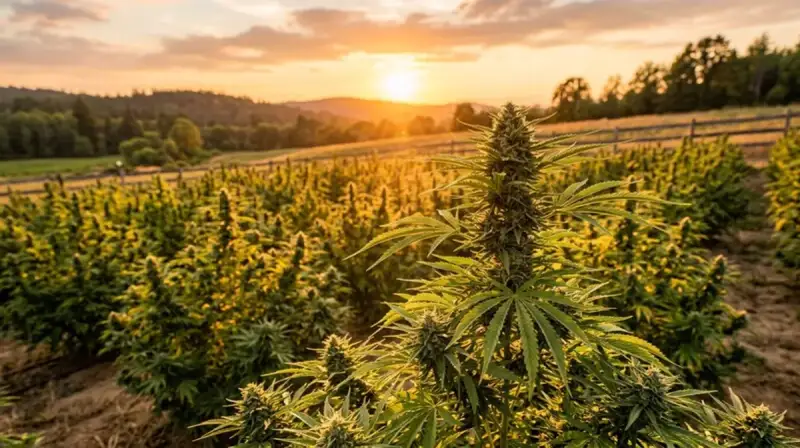
7 Key Findings — ATF (Alaskan Thunder Fuck)
- ATF (Alaskan Thunder Fuck) is a legendary Alaskan sativa strain that originated in the Matanuska Valley during the 1970s, where it was cultivated in extreme northern conditions that may have influenced its unusual terpene expression.
- The genetics of ATF are historically debated: most accounts cite a cross between a native Alaskan/Russian ruderalis-influenced landrace and North American sativa, with some historians noting possible Afghani or Northern California sativa contributions during the 1970s era.
- ATF’s defining characteristic is an intense, nearly immediate cerebral euphoria that experienced users describe as exceptionally clear and uplifting rather than disorienting — a cerebral effect quality that modern high-THC hybrids rarely replicate.
- The terpene profile is unique for a sativa: the dominant alpine freshness from high pinene content combined with myrcene earthy undertones and a distinctive menthol-like quality creates an aroma unlike most other sativa strains.
- THC content has been measured at 16–23% in modern genetics, though original 1970s material was likely in the 12–16% range — still producing the legendary intensity likely due to the unusual terpene-cannabinoid interaction profile.
- ATF is a challenging grow requiring significant vertical space (plants can reach 150–200cm indoors) and a long 10–12 week flower period, but rewards with exceptional yield and a unique terpene profile that commands premium prices at dispensaries.
- The name “Matanuska Thunder Fuck” (MTF) is the original designation from the Matanuska Valley community; “Alaskan Thunder Fuck” (ATF) became the broader commercial name as seeds spread south through the US West Coast in the 1980s–90s.
Origin, History & Legend
The Matanuska Valley sits approximately 70 kilometres northeast of Anchorage, Alaska — an improbable location for legendary cannabis cultivation. The valley is known for its extraordinarily fertile glacial silt soils and extremely long summer days (up to 20 hours of light), which create a compressed but intense growing season. Cannabis cultivated here in the 1970s developed adaptations to these extreme photoperiod conditions, producing vigorous, fast-developing sativa plants with an unusually complex terpene expression.
The origin story most commonly cited in cannabis culture attributes ATF to a small community of Alaskan cultivators who crossed a native Alaskan landrace (possibly influenced by proximity to Russian Far East genetics via the Bering Strait seed exchange pathway used by indigenous peoples) with North American sativa genetics. Some accounts from the 1970s and 1980s mention possible Northern California sativa contributions as seeds were traded along the West Coast. Whatever the precise genetic origin, the resulting phenotype — with its characteristic pine-menthol aroma and clear cerebral sativa effect — became iconic.
ATF gained significant cult status during the 1970s and 1980s in the Pacific Northwest cannabis community. It was reportedly the premium strain of choice in Alaska before the flood of California OG genetics arrived in the 1990s. As the Alaskan community began trading seeds and cuttings with California growers, ATF genetics spread, though many users note that Matanuska Valley grown material — benefiting from the specific soil composition, extreme light cycle, and cool temperatures — retains a character that indoor or southern-grown ATF cannot fully replicate.
ATF Name Variants & Genetic Lineage Theories
| Name |
Usage Context |
Period |
Notes |
| Matanuska Thunder Fuck (MTF) | Original Alaskan community name | 1970s–80s | Named after Matanuska Valley origin |
| Alaskan Thunder Fuck (ATF) | Commercial / dispensary name | 1990s–present | Broader US West Coast adoption |
| Matanuska Tundra | Alternative commercial name | 2000s | Used to avoid explicit naming in early legal markets |
| AK-47 (different strain) | Often confused in dispensaries | Distinct strain | AK-47 is a separate Dutch hybrid; not ATF |
Cannabinoid & Terpene Profile
ATF’s cannabinoid profile reflects its sativa character: THC dominant at 16–23%, CBD extremely low (below 0.3%), and a terpene profile that is unusually pinene-forward for a sativa-dominant strain. The high alpha-pinene and beta-pinene content is one of ATF’s defining characteristics and contributes directly to the clean, forest-alpine aroma and the characteristic cognitive alertness that accompanies the cerebral high. Pinene is a known acetylcholinesterase inhibitor — it partially counteracts THC-induced short-term memory impairment, which may contribute to ATF’s reputation for producing a clear-headed, functional high.
| Compound |
Typical Range |
Effect Contribution |
Aroma Note |
| THC | 16–23% | Cerebral euphoria, energy, focus, creativity | — |
| CBD | <0.3% | Minimal; not a CBD strain | — |
| Terpinolene | Moderate–High | Uplifting, mild anti-anxiety, contributes to sativa energy | Floral, herbal, fresh citrus |
| Alpha-Pinene | High (>0.6%) | Acetylcholinesterase inhibition — cognitive clarity, memory retention | Pine forest, alpine |
| Beta-Pinene | Moderate (>0.4%) | Bronchodilation, mild mental clarity | Dill, parsley, woody pine |
| Myrcene | Moderate | Earthy grounding note; slight body contribution | Earthy, herbal undertone |
| Ocimene | Low–Moderate | Uplifting, anti-anxiety | Sweet, herbal, tropical |
Effects: The ATF Experience
ATF’s effect profile is why it earned legendary status: onset is rapid (5–10 minutes), cerebral, and unmistakably sativa. Unlike many modern hybrids that combine sativa energy with anxiety-producing raciness or disorientation, ATF’s high pinene content moderates the cerebral intensity into something experienced users describe as exceptionally functional — clear, energetic, euphoric, and creative without the paranoia edge that plagues some high-THC sativas.
The euphoria peaks within 20–30 minutes and sustains for 1.5–2 hours in a plateau before gradually declining. Social energy increases significantly — ATF is a conversational, socially engaging strain. Focus and creativity are enhanced rather than scattered. Physical effects are minimal: there is a mild tingling energy in the body but no sedation, no couch-lock, and no significant appetite stimulation at moderate doses.
At high doses, ATF’s intensity becomes challenging: the cerebral acceleration can become overwhelming, and users susceptible to THC-induced anxiety should approach ATF with caution. The low CBD content means there is minimal buffer against THC anxiety at higher doses. For experienced sativa users, however, high-dose ATF delivers an experience that is difficult to replicate with any other strain.
ATF vs. Other Classic Sativas — Effect Comparison
| Strain |
Effect Character |
Anxiety Risk |
Best Use |
| ATF | Intense cerebral, clear, euphoric, energetic | Moderate at high dose | Creative work, social, daytime |
| Durban Poison | Energetic, uplifting, slightly racy | Moderate–High | Outdoor activity, morning |
| Sour Diesel | Dreamy, cerebral, slightly introspective | Moderate | Creative projects, focus |
| Jack Herer | Balanced sativa, focused, positive | Low–Moderate | Work, social, all-day |
| Acapulco Gold | Warm euphoria, energetic, happy | Low | Social, creative, daytime |
Video: ATF Strain Deep Dive
Flavour & Aroma Profile
The aroma of ATF is immediately distinctive and polarising — there is nothing quite like it in the cannabis world. The dominant note is a sharp, almost medicinal alpine pine that is more intense and fresher than the softer pine notes of Afghani-derived strains. Beneath the pine is a menthol-like coolness that some users describe as eucalyptus-adjacent, and a spice note that has been compared to black pepper mixed with dried herbs. The overall effect is like standing in a cold Alaskan forest after rain.
On the inhale, the pine is fresh and expansive — terpinolene and high pinene combine to create a sensation of opened airways and clear sinuses. The exhale transitions to a more earthy, herbal base with a slight floral sweetness from the ocimene content. The flavour profile is persistent and distinctive in a way that makes ATF unmistakable to those who have encountered it before.
The unique menthol note in ATF has been the subject of speculation among terpene researchers. The most likely explanation is an unusually high ocimene and terpinolene content combined with specific pinene ratios that interact to create a perceived cooling sensation similar to menthol, without actual menthol (neomenthol or menthol terpenes) being present in measurable quantities.
Medical Uses
ATF’s medical applications reflect its sativa character. It is not a sleep aid or pain management strain in the classic sense, but it excels in conditions where energy, mood elevation, and cognitive engagement are the therapeutic goals. Depression and mood disorders respond strongly to ATF’s reliable, sustained euphoria — it is one of the most consistently mood-elevating strains available.
ADHD is a documented medical use for high-pinene sativas: the alpha-pinene content’s acetylcholinesterase inhibition may improve focus and working memory, and clinical reports from medical cannabis programmes in legal states note that some ADHD patients find sativa-dominant high-pinene strains such as ATF more effective than stimulant medications for their specific symptom set. Fatigue, including chemotherapy-related fatigue and chronic fatigue syndrome, responds to ATF’s energising effect profile. Nausea management is supported by the antiemetic properties of cannabinoids at lower doses.
Growing ATF
ATF is a challenging but rewarding grow. The sativa genetics mean it stretches significantly during flower — plants can double or even triple in height during the transition to 12/12 light schedule, reaching 150–200cm indoors without significant training. Outdoor plants in suitable climates can reach 250cm or more. Screen of Green (SCROG) and topping are strongly recommended for indoor ATF cultivation to manage vertical space and improve light distribution across the canopy.
The flowering period of 10–12 weeks is at the longer end of the spectrum but is consistent with its sativa genetics and Alaskan origin. The long Alaskan summers essentially accelerated the vegetative growth while the short but intense flowering season produced the potency and terpene density that define ATF. Outdoor growers in northern latitudes may face early frost issues — ATF is best suited to climates with reliably warm weather through mid-October.
Yield is generous for a sativa: 400–550g/m² indoor under strong LED or HID lighting, with experienced SCROG growers reporting higher. The buds are large and fluffy relative to indica varieties — classic sativa structure with visible trichome coverage and an intense pine-dominant aroma that fills the grow room from mid-flower onward.
ATF Grow Specifications
| Parameter |
Indoor |
Outdoor |
Notes |
| Flower Time | 10–12 weeks | Mid–late October | Long flower; patience required |
| Yield Indoor | 400–550g/m² | 500–800g/plant | Good sativa yield for effort |
| Height | 120–200cm (with topping) | 180–280cm | SCROG strongly recommended indoors |
| Difficulty | Moderate–Advanced | Moderate | Height management is the primary challenge |
| Climate | 65–80°F, 45–55% RH flower | Temperate; tolerates cooler | Cold tolerance from Alaskan heritage |
| Aroma During Grow | Very strong | Very strong | Carbon filter essential indoors |
Consumption Methods
ATF’s terpene profile responds exceptionally well to vaporisation at 170–190°C, which volatilises the pinene and terpinolene dominant terpenes without burning them and delivers the characteristic alpine-fresh flavour at full intensity. At higher vaporisation temperatures (190–210°C), the earthy myrcene undertones become more prominent. Combustion is effective but sacrifices some of the delicate terpinolene notes that distinguish ATF’s aroma profile.
Concentrate users working with ATF report that live resin captures the unique pine-menthol freshness most faithfully, as the terpene-heavy fresh-frozen extraction preserves the volatile terpinolene and pinene compounds that are lost during dry-cure. Bubble hash from ATF is exceptional — the terpene intensity makes it a favourite among concentrates connoisseurs seeking sativa-effect hash options.
Similar Strains
About the Author
Jordan Price is a cannabis educator and cultivation specialist with over a decade of experience in landrace preservation, terpene science, and medical cannabis applications. All content on ZenWeedGuide is written for educational purposes.
Frequently Asked Questions
What is ATF (Alaskan Thunder Fuck) strain?
ATF (Alaskan Thunder Fuck), also known as Matanuska Thunder Fuck (MTF), is a legendary sativa-dominant cannabis strain from the Matanuska Valley of Alaska. It has been cultivated since the 1970s and is known for intense cerebral euphoria, an unusual pine-menthol-spice aroma, and a clear, energetic high that distinguishes it from most modern hybrids. THC ranges 16–23%.
What are the effects of ATF?
ATF produces intense, rapid cerebral euphoria (onset 5–10 minutes) with notable clarity and functional energy. Unlike some high-THC sativas, ATF’s high pinene content provides cognitive clarity that moderates disorientation. Effects include elevated mood, increased creativity, social energy, and focus. At high doses, anxiety is possible. Duration is approximately 2–3 hours. Not recommended for sleep or sedation.
What does ATF smell and taste like?
ATF has a distinctive alpine pine-menthol aroma with spice and herbal notes. The dominant pine freshness comes from exceptionally high pinene content; the menthol-like quality likely results from terpinolene and pinene interaction. The exhale is earthy and herbal with slight sweetness. The aroma is unique in the cannabis world — immediately recognisable to those familiar with the strain.
Is ATF the same as AK-47?
No. ATF (Alaskan Thunder Fuck / Matanuska Thunder Fuck) and AK-47 are completely different strains. AK-47 is a Dutch hybrid created by Serious Seeds in the 1990s, bred from Colombian, Mexican, Afghani, and Thai genetics. ATF is an Alaskan sativa landrace dating to the 1970s. They share no genetic lineage and have distinct effects and aroma profiles.