










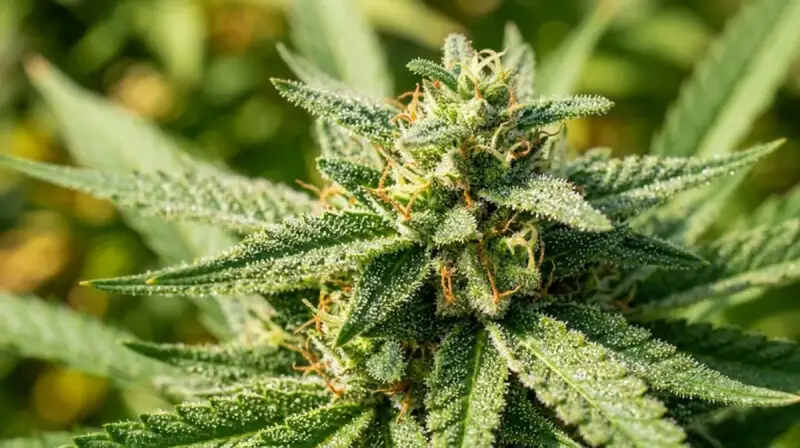
- No recreational cannabis: Texas has not legalized cannabis for adult recreational use and shows no near-term path to legalization given the Republican-controlled legislature.
- Ultra-restricted medical (CUP): The Compassionate Use Program, created in 2015 and expanded slightly in 2021, allows only low-THC oil (maximum 1% THC, minimum 10% CBD) for qualifying conditions via three licensed dispensary organizations.
- Only 3 CUP dispensaries: Compassionate Cultivation, Surterra Wellness, and Texas Original hold the only cannabis dispensary licences in Texas. Products are delivered; no retail storefronts operate.
- Possession penalties: 2 oz or less = Class B misdemeanor (180 days jail, $2,000 fine). 2–4 oz = Class A misdemeanor. Over 4 oz = felony. Over 5 lbs = trafficking with mandatory minimums.
- City cite-and-release: Austin, Dallas, Houston, and San Antonio have policies directing police to issue citations rather than arrest for small amounts, but state law still applies and prosecution remains possible.
- Hemp legal since 2019: Texas legalized hemp under HB 1325 in 2019, aligning with federal Farm Bill. Hemp-derived CBD products are widely sold statewide.
- Border proximity: Texas shares a long border with New Mexico, which has adult-use cannabis retail. Legal purchases in New Mexico cannot be legally transported into Texas.
Texas Cannabis Law Quick Reference
| Category | Rule / Penalty |
|---|---|
| Recreational cannabis | Fully illegal |
| Medical programme | Compassionate Use Program (CUP) — very restricted; low-THC oil only |
| CUP THC limit | Maximum 1% THC; minimum 10% CBD by weight |
| CUP qualifying conditions | Epilepsy, intractable seizures, PTSD, multiple sclerosis, Parkinson’s, ALS, terminal cancer, autism (as of 2021) |
| CUP dispensary licences | 3 organizations: Compassionate Cultivation, Surterra Wellness, Texas Original |
| Possession ≤2 oz | Class B misdemeanor: up to 180 days jail; $2,000 fine |
| Possession 2–4 oz | Class A misdemeanor: up to 1 year jail; $4,000 fine |
| Possession 4 oz–5 lbs | State jail felony: 180 days–2 years state jail; $10,000 fine |
| Possession 5–50 lbs | Third-degree felony: 2–10 years; $10,000 fine |
| Possession 50–2,000 lbs | Second-degree felony: 2–20 years; $10,000 fine |
| Possession >2,000 lbs | First-degree felony: 5–99 years; $50,000 fine |
| Home cultivation | Illegal; treated as manufacturing; felony charges |
| Hemp/CBD (≤0.3% THC) | Legal since 2019 (HB 1325) |
| Public consumption | Illegal; criminal charge |
| Decriminalization | No state law; cite-and-release in major cities only (enforcement policy, not law) |
The Compassionate Use Program (CUP): Texas’s Ultra-Restricted Medical Cannabis
Texas created the Compassionate Use Program through SB 339 in 2015, one of the most restrictive medical cannabis frameworks in the country. The programme was conceived specifically for patients with intractable epilepsy who were not responding to conventional treatments. Legislators who supported SB 339 were primarily motivated by families with children suffering severe seizure disorders, similar to the political dynamic that drove limited CBD laws in other conservative states.
The original 2015 CUP allowed only CBD oil with 0.5% THC or less and 10% CBD or more, prescribed only for intractable epilepsy, dispensed by only 3 licensed Dispensing Organizations. In 2019, HB 3703 expanded qualifying conditions to include multiple sclerosis, Parkinson’s disease, ALS, terminal cancer, PTSD, and autism spectrum disorder. The THC limit was also raised to 1% (doubled from 0.5%).
Despite the 2021 expansion, the CUP remains extraordinarily limited compared to medical programmes in states like Florida, New York, or Pennsylvania. The 1% THC maximum means that CUP products provide negligible psychoactive effects and limited effectiveness for many qualifying conditions compared to full-spectrum medical cannabis products available in other states. Patients with PTSD, for example, who have benefited from THC-inclusive medical cannabis in other states find the Texas CUP products substantially less effective.
| CUP Element | Details |
|---|---|
| Licensed Dispensing Organizations | Compassionate Cultivation (Austin area), Surterra Wellness (multiple locations), Texas Original (Austin, Houston, Dallas, San Antonio delivery) |
| Product forms | Tinctures, capsules, oral spray; no smokable flower, no vaporizer products (limited), no edibles in traditional form |
| Patient registry | CURT (Compassionate Use Registry of Texas) — physicians must register and enter prescriptions |
| Physician requirements | Must be licensed in Texas, registered in CURT, and have prescribed conventional treatments first |
| Patient residency | Must be Texas resident |
| Purchase/possession limit | No explicit statutory limit beyond what is dispensed per prescription |
| Delivery model | Home delivery; no traditional walk-in dispensary storefronts |
| Estimated active patients | Approximately 40,000–50,000 registered as of 2024 |
Advocates have pushed for multiple CUP expansions in subsequent legislative sessions, including proposals to allow smokable flower (which remains strictly prohibited), raise the THC limit, add qualifying conditions, and issue additional dispensary licences. As of 2026, none of these expansions have passed. The combination of a Republican-controlled legislature, opposition from law enforcement lobbies, and philosophical resistance to any pathway that resembles fuller legalization has kept the CUP at its 2021 scope.
Possession Penalties: Full Breakdown
| Amount | Charge | Jail / Prison | Max Fine |
|---|---|---|---|
| 2 oz or less | Class B misdemeanor | Up to 180 days | $2,000 |
| 2–4 oz | Class A misdemeanor | Up to 1 year | $4,000 |
| 4 oz–5 lbs | State jail felony | 180 days–2 years (state jail) | $10,000 |
| 5–50 lbs | Third-degree felony | 2–10 years TDCJ | $10,000 |
| 50–2,000 lbs | Second-degree felony | 2–20 years TDCJ | $10,000 |
| 2,000+ lbs | First-degree felony | 5–99 years or life TDCJ | $50,000 |
| Paraphernalia (possession) | Class C misdemeanor | No jail; fine only | $500 |
| Delivery of paraphernalia | Class A misdemeanor | Up to 1 year | $4,000 |
| Distribution/delivery (1/4 oz–5 lbs) | Second-degree felony (if not for remuneration) | 2–20 years | $10,000 |
| Distribution/delivery (for remuneration) | Enhanced charge | Up to first-degree range | $10,000–$50,000 |
Texas’s 2 oz misdemeanor threshold is somewhat more generous than Tennessee’s 0.5 oz threshold, but still criminal. Many Texas residents are surprised to learn that a quantity equal to roughly 56 joints is “only” a misdemeanor while the state simultaneously has a medical programme — the incongruity reflects the political patchwork of cannabis policy reform rather than coherent policy design.
Conviction for any cannabis possession offense in Texas creates a criminal record that must be disclosed on most employment applications, can disqualify applicants from public housing, and can affect professional licensing in regulated fields including law, medicine, and education. Texas has a deferred adjudication process that may allow first-time offenders to avoid a formal conviction if they complete probation, but this requires legal counsel and proactive action.
Major Cities: Cite-and-Release Policies
Several of Texas’s largest cities have adopted cite-and-release policies that direct law enforcement to issue citations rather than make arrests for small cannabis possession. These policies reflect both resource allocation priorities — avoiding costly bookings and jail costs for minor offenses — and the political preferences of urban electorates that tend to favour less aggressive cannabis enforcement.
| City | Policy | Key Details |
|---|---|---|
| Austin | Official cite-and-release; City Council action | Police directed to cite rather than arrest for Class B misdemeanor (2 oz or less); DA office has also deprioritized prosecution |
| Dallas | Cite-and-release policy | Dallas PD directive since 2017; applies to 4 oz or less; prosecution remains possible |
| Houston | Cite-and-release; DA Harris County policy | Harris County District Attorney Kim Ogg implemented “Misdemeanor Marijuana Diversion Program”; Class B possession: no prosecution, $150 class fee + online course |
| San Antonio | Informal de-emphasis | No formal ordinance but reduced arrest rates; Bexar County DA has similar diversion options |
| El Paso | Proximity to New Mexico (legal) | No formal policy; state law enforced; NM border creates enforcement complexity |
| Rural Texas | Full criminal enforcement | State law fully enforced; arrest rates significantly higher per capita |
The Houston/Harris County approach deserves particular attention. District Attorney Kim Ogg’s Misdemeanor Marijuana Diversion Program diverts Class B possession cases from prosecution entirely if the defendant pays a $150 fee and completes an online drug education class. This effectively creates a fine-based system for small possession in Houston without legislative action. Over 10,000 cases were diverted in the programme’s first two years.
However, these city and county policies have important limits. They apply only to the specific jurisdiction’s police and prosecutors. A Houston resident stopped by DPS (Texas Department of Public Safety) state troopers on a state highway still faces full criminal exposure. The policies also do not expunge records or prevent background check disclosures for arrests that occur even if the case is later diverted. They provide practical risk reduction but not legal protection.
Hemp and CBD in Texas
Texas legalized hemp in 2019 through HB 1325, aligning state law with the federal 2018 Farm Bill. This created a legal hemp industry in Texas and made hemp-derived CBD products widely available in retail stores, pharmacies, gas stations, and specialty shops across the state.
| Product | Legal Status | Notes |
|---|---|---|
| Hemp-derived CBD oil | Legal (≤0.3% THC) | Widely available; no prescription needed; sold at most health retailers |
| Hemp flower | Legal (≤0.3% THC) | Visually identical to cannabis; has created field testing issues for law enforcement |
| Delta-8 THC | Gray area; widely sold | Texas DPS has stated delta-8 is illegal as a Schedule I analogue, but enforcement is inconsistent; retail sales continue |
| Delta-9 THC (cannabis-derived) | Fully illegal | Criminal penalties apply regardless of form |
| THCA flower | Gray area | Sold as “hemp” but converts to THC when heated; enforcement action sporadic |
Hemp legalization created a notable unintended consequence for Texas law enforcement. Hemp flower and cannabis flower are visually identical and smell identical. Standard field tests cannot distinguish between legal hemp (0.3% THC) and illegal cannabis. This has led to dropped charges in multiple high-profile Texas cases where defendants demonstrated their product was hemp, and has forced many district attorneys to decline prosecution of small-amount cannabis cases where lab testing is not cost-effective.
The Texas DPS has issued guidance asserting that delta-8 THC is a controlled substance under Texas’s Controlled Substances Act because it is an isomer of delta-9 THC. Several delta-8 retailers have contested this position in court. The legal uncertainty has not stopped thousands of Texas retailers from selling delta-8 products openly.
DUI and Cannabis in Texas
Texas law prohibits driving while impaired by any substance, including cannabis, under Texas Penal Code §49.04 (Driving While Intoxicated). Texas does not have a specific per se THC blood limit — instead, DWI requires proof that the person lacks normal use of mental or physical faculties due to the introduction of cannabis into the body.
This impairment-based standard is theoretically more defendant-friendly than a per se limit because it requires actual impairment evidence, not just the presence of THC. In practice, Texas courts accept officer testimony about observed impairment (field sobriety tests, erratic driving, odour, admission of use) combined with blood or urine test evidence of cannabis presence.
| Offense | Classification | Penalty |
|---|---|---|
| DWI first offense (cannabis) | Class B misdemeanor | 72 hours–180 days jail; $2,000 fine; $1,000–2,000/yr surcharge (3 yrs) |
| DWI with BAC/impairment “open container” | Class B misdemeanor (6-day minimum) | 6–180 days; same fines |
| DWI second offense | Class A misdemeanor | 30 days–1 year; $4,000 fine; $1,500–2,000/yr surcharge |
| DWI third offense | Third-degree felony | 2–10 years TDCJ; $10,000 fine |
| DWI with child passenger | State jail felony | 180 days–2 years; $10,000 fine |
Employment and Housing Protections
Texas has no state law protecting employees from adverse employment action based on cannabis use, even legal CUP medical programme participation. Employers in Texas have broad discretion to maintain drug-free workplace policies, test for cannabis, and terminate or refuse to hire employees who test positive.
Even CUP patients — the small minority of Texas residents who have a legal physician’s prescription under the Compassionate Use Program — have no employment protection against termination for cannabis use. The CUP does not create an employment accommodation right. A Texas employer can terminate a CUP patient for testing positive for cannabis metabolites.
Housing protections are similarly absent. Texas landlords may prohibit cannabis use on their properties. Federal housing authorities in Texas follow federal zero-tolerance policy. Texas is a large employer of federal contractors through its military installations (Fort Hood/Fort Cavazos, Joint Base San Antonio, Dyess AFB, Laughlin AFB, and others) and energy sector federal contractors — all subject to federal drug-free workplace rules.
Federal Conflict and the Texas-New Mexico Border
Texas shares approximately 1,200 miles of border with New Mexico, which has operated adult-use recreational cannabis retail since June 2021. This geographic proximity has created significant illegal cannabis flows. Texas residents, particularly in El Paso, Midland, Odessa, Lubbock, and Amarillo, are within driving distance of New Mexico dispensaries.
Cannabis purchased legally in New Mexico becomes contraband the moment it crosses into Texas, making interstate transport a federal crime. DEA and CBP operations in the El Paso area have intercepted individuals transporting cannabis purchased in New Mexico back into Texas. Texas DPS troopers on I-10, I-25, and US-54 are aware of the border traffic pattern and conduct stops accordingly.
El Paso County prosecutors have historically shown some restraint in small personal-use possession cases but have also pursued larger trafficking charges against individuals clearly transporting commercial quantities from New Mexico. The risk-to-consumer is real and significant in the Texas-New Mexico border region.
The Texas Reform Political Landscape
Texas has a citizen initiative process for constitutional amendments but not for statutory changes via referendum, which limits the ability of cannabis advocates to bypass the legislature. Reform must pass through the Republican-controlled Texas Legislature, which meets in regular session only every two years (odd years), creating an inherently slow reform cycle.
Multiple Texas Republican lawmakers have introduced medical cannabis expansion bills over the years. Some, including former Rep. Stephanie Klick and Sen. Donna Campbell, have supported CUP expansion while stopping short of full medical programs. The Texas Tribune polling consistently shows majority support among Texas voters for medical cannabis (approximately 65–70%) and growing plurality support for recreational legalization (~50%), but this has not translated to meaningful legislative movement at leadership level.
The Texas Republican Party platform explicitly opposes cannabis legalization, creating a political cost for Republican legislators who support reform in primary elections. Given that most Texas House and Senate districts are safe Republican seats where the primary is the de facto election, this platform position functions as a significant deterrent to pro-reform Republican lawmakers.
Watch: US Cannabis Law Overview
Related State & Legal Guides
- New Mexico Cannabis Laws →
- Oklahoma Cannabis Laws →
- Louisiana Cannabis Laws →
- Tennessee Cannabis Laws →
- Florida Cannabis Laws →
- Arizona Cannabis Laws →
View All 50 US State Cannabis Laws → | Full Legalization by State Guide →
See our guide to Best Dispensaries in Austin, TX
See our guide to Best Dispensaries in Dallas, TX