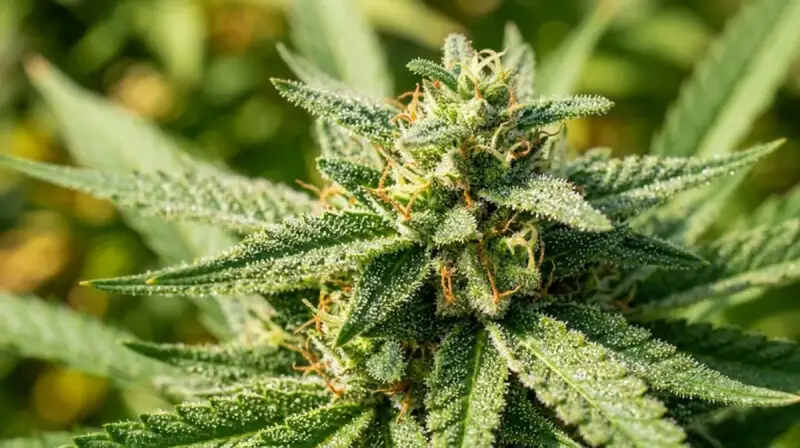
One of the most restrictive programs in the US — medical CBD extracts only, no flower, no recreational. Here’s what you need to know.
Key Findings — Iowa Cannabis Laws
Recreational cannabis: Illegal — no adult-use program exists
Medical program: Extremely limited — CBD extracts only (max 3% THC)
No smokable flower: Only oils, tinctures, capsules, topicals, and vaporizers
Patient purchase limit: 4.5 oz per 90-day period
Possession (non-patient): Serious misdemeanor — up to $1,875 / 1 year
Home cultivation: Illegal for all, including medical patients
CBD / hemp: Legal — 0.3% THC max per 2018 Farm Bill
Current Legal Status in Iowa
Iowa is one of the most conservative states when it comes to cannabis policy. What Iowa calls its “medical program” is more accurately described as a limited medical cannabidiol (CBD) program. The Iowa Medical Cannabidiol Act (HF 524, 2017) and its predecessor (2014) do not permit whole-plant cannabis, smokable flower, or products with THC above 3%.
This means patients cannot walk into a dispensary and buy cannabis buds. Only laboratory-produced extracts — oils, tinctures, capsules, suppositories, vaporizer cartridges, and topicals — are allowed. The 3% THC cap is significantly lower than most medical states, which typically allow full THC potency for qualifying patients.
Recreational cannabis has never been seriously considered by the Iowa legislature, which is controlled by Republicans. Iowa does not allow citizen ballot initiatives for constitutional amendments, so any legalization would require legislative action.
Possession Penalties in Iowa
Iowa has strict criminal penalties for cannabis possession. There is no decriminalization, and even small amounts carry potential jail time. The state uses a tiered system based on prior offenses.
Amount / Offense
Charge
Max Penalty
Any amount (first offense)
Serious Misdemeanor
$1,875 / 6 months
Any amount (second offense)
Serious Misdemeanor (enhanced)
$1,875 / 1 year
Any amount (third+ offense)
Aggravated Misdemeanor
$6,250 / 2 years
50 kg or more
Class C Felony
$10,000 / 10 years
100 kg or more
Class B Felony
$50,000 / 25 years
Valid medical card (within limits)
Legal
No penalty
Iowa has mandatory driver’s license revocation for drug convictions, including cannabis. A first-offense conviction results in a 180-day revocation. This can severely impact employment in a state where public transit is limited outside of Des Moines.
Iowa Medical Cannabidiol Program
Iowa’s medical program is administered by the Iowa Department of Public Safety (DPS), which licenses dispensaries and manufacturers, and the Iowa Department of Health and Human Services, which manages patient registration. The Iowa Board of Pharmacy provides scientific oversight.
Qualifying Conditions
Qualifying Condition
Notes
Cancer
Terminal or undergoing treatment
Epilepsy / seizure disorders
Including intractable epilepsy (original 2014 Act)
Multiple sclerosis (MS)
Including spasticity and pain
ALS
Amyotrophic lateral sclerosis
AIDS
Including HIV-related wasting
Crohn’s disease
Inflammatory bowel condition
Parkinson’s disease
Certified by neurologist
PTSD
Added in 2020 expansion
Neuropathy
Chronic neuropathic pain
Terminal illness
With 12-month or less prognosis
Registered patients may purchase up to 4.5 oz (approximately 127 grams) of cannabidiol-rich products every 90 days. Products must be in extract form — oils, tinctures, capsules, topicals, or vaporizer-ready formulations. Smokable cannabis flower is explicitly prohibited under Iowa law.
There are five licensed medical cannabidiol dispensaries in Iowa, operated by MedPharm Iowa. Locations are in Des Moines, Iowa City, Waterloo, Council Bluffs, and Sioux City.
Iowa vs. Neighboring States: Comparative Overview
State
Program Type
THC Cap
Flower Allowed
Iowa
Medical CBD Only
3%
No
Illinois
Recreational
None (full potency)
Yes
Minnesota
Recreational (2023)
None
Yes
Missouri
Recreational (2022)
None
Yes
Wisconsin
No program
N/A
No
Nebraska
Medical (2024)
Full potency
TBD
Iowa is notable for being surrounded by states with significantly more permissive cannabis laws, including two recreational states (Illinois and Minnesota). This creates a pronounced border-state dynamic where Iowans may legally purchase cannabis in neighboring states but face criminal charges if they bring it back.
Future Outlook in Iowa
Iowa’s conservative legislature has repeatedly blocked efforts to expand the medical program or introduce recreational legalization. Bills to allow smokable flower for medical patients have failed multiple times in the General Assembly. Governor Kim Reynolds has signaled opposition to broader cannabis access.
The proximity of recreational states like Illinois and Minnesota has increased public pressure, with polling showing majority support for at least medical expansion. However, no legislative pathway is clear in the near term.
MW
Marcus Webb
Cannabis Law Researcher — ZenWeedGuide Editorial Team
Reviewed May 2026 — Sources: Iowa Dept. of Public Safety, Iowa Code Chapter 124E, HF 524 (2017)
One of the most notable aspects of Iowa’s medical program is its explicit prohibition on smokable cannabis flower. Unlike the vast majority of medical states — even conservative ones — Iowa does not permit patients to purchase or possess cannabis in its raw plant form. This restriction applies even to the use of dry herb vaporizers that do not involve combustion.
The rationale presented by legislators was that smoking cannabis posed respiratory risks and that a medical program should focus on pharmaceutical-grade preparations rather than traditional consumption methods. Critics argue this paternalistic approach significantly restricts patient choice and increases costs, since extracted products are more expensive per dose than equivalent flower.
Bills to add smokable flower to Iowa’s medical program have been introduced in the General Assembly but have not advanced. The 2024 legislative session saw similar proposals fail in committee. Iowa patients who prefer flower must travel to neighboring Illinois or Minnesota, where recreational cannabis is legally available to adults 21+.
Drug Testing in Iowa
Iowa has some of the most employer-friendly drug testing laws in the Midwest. Employers are permitted to test all employees and applicants and to take adverse action based on positive cannabis tests. Iowa’s medical cannabis program provides no employment protections for registered patients — a medical card does not shield a patient from termination or hiring rejection.
Iowa also has a drug and alcohol testing policy that applies to state employees, which serves as a model that many private employers follow. First responders, healthcare workers, and transportation employees face particularly strict requirements.
The mandatory driver’s license revocation for drug convictions — which applies to cannabis — can have severe practical consequences in a state where car travel is essential for most residents. See the drug test guide for details on detection windows by test type.
Patient Registration Process in Iowa
To register as a medical cannabidiol patient in Iowa, you must first obtain a written certification from a physician licensed in Iowa who is registered with the Iowa Department of Health and Human Services. The physician must determine that you have a qualifying condition and that standard treatments have been inadequate.
After receiving the certification, you apply for a medical cannabidiol card through the Iowa DHS online portal. You will need the physician certification, proof of Iowa residency, and a government-issued ID. There is a registration fee for adults and a reduced fee for patients under 18 (who must also have a caregiver registered).
Registration is valid for one year. Patients must purchase exclusively from one of the five MedPharm Iowa dispensary locations. The 4.5 oz per 90-day purchase limit applies across all dispensary visits combined, tracked in the state’s point-of-sale monitoring system.
Iowa Medical CBD vs. Recreational States: Key Differences
Iowa stands out in stark contrast to its neighbors Illinois and Minnesota, both of which have fully legal recreational cannabis. An Iowan driving 20 minutes across the state line to Chicago can legally purchase cannabis flower at any licensed dispensary — but bringing any of it back to Iowa constitutes a criminal offense under Iowa and federal law.
The difference in program scope is equally significant. Illinois allows registered medical patients to cultivate up to 5 plants at home and purchase up to 2.5 oz at a time. Minnesota adults 21+ can possess up to 2 oz in public. Iowa patients are limited to 4.5 oz of extract products — no flower, no home grow — across a 90-day period.
This border-state dynamic has fueled growing public support for expanding Iowa’s program. Polling consistently shows majority support among Iowans for at minimum allowing smokable flower for medical patients, though no bill to that effect has passed the General Assembly.
Iowa Medical CBD: Frequently Asked Questions
Can you buy CBD flower in Iowa? No. Iowa’s Medical Cannabidiol Program does not permit smokable or vapeable cannabis flower. Only extracted products (oils, capsules, tinctures, topicals, and vaporizer-ready concentrates) are allowed.
Does Iowa recognize out-of-state medical cards? No. Iowa does not have reciprocity for out-of-state patients. Only Iowa-registered patients can purchase from Iowa’s five licensed dispensary locations.
How many dispensaries are in Iowa? Iowa has five licensed medical cannabidiol dispensaries, all operated by MedPharm Iowa. Locations are in Des Moines, Iowa City, Waterloo, Council Bluffs, and Sioux City.
Can minors use Iowa’s medical CBD program? Yes. Minors with qualifying conditions can participate with a registered caregiver (parent or guardian) who manages purchases and administration. The caregiver must also register with the Iowa DHS system.
Iowa Hemp and Industrial CBD
Hemp and hemp-derived CBD are legal in Iowa under the state’s industrial hemp program and the 2018 Farm Bill. The Iowa Department of Agriculture and Land Stewardship administers hemp cultivation licensing. CBD products at or below 0.3% THC are available statewide at pharmacies, health food stores, and online.
Iowa’s hemp program is separate from the Medical Cannabidiol Program and does not require a physician certification. This means that Iowa residents who do not qualify for the medical program — or who have conditions not on the qualifying list — may find hemp-derived CBD products a legal alternative for general wellness use.
Delta-8 THC products from hemp are not explicitly banned in Iowa, but the legal landscape is unsettled. Iowa regulators have expressed concern about high-potency hemp-derived intoxicants, and consumers should use caution. Products available in retail stores may or may not be compliant with future Iowa regulations on hemp-derived cannabinoids beyond CBD.