









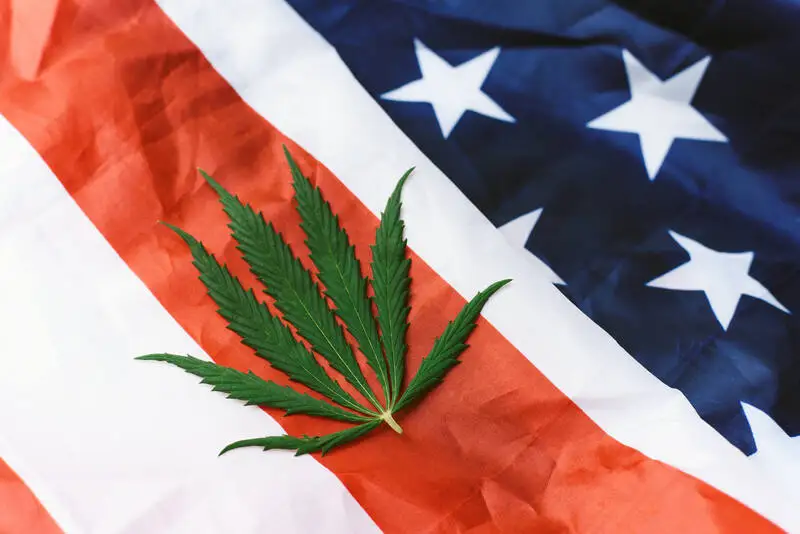
November 3, 2020: The Night Cannabis Won in Red and Blue America
Published November 3, 2020 — By Ann Karim, Senior Cannabis Editor
- New Jersey, Arizona, Montana, and South Dakota all passed adult-use cannabis measures on November 3, 2020
- Oregon passed Measure 110, decriminalizing personal possession of all drugs including heroin
- New Jersey passed by 67-33% — the widest margin for cannabis legalization in US history to that point
- South Dakota’s Amendment A was later struck down by the state Supreme Court on procedural grounds in 2021
- The MORE Act passed the US House in December 2020 — the first federal cannabis descheduling bill to pass a chamber
- Over 40% of Americans lived in adult-use states after the 2020 election results
New Jersey: The Blowout That Sent Shockwaves to Albany
New Jersey’s cannabis legalization vote on November 3, 2020 was not close. Ballot Question 1 passed by 67% to 33% — a margin that stunned even legalization advocates who had expected a closer race. New Jersey had a complex political history with cannabis: Governor Phil Murphy had campaigned on legalization in 2017, but the state legislature had repeatedly failed to pass a bill, leading to the ballot measure. When voters spoke with such overwhelming clarity, the political conversation in neighboring states shifted immediately.
New York, which had been debating legalization for years while watching New Jersey, Massachusetts, and other neighbors move forward, passed the Marijuana Regulation and Taxation Act in March 2021 — four months after the NJ vote. New York politicians explicitly cited the revenue risk of NJ’s legal market attracting New York consumers. The New Jersey result was a direct catalyst for the Northeast’s rapid turn toward legal cannabis in 2021.
For cannabis businesses and entrepreneurs, NJ’s 9 million population represented one of the largest new markets in the country. The proximity to New York City — home to millions of cannabis consumers in a state that would legalize months later — meant that NJ dispensaries were positioned to serve a mega-regional market. The economic stakes were enormous, which was part of what drove the bipartisan coalition that produced the 67% yes vote.
“Cannabis won in red states and blue states tonight. The war on cannabis is over — the question is just how fast each state moves to end it.” — cannabis policy analyst, November 4, 2020
Arizona and Montana: Legalization Goes Bipartisan
Arizona’s Proposition 207 passed 60-40% in a state that had narrowly rejected legalization in 2016. The 2020 measure included social equity provisions including expungement of prior cannabis convictions and a social equity program for licensing. Arizona had a strong existing medical cannabis program that gave consumers and dispensary operators a foundation to build on, and sales launched rapidly after the vote.
Montana’s Initiative 190 passed 57-43% in a deeply conservative state that had voted for Trump by 16 points on the same ballot. The Montana result was the clearest evidence that cannabis legalization had achieved genuine bipartisan support — that it was not a Democratic or liberal position but a broadly popular policy that reflected American public opinion regardless of partisan alignment. Cannabis law reform had officially outrun the partisan divide that critics claimed it could never escape.
South Dakota’s Amendment A also passed in November 2020, making it the first state in US history to legalize both medical and recreational cannabis simultaneously via ballot measure. However, Governor Kristi Noem challenged the amendment, and the South Dakota Supreme Court struck it down in 2021 on procedural grounds. The medical measure survived. South Dakota eventually legalized recreational cannabis through the legislature in 2023, but the 2020 vote result — that even South Dakota had voted for legalization — remained a data point in every subsequent federal reform discussion.

Oregon’s Measure 110: The Drug Decriminalization Landmark
While four states legalized adult-use cannabis, Oregon took a step that went further than any US state had gone in drug policy reform. Measure 110 decriminalized personal possession of all drugs — including heroin, methamphetamine, cocaine, and all other controlled substances — replacing criminal penalties with civil citations and a $100 fine (which could be waived by completing a health assessment). It was the most radical drug policy reform in American history and drew as much media attention as any of the cannabis measures.
Oregon, which had already legalized cannabis in 2014, was building on its record as the most progressive drug policy state in the country. Measure 110 explicitly borrowed from the Portuguese decriminalization model implemented in 2001, which had dramatically reduced drug-related HIV infections and overdose deaths without increasing overall drug use rates. The connection between drug decriminalization and public health framing gave advocates a credible evidence base to present to voters.
For cannabis specifically, Measure 110 reinforced Oregon’s position as the most permissive cannabis state in the country. The measure also established a new funding mechanism directing cannabis tax revenue toward addiction treatment and recovery services — a direct connection between cannabis legalization revenue and broader drug harm reduction work. Our drug test guide and effects information reflect the evolving understanding of cannabis within this broader harm-reduction policy context.
What the 2020 Results Mean for Federal Reform
After election night 2020, over 40% of Americans lived in states with legal adult-use cannabis. The political math for federal cannabis reform had shifted dramatically. In December 2020, the US House of Representatives passed the MORE Act — a federal cannabis descheduling bill — for the first time in American history. It stalled in the Republican-controlled Senate, but the precedent was set.
The bipartisan nature of the 2020 results was the key political development. Montana voting yes on the same ballot as a 16-point Trump landslide made it impossible to frame cannabis legalization as a liberal or Democratic policy. Conservative voters in conservative states supported it. This reality forced a reckoning in Republican politics about whether opposition to cannabis legalization was sustainable as a political position at the federal level.
For consumers in all US states, the 2020 results accelerated the timeline toward a national legal market. More legal states meant more political pressure on Congress, more banking system normalization arguments, more data on the safety and economic benefits of legal markets, and more industry actors building infrastructure that would eventually need federal legal clarity to reach its full scale. The 2020 election was not the end of US cannabis prohibition — but it was the night the end became clearly inevitable.