










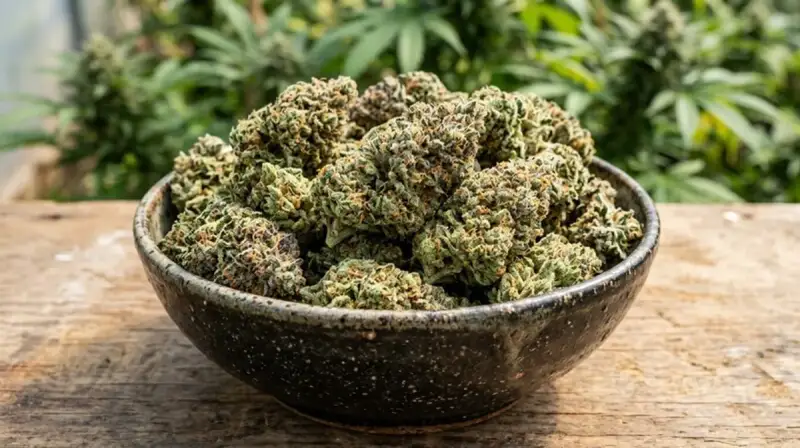
New Cannabis Strains: The Latest Genetics, Trends & What Consumers Need to Know
By the ZenWeedGuide Editorial Team | Updated November 2024 | Cannabis News |
- Hundreds of new cannabis strains reach licensed US dispensaries every year, driven by competitive breeding programs and consumer demand for novelty.
- Modern breeding focuses increasingly on terpene complexity, CBD/THC ratios, and specific effects rather than raw THC percentage alone.
- Exotic and "designer" cultivars can retail for $60–$100 per eighth at premium dispensaries, representing a distinct luxury segment.
- Genetic testing and cannabis seed banks have made professional-level breeding accessible to small-scale cultivators nationwide.
- New strains must comply with state-specific testing and labeling requirements before they can legally reach consumers — regulations vary significantly by state.
- The entourage effect means that terpene profiles in new strains are just as important as cannabinoid content for predicting consumer experience.
Background: The Science and History Behind New Strain Development
Cannabis genetics have been shaped by thousands of years of human cultivation, but the modern era of intentional strain breeding accelerated dramatically in the late 20th century. During the prohibition era, underground breeders in the Netherlands, Northern California, and the Pacific Northwest began systematically crossing landrace strains — original, geographically distinct cannabis varieties from places like Afghanistan, Colombia, Thailand, and Jamaica — to produce hybrids with new and desirable characteristics.
The result was a foundational library of iconic cultivars: OG Kush, Sour Diesel, Blue Dream, and White Widow, among dozens of others, that still anchor the genetics of most contemporary strains. These parents have been crossed, backcrossed, and stabilized countless times to produce the explosion of variety consumers see on dispensary menus today.
The legalization wave that began with Colorado and Washington in 2012 fundamentally changed the breeding landscape. Licensed commercial operators, backed by investment capital and access to professional laboratory testing, began developing proprietary genetics with unprecedented rigor. Seed banks went legitimate. Breeders like Cookies Fam, Jungle Boys, and Archive Seed Bank built cult followings. Cannabinoid science matured, giving breeders data-driven targets for chemical profiles rather than relying solely on subjective evaluation.
Today, new strain development sits at the intersection of horticulture, chemistry, consumer marketing, and intellectual property law. Understanding what drives new strain releases — and what they actually mean for your experience — requires looking at all of these dimensions together.
Key Developments: A Timeline of Strain Innovation
The following table traces the major milestones in cannabis strain development from the modern era to present day, highlighting how breeding objectives and market forces have evolved in tandem.
| Year / Period | Development | Significance |
|---|---|---|
| 1970s–1980s | Landrace crosses in Netherlands & California; Skunk #1, Northern Lights emerge | Establishes hybrid breeding as standard; foundational genetics still used today |
| 1990s | OG Kush, White Widow, and Sour Diesel debut; indoor growing proliferates | Premium indica-dominant hybrids redefine consumer expectations for potency |
| 2012–2014 | Colorado & Washington legalize adult use; licensed commercial breeding begins | Lab testing enables verifiable THC/CBD data, accelerating potency arms race |
| 2015–2017 | Cookies genetics (Girl Scout Cookies, Gelato) explode in California market | Dessert-flavored, high-terpene strains become dominant commercial category |
| 2018 | 2018 Farm Bill federally legalizes hemp; CBD-rich cultivar development surges | Opens legal pathway for CBD-forward genetics; cross-pollination with hemp breeding |
| 2019–2020 | "Exotic" and "Runtz" genetics dominate; solventless hash rosin market expands | Terpene and flavor complexity surpasses THC % as premium differentiator for some consumers |
| 2021–2022 | Certified cannabis genomics companies (Phylos, Medicinal Genomics) offer DNA fingerprinting | Genetic authentication reduces fraud; breeders can protect intellectual property |
| 2023–2024 | Minor cannabinoid strains (high-CBG, THCV, CBN) reach mainstream dispensaries | Consumers gain access to targeted cannabinoid profiles beyond THC/CBD binary |

Impact on Consumers: What New Strains Mean for Your Experience
For the everyday cannabis consumer, the proliferation of new strains is simultaneously exciting and overwhelming. Walk into any well-stocked dispensary in California, Colorado, or Michigan and you may find 80, 100, or even 150 different products on the menu — many of them strains that didn't exist five years ago. Making sense of this landscape requires understanding a few key principles.
Terpenes drive the experience more than you think. The terpene profile of a strain — the aromatic compounds like myrcene, limonene, caryophyllene, and linalool — has a profound effect on the character of the high, the flavor, and even the therapeutic potential. Many of the most celebrated new cultivars are prized specifically for unusual or complex terpene combinations. When evaluating a new strain, ask your budtender for the terpene breakdown, not just the THC number.
Higher THC does not automatically mean a better product. As noted by researchers studying the entourage effect, the interaction between cannabinoids and terpenes produces outcomes that cannot be predicted from cannabinoid content alone. A 35% THC flower grown without care for terpene preservation may deliver a harsher, less interesting experience than a 22% THC craft-grown equivalent.
Effects still map loosely onto indica/sativa heritage — but imperfectly. While the traditional indica/sativa binary is a simplification, it remains a useful starting point. Most new strains are hybrids, and understanding their lineage can help predict their character. Budtenders and strain guides can help you navigate parent genetics when assessing a new cultivar.
Medical consumers face additional considerations. Patients using cannabis for specific medical conditions — chronic pain, anxiety, sleep disorders, nausea — should pay particular attention to CBD/THC ratios and minor cannabinoid content in new strains. High-THCV strains, for example, are increasingly studied for appetite suppression and blood sugar regulation, while CBG-dominant strains show promise for anti-inflammatory applications. Always consult a qualified healthcare provider before using cannabis for medical purposes.
Drug testing remains a concern regardless of strain. No new or specialty strain — regardless of marketing claims — is "undetectable" on standard drug tests. All THC-containing cannabis metabolizes into THC-COOH, the compound detected in standard urine screens. If you are subject to workplace or legal drug testing, review our comprehensive drug testing guide before consuming any cannabis product, including new or novel cultivars.
Industry Perspective: Market Forces Driving Strain Innovation
The cannabis industry's strain innovation engine is powered by a complex set of market forces. On the demand side, cannabis consumers — particularly in mature legal markets — have demonstrated a strong appetite for novelty and premiumization. Research from market intelligence firm BDSA consistently shows that "new" and "limited edition" strains command price premiums of 25–60% over established menu staples, incentivizing cultivators and breeders to continuously develop fresh genetics.
"The cannabis consumer of 2024 is more educated and more discerning than ever before. They're reading lab reports, studying terpene profiles, and asking for the breeder's story. The brands winning in this environment are the ones investing in genuine genetic differentiation — not just slapping a new name on an existing phenotype."
On the supply side, the dramatic reduction in the cost of genetic sequencing and tissue culture propagation has democratized professional breeding. Small-scale craft operators can now access tools and knowledge that were previously available only to large, well-funded commercial grows. This has produced a flowering (pun intended) of independent breeding programs, particularly in Oregon, Washington, and California, where craft cannabis licensing structures protect small producers from being priced out of the market.
| Strain Category | Typical THC Range | Key Terpenes | Avg. Retail Price/8th | Target Consumer |
|---|---|---|---|---|
| Legacy/Classic (OG Kush, etc.) | 18–24% | Myrcene, Limonene, Caryophyllene | $30–$45 | Value-conscious; nostalgic |
| Cookies-lineage Hybrids | 24–30% | Caryophyllene, Limonene, Linalool | $45–$65 | Flavor-forward; mainstream premium |
| Exotic/Designer (Runtz, Gelato crosses) | 28–35% | Terpinolene, Ocimene, Myrcene | $60–$100 | Collectors; connoisseurs |
| CBD/Balanced Hybrids | 10–15% THC / 8–12% CBD | Myrcene, Pinene, Linalool | $35–$55 | Medical |