









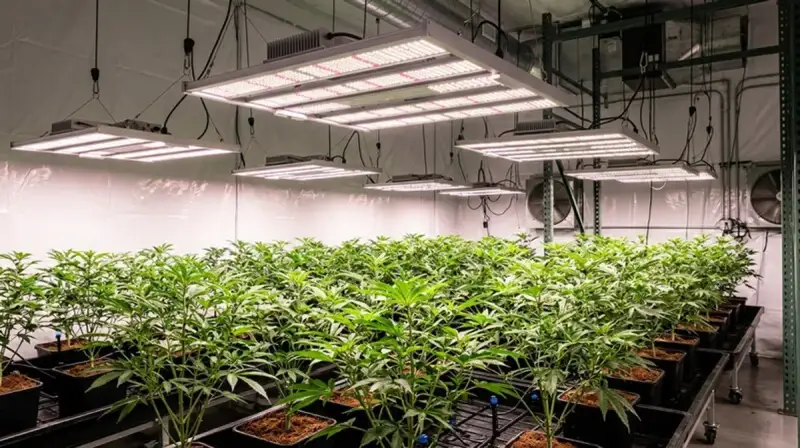
Micro Growing Cannabis: How Small-Scale Home Cultivation Is Changing the Industry
By the ZenWeedGuide Editorial Team | Updated June 2025 | 8 min read |
- Micro growing refers to small-scale personal cannabis cultivation, typically involving 1–6 plants in compact spaces like grow tents, closets, or purpose-built cabinets.
- As of 2025, at least 24 U.S. states and Washington D.C. permit some form of home cannabis cultivation for adults 21 and older.
- A properly set up 2×2 foot grow tent can yield between 1 and 4 ounces per harvest cycle, saving consumers $150–$600 per harvest compared to retail prices.
- The home cultivation equipment market is projected to exceed $1.2 billion in North America by 2026, driven largely by micro grow adoption.
- Autoflowering cannabis strains have made micro growing significantly more accessible, reducing the typical grow cycle from 16+ weeks to as few as 10 weeks.
- Cannabis laws vary dramatically by state — always verify your local rules before starting any home cultivation project.
Background: The Rise of the Home Cultivator
Cannabis home cultivation is not a new idea — for decades, passionate enthusiasts have quietly grown plants in basements, closets, and garages across the United States. What has fundamentally changed in the past ten years, however, is the combination of legal access, advanced technology, and a thriving community of knowledge-sharing growers that has turned small-scale home cultivation from a fringe activity into a mainstream hobby embraced by hundreds of thousands of Americans.
The term "micro grow" broadly describes any personal cannabis cultivation operation limited in scale — typically fewer than six plants and occupying fewer than 10 square feet of canopy space. This distinguishes it from commercial micro-cultivator licenses (a regulatory category in some states) and from larger hobbyist operations. A micro grow is fundamentally about self-sufficiency: growing enough cannabis for personal use without commercial intent.
Several converging forces have driven this growth. First, the wave of state-level legalization that began with Colorado and Washington in 2012 has progressively normalized the idea of adults growing their own cannabis, much like home brewing beer became accepted after federal Prohibition ended. Second, the LED lighting revolution dramatically reduced the cost and heat output of indoor grow lighting, making small-space cultivation far more practical and affordable. Third, the widespread availability of cannabis strains specifically bred for compact growing — particularly autoflowering varieties — has removed a significant technical barrier for beginners.
Understanding the micro grow movement matters for everyone in the cannabis space, from consumers weighing their options to policymakers crafting regulations. For patients accessing medical cannabis, home cultivation can be a vital tool when dispensaries are distant or unaffordable. For recreational users in states where it is legal, it represents an exercise in consumer autonomy. And for the broader industry, the rise of the home grower is reshaping demand, pricing, and even strain development priorities.
Key Developments: A Timeline of Micro Growing Milestones
The modern micro growing movement has been shaped by a series of legislative, technological, and cultural milestones. The table below tracks the most significant developments that have brought small-scale home cultivation to where it stands today.
| Year | Milestone | Significance |
|---|---|---|
| 2012 | Colorado & Washington legalize adult-use cannabis | Both states permit home cultivation of up to 6 plants, establishing the policy template followed by most subsequent states. |
| 2014 | Oregon and Alaska follow with home grow provisions | Home cultivation becomes a consistent feature of adult-use legalization frameworks across the Pacific Northwest. |
| 2016 | LED grow light technology achieves price parity with HID | Quantum board and COB LED panels become affordable for hobbyists, reducing energy costs by up to 50% vs. traditional HPS lighting. |
| 2018 | Canada legalizes nationwide with 4-plant home grow limit | Federal legalization in Canada validates the personal cultivation model internationally and accelerates the grow equipment industry. |
| 2019 | All-in-one smart grow cabinets enter mass market | Products like Grobo and Leaf automate the grow process, attracting tech-savvy consumers with no prior cultivation experience. |
| 2020 | COVID-19 pandemic spurs home grow boom | Dispensary closures, supply anxiety, and time at home drive a significant surge in grow equipment sales across legal states. |
| 2021 | New York, New Mexico, and Virginia legalize with home grow rights | Large-population states add millions of potential home growers to the legal market; New York's initial implementation delays highlight policy complexity. |
| 2022 | Maryland and Missouri voters approve adult-use with home grow | Bipartisan voter support for personal cultivation provisions signals broad public acceptance of home growing rights. |
| 2023 | Autoflower seed sales surpass photoperiod in US online retail | Beginner-friendly autoflowering genetics dominate consumer seed sales, reflecting the mass adoption of micro growing. |
| 2024–25 | Micro-cultivator licensing expands in Canada & select US states | Regulatory frameworks begin to distinguish between personal and small commercial cultivation, creating pathways for micro grow hobbyists to scale legally. |

Impact on Consumers: What Micro Growing Means for Everyday Users
For the average cannabis consumer in a legal state, micro growing represents one of the most significant quality-of-life improvements the legalization era has produced. The implications touch on cost, quality, access, and personal empowerment.
Cost Savings: Retail cannabis prices in legal states typically range from $8 to $20 per gram, with premium flower often exceeding $300 per ounce. A modest micro grow operation — even a single plant under a quality LED — can produce 1 to 3 ounces of dried flower per harvest cycle at an operating cost of roughly $30 to $80 in electricity, nutrients, and supplies. Over a year with two to four harvest cycles, home growers can save hundreds or even thousands of dollars compared to retail purchasing. This is particularly meaningful for medical cannabis patients on fixed incomes or those who consume regularly for chronic conditions.
Quality Control: Home growers have complete control over every input their plants receive — from the growing medium and nutrient line to the curing process. This level of control is impossible at the retail level, where consumers must trust third-party testing and storage practices. Many experienced micro growers report that their home-grown cannabis consistently exceeds dispensary quality in freshness and terpene preservation because they can cure slowly and consume at peak freshness. Exploring the terpene profiles that interest you most becomes easier when you can choose exactly which strains to cultivate.
Access and Equity: In rural areas where the nearest dispensary may be an hour away, home cultivation provides reliable, legal access to cannabis for patients and recreational users alike. This is especially important for mobility-impaired patients. Advocacy organizations have consistently argued that home cultivation rights are a fundamental equity issue — particularly for communities that were disproportionately impacted by cannabis prohibition enforcement.
Educational Value: Growing cannabis teaches patience, observation, and a deep understanding of plant biology and the effects of different cultivation choices on the final product. Many consumers report that growing their own cannabis profoundly changed their relationship with the plant, moving from passive consumption to active, informed appreciation. Our explainers section covers many of the concepts — from cannabinoids to growing techniques — that home growers encounter on their journey.
Industry Perspective: Market Implications of the Micro Grow Movement
The cannabis industry's relationship with home cultivation is complex and sometimes contradictory. While licensed dispensaries might seem threatened by consumers growing their own supply, the reality is considerably more nuanced, and many industry analysts view the micro grow trend as a net positive for the broader legal cannabis ecosystem.
| Business Segment | Impact of Micro Growing | Trend Direction |
|---|---|---|
| Grow Equipment Retail | Major growth driver; tents, LEDs, nutrients see surging demand from new home growers | Strong growth |
| Seed & Genetics Companies | Direct-to-consumer seed sales boom; autoflower and feminized varieties dominate | Strong growth |
| Retail Dispensaries | Some cannibalization of flower sales; offset by new customers drawn into cannabis ecosystem | ️ Mixed/Neutral |
| Cannabis Brands | Home growers still purchase concentrates, edibles, and accessories; loyalty shifts to quality | ️ Mixed |
| Cannabis Media & Education | Growing demand for tutorials, strain guides, and growing content from new cultivators | Strong growth |
| Commercial Cultivators (Large) | Pressure on commodity flower prices; differentiation becomes essential for survival | Headwind |
| Testing Laboratories | Some home growers seek third-party testing; growing demand for consumer-facing test kits | Emerging opportunity |
The grow equipment sector has been the clearest financial winner in the micro growing boom. Companies supplying LED grow lights, ventilation systems, growing media, and nutrients have seen consistent double-digit revenue growth through the early 2020s. The rise of purpose-built "plug-and-play" grow systems — self-contained units with automated lighting schedules, integrated fans, and sometimes app-based monitoring — represents a significant product innovation aimed squarely at first-time home growers who want simplicity over customization.
For cannabis seed and genetics companies, the micro growing movement has been transformative. The demand for stable, predictable, beginner…