









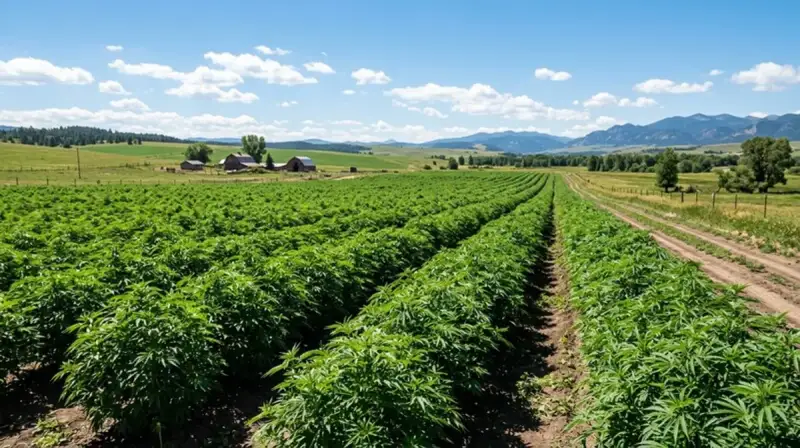
Hemp Fabric Clothing: History, Benefits, and the Booming Market in 2024
By the ZenWeedGuide Editorial Team | Updated 2024 | News & Analysis |
- Hemp fabric is made from the stalks and bast fibers of Cannabis sativa plants containing less than 0.3% THC — it carries no psychoactive properties.
- The 2018 Farm Bill federally legalized industrial hemp cultivation in the United States, unlocking domestic hemp textile production for the first time in decades.
- Hemp requires no pesticides in most growing conditions and replenishes soil nutrients naturally, giving it a dramatically lower environmental footprint than cotton.
- Major fashion brands including Patagonia, Levi's, and Stella McCartney have introduced hemp-blend garments, signaling mainstream market acceptance.
- Hemp clothing is 100% legal to wear, purchase, and ship in all 50 U.S. states regardless of local cannabis laws — it is classified as an agricultural product, not a drug.
- Modern processing techniques have largely eliminated the historically rough texture, producing hemp garments that rival the softness of premium cotton or linen.
- The global hemp textile market was valued at approximately $4.9 billion in 2022 and is projected to reach $18.6 billion by 2030 (CAGR ~18%).
Hemp fabric clothing occupies a fascinating intersection of ancient tradition and cutting-edge sustainability. Long before cotton dominated global textile markets, hemp was one of humanity's primary fiber crops — woven into rope, sails, and garments across Asia, Europe, and the Americas for thousands of years. Today, driven by the explosion of sustainable fashion, the passage of landmark U.S. hemp legislation, and a growing consumer appetite for environmentally responsible products, hemp clothing is staging a remarkable comeback.
For cannabis consumers and advocates, the rise of hemp textiles carries particular resonance. The same plant species that produces the cannabis strains valued for their cannabinoid profiles also yields one of the world's most durable, sustainable, and versatile natural fibers. Understanding the distinction — and the opportunity — is key to appreciating what the hemp textile boom means for American consumers, farmers, and the broader cannabis industry in 2024 and beyond.
Background: A Fiber With a 10,000-Year History
Hemp's story as a textile material begins approximately 10,000 years ago in what is now Taiwan, where archaeological evidence shows early humans using hemp fibers to create cloth and rope. For most of recorded human history, hemp was simply one of the most useful plants on earth. Ancient Chinese texts from 2,800 BCE describe Emperor Shen Nung cultivating hemp for fiber. In medieval Europe, hemp rope and hemp canvas (the word "canvas" itself derives from cannabis) were essential to maritime trade and military operations. The Founding Fathers of the United States — including George Washington and Thomas Jefferson — grew hemp on their plantations, and the first drafts of the Declaration of Independence were reportedly written on hemp paper.
The story of hemp's decline is inseparable from the broader history of cannabis prohibition in America. The Marihuana Tax Act of 1937 effectively conflated industrial hemp with psychoactive cannabis, placing prohibitive taxes and regulations on all cultivation. Then, during World War II, the U.S. government briefly reversed course with the famous "Hemp for Victory" campaign, encouraging farmers to grow hemp for wartime rope and canvas. But after the war, prohibition returned in full force, and the Controlled Substances Act of 1970 classified all forms of Cannabis sativa as a Schedule I substance, making domestic hemp cultivation effectively impossible for decades.
During the prohibition years, U.S. hemp textile demand was met primarily by imports from China, Europe, and Canada — countries that never abandoned the crop. China in particular remained the world's dominant hemp fiber producer, accounting for an estimated 70% of global supply. The European Union maintained a regulated hemp sector, with France, Romania, and Hungary among the leading producers. This international production context meant hemp clothing never truly disappeared; it simply became synonymous with fringe counterculture markets rather than mainstream fashion.
The modern revival began gaining real momentum with the 2014 Farm Bill, which authorized limited hemp research programs in states that passed enabling legislation. But the true turning point was the Agricultural Improvement Act of 2018 — commonly known as the 2018 Farm Bill — which removed hemp from the federal Controlled Substances Act, defined it as an agricultural commodity (cannabis containing less than 0.3% THC by dry weight), and authorized licensed cultivation nationwide. You can read more about how federal hemp policy intersects with state cannabis laws in our Cannabis Explainers section and review specific state-by-state cannabis regulations.
Key Developments: A Timeline of Hemp Textile Milestones
| Year | Milestone | Significance |
|---|---|---|
| ~8,000 BCE | Hemp fiber use documented in Taiwan | Oldest known evidence of hemp textile production |
| 1937 | Marihuana Tax Act passed | Effectively ends U.S. domestic hemp cultivation |
| 1942 | USDA "Hemp for Victory" campaign | Temporary wartime revival; then prohibition restored post-1945 |
| 1970 | Controlled Substances Act | Hemp classified Schedule I alongside marijuana |
| 1998 | Canada legalizes industrial hemp | Creates major N. American hemp fiber supply for U.S. brands |
| 2014 | U.S. Farm Bill (research pilot programs) | First opening for limited domestic hemp cultivation in decades |
| 2018 | 2018 Farm Bill signed into law | Full federal legalization of industrial hemp; game-changer for textiles |
| 2019 | Levi's launches hemp-cotton denim line | Iconic mainstream brand validates hemp as fashion-forward material |
| 2020–2022 | Patagonia, Stella McCartney expand hemp lines | Premium/sustainable fashion sector fully embraces hemp blends |
| 2023–2024 | U.S. hemp acreage and processing infrastructure expands | Domestic supply chain matures; costs begin to decline toward cotton parity |

Impact on Consumers: What Hemp Clothing Means for Everyday Buyers
For American consumers, the hemp clothing boom translates into a rapidly expanding range of stylish, durable, and eco-conscious options that weren't accessible even five years ago. Whether you're a committed cannabis advocate, an environmentally conscious shopper, or simply someone looking for better-quality basics, hemp garments offer a compelling set of advantages.
Durability that saves money over time. Hemp fibers are among the strongest natural fibers on earth — estimated at three to four times the tensile strength of cotton. This means a well-made hemp t-shirt or pair of jeans will typically outlast multiple cotton equivalents before showing significant wear. For budget-conscious consumers, the higher upfront cost of hemp clothing is often offset by its extended lifespan.
Comfort that improves with wear. One of the most persistent myths about hemp clothing is that it's coarse and scratchy. While this may have been true of older processing methods, modern retting, softening, and blending techniques — particularly hemp-cotton and hemp-lyocell blends — produce garments that soften significantly with each wash. Many hemp apparel owners report that their garments become noticeably more comfortable over months of wear.
Natural performance properties. Hemp fabric is naturally antimicrobial, resisting bacterial growth that causes odor — a meaningful benefit for activewear and travel clothing. It also provides moderate UV protection and is highly breathable, making it particularly well-suited for warm climates. These properties occur without the chemical treatments applied to many conventional synthetic performance fabrics.
Legal accessibility nationwide. Unlike cannabis flower, edibles, or even CBD products — which navigate a complex patchwork of state-by-state cannabis laws — hemp clothing is universally legal. It can be freely purchased online, shipped to any U.S. address, and worn in all 50 states. There are no possession limits, no age restrictions, and no regulatory complexity whatsoever.
One practical question many cannabis consumers have: could wearing hemp clothing affect a drug test? The answer is an unambiguous no. Hemp textile fibers contain no THC, CBD, or other cannabinoids. Drug tests screen for THC metabolites produced by consuming cannabis — not from skin contact with plant fibers. For a full breakdown of how drug testing works and what actually affects results, see our dedicated drug test guide.
Industry Perspective: A Market Coming of Age

The business case for hemp textiles has never been stronger, and investors and fashion executives are taking notice. The global hemp textile market was valued at approximately $4.9 billion in 2022. Analysts at Grand View Research and Allied Market Research project compound annual growth rates (CAGR) in the 14–18% range through 2030, potentially pushing the market past $18 billion — growth that would make it one of the fastest-expanding segments in the broader sustainable textiles sector.
| Material | Water Use (gallons/lb) | Pesticide Use | Avg. Garment Lifespan | CO2 Absorption |
|---|---|---|---|---|
| Hemp | ~300–500 | Minimal/none | Very long (10–20+ years) | High (~1.6 tons/acre) |
| Conventional Cotton | ~700–2,000 | High (16% of global insecticides) | Moderate (3–7 years) | Low |
| Organic Cotton | ~700–1,500 | None (certified) | Moderate (4–8 years) | Low |
| Polyester | Very low | N/A (petroleum-based) | Long but microplastic shedding | Negative (fossil fuel) |
| Linen (Flax) | ~400–600 | Low | Long (10–15 |