









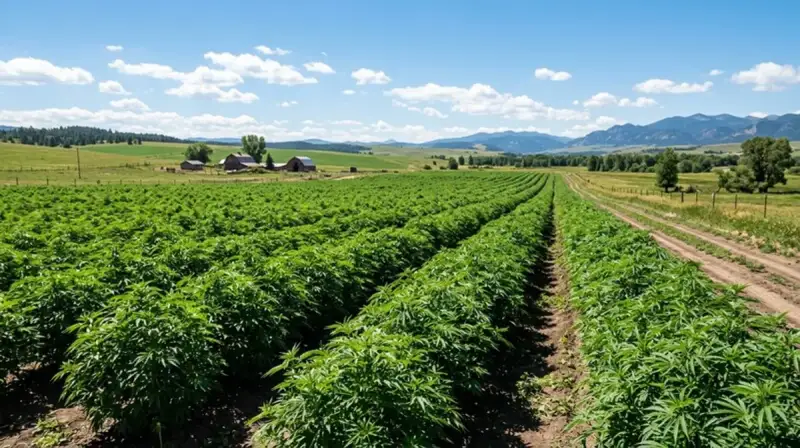
Guerrilla Growing Guide: The History, Risks & Reality of Stealth Cannabis Cultivation
ZenWeedGuide Editorial Team |
By ZenWeedGuide Editorial Team | Updated 2024 | 8 min read
- Guerrilla growing refers to cultivating cannabis on land the grower does not own, typically in remote or forested areas, to avoid detection.
- The practice predates modern legalization by decades, rooted in the War on Drugs era of the 1970s and 1980s.
- Even in states with legal home cultivation, growing on public or federal land remains a criminal offense.
- Auto-flowering and fast-finishing cannabis strains have become the dominant choice for stealth outdoor grows.
- Federal eradication programs like CAMP (Campaign Against Marijuana Planting) have destroyed millions of plants since the 1980s.
- As legal markets expand, some experts argue guerrilla growing's prevalence is declining in legalized states — but rising where cannabis remains prohibited.
- Consumers in prohibition states who source cannabis from illicit guerrilla grows face product-safety risks, including unregulated pesticide exposure.
Background: How Guerrilla Growing Became an American Cannabis Tradition
The term "guerrilla growing" borrows its name from guerrilla warfare — small, decentralized units operating covertly against a larger force. In the cannabis world, it describes the practice of planting and tending cannabis in concealed outdoor locations, usually on land the grower does not legally own or control. The sites are chosen for their remoteness, natural water sources, and natural cover — dense forests, overgrown hillsides, river bottoms, and other terrain difficult to survey by air or on foot.
The roots of American guerrilla cannabis cultivation stretch back to the early 1970s, when President Nixon's administration declared a "War on Drugs" and the federal government classified cannabis as a Schedule I controlled substance. Domestic cultivation exploded during this period as import routes from Mexico and Colombia were targeted by law enforcement, creating demand for homegrown supply. Appalachian hollows, the forests of Northern California's Emerald Triangle (Humboldt, Mendocino, and Trinity counties), and the rural hills of Kentucky and Tennessee became the epicenters of a homegrown cannabis revolution.
By the 1980s, the Emerald Triangle had become the cannabis-producing capital of the United States — and arguably the world — with guerrilla grows tucked into national forests and state lands generating crops worth hundreds of millions of dollars. The federal government responded with aggressive eradication campaigns. California launched the Campaign Against Marijuana Planting (CAMP) in 1983, which at its peak deployed helicopters, National Guard units, and hundreds of law enforcement officers to locate and destroy outdoor cannabis plots. Similar programs spread to Oregon, Washington, Kentucky, Hawaii, and beyond.
Despite decades of eradication efforts, guerrilla growing never disappeared — it adapted. Growers moved deeper into wilderness, adopted camouflage netting, reduced plot sizes, staggered harvests, and embraced new genetics that finished faster and grew shorter. The practice became embedded in cannabis culture, giving rise to a body of knowledge passed down through grower communities, zines, and early internet forums. Understanding this history is essential context for today's cannabis policy discussions and the ongoing tension between illicit and legal markets.
Key Developments: A Timeline of Guerrilla Growing in America
The following table traces major milestones in the evolution of guerrilla cannabis cultivation and the policy responses that shaped it.
| Year | Milestone | Significance |
|---|---|---|
| 1970 | Controlled Substances Act signed into law | Cannabis classified Schedule I; domestic cultivation criminalized at federal level |
| 1972–1975 | Operation Intercept shuts down Mexican import routes | Demand for domestic outdoor cultivation surges across Appalachia and California |
| 1983 | California CAMP program launched | First large-scale aerial eradication; hundreds of thousands of plants destroyed annually |
| 1990s | Growers adopt camouflage netting and smaller plot sizes | Adaptation to aerial surveillance; decentralized micro-grow model emerges |
| Early 2000s | Auto-flowering genetics arrive from Dutch and Russian breeders | 60–75 day harvest window reduces exposure time dramatically for guerrilla growers |
| 2012 | Colorado and Washington legalize adult-use cannabis | Legal markets begin competing with illicit supply; guerrilla grows decline in those states |
| 2016–2018 | California Prop 64 passes; Emerald Triangle faces market disruption | Legacy outdoor growers transition (or attempt to) toward licensed cultivation |
| 2020 | DEA reports continued large-scale grows on federal land | Cartel-linked grows on national forests raise environmental and safety concerns |
| 2023–2024 | 24 states legal for adult use; illicit market persists at $35B+ | Guerrilla growing declines where legal but remains common in prohibition states |

Impact on Consumers: What Guerrilla Growing Means for Everyday Cannabis Users
For the majority of American cannabis consumers, guerrilla growing exists at the edges of their awareness — it is the origin story of much of the illicit cannabis that still flows through unregulated channels in the roughly half of US states where adult-use cannabis remains prohibited. Understanding the guerrilla growing ecosystem matters because it directly affects product safety, pricing, and access for millions of users.
Product safety: Cannabis cultivated on remote public land operates entirely outside any regulatory framework. There are no required pesticide restrictions, no heavy metals testing, no mold or microbial screening, and no labeling of THC content. Research from drug testing and contaminant analysis contexts consistently finds that unregulated cannabis can carry residues of banned pesticides — including carbofuran and other highly toxic organophosphates that have been documented at illegal grow sites on federal land. Consumers purchasing from illicit sources in prohibition states cannot verify what they are consuming.
Pricing dynamics: In states without legal cannabis, guerrilla-grown product often sets the market price floor. Because overhead is minimal (no taxes, no licensing, no compliance costs), illicitly grown cannabis can be sold cheaply — which is one reason the illicit market continues to thrive even where legal cannabis is available. Legal dispensary products carry full regulatory overhead and tax burdens that can push retail prices significantly higher. Check your state's cannabis laws and tax structure to understand pricing in your area.
Strain diversity: Interestingly, guerrilla growing has historically been a driver of cannabis genetic diversity. Growers selecting for hardiness, mold resistance, and short flowering times in specific microclimates have produced regionally adapted landrace-adjacent genetics that have made their way into modern breeding programs. Many beloved cannabis strains trace lineage to Emerald Triangle outdoor genetics cultivated under exactly these conditions.
Legal risk for consumers: In states where cannabis remains fully illegal, purchasing from illicit sources — including guerrilla-grown product — carries legal risk for buyers as well as sellers. Even in legal states, purchasing outside the licensed retail system is illegal. Consumers should always verify they are operating within their state's specific cannabis laws.
Industry Perspective: How Guerrilla Growing Shapes the Legal Cannabis Market

The legal cannabis industry has a complicated relationship with its guerrilla-growing roots. On one hand, much of the expertise, genetics, and culture that built the multi-billion dollar legal market originated with exactly the kind of covert outdoor cultivation that policy makers have spent decades trying to eradicate. On the other hand, the licensed industry views the illicit market — including guerrilla-grown cannabis — as its primary competitive threat.
The scale of that threat is significant. Industry analysts at New Frontier Data and BDSA consistently estimate the US illicit cannabis market at $35 billion or more annually — roughly equivalent to or larger than the legal market in some years. A substantial portion of that supply comes from unregulated outdoor grows, including guerrilla operations. In California, where the legal market was expected to absorb much of the legacy Emerald Triangle production, licensed operators have repeatedly warned that high taxes, complex licensing requirements, and slow local permitting have pushed consumers back toward illicit sources.
The environmental cost of large-scale illicit outdoor grows — particularly those linked to organized criminal organizations — has also become a significant industry and policy talking point. Federal land grows documented in recent years have involved extensive grading, illegal water diversion, rodenticide poisoning of wildlife, and soil contamination. These practices are antithetical to the sustainability messaging increasingly central to premium legal cannabis branding, and legal industry groups have used these documented harms to argue for more robust eradication of illicit operations and more accessible licensing pathways for legacy cultivators.
For small-scale legacy growers in places like Humboldt County, the transition from guerrilla cultivation to licensed production has been economically brutal. Licensing costs, compliance requirements, and the collapse of wholesale cannabis prices in legal markets have left many operators who expected legalization to be their salvation instead facing bankruptcy or continued operation in gray or black market channels. This human dimension is an important part of understanding why guerrilla growing persists even as legal markets mature. Explore more about legal home cultivation options in your state.
| Factor | Guerrilla/Illicit Outdoor Grow | Legal Licensed Outdoor Grow |
|---|---|---|
| Startup Cost | Minimal (seeds, basic supplies) | High (licensing, compliance, infrastructure) |
| Ongoing Overhead | Very low (no taxes, no compliance) | High (excise taxes, testing, reporting) |
| Product Safety | Unregulated, no testing required | Mandatory lab testing, pesticide limits |
| Legal Risk | Severe federal and state criminal exposure | Low if compliant; administrative risks |
| Environmental Impact | Potentially severe (illegal water use, rodenticides) | Regulated; sustainability programs available |
| Genetic Diversity | High — natural selection pressure | Moderate — market-driven strain selection |
| Market Access | Illicit channels only | Licensed dispensaries, delivery, consumption lounges |