










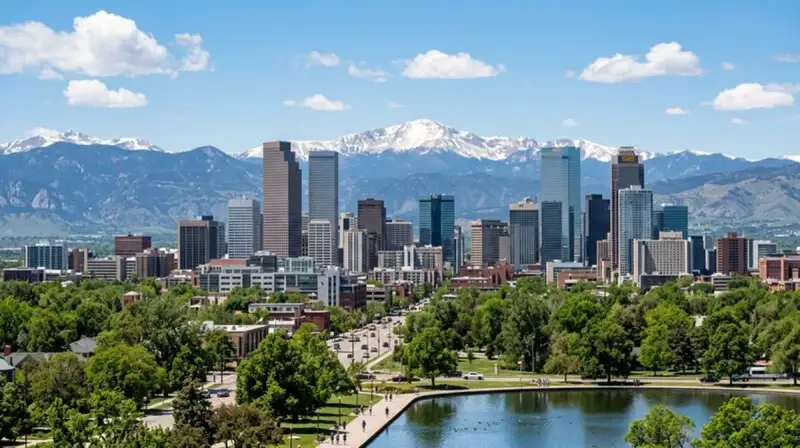
Colorado voters passed Amendment 64 in November 2012, making Colorado the first state in the US to legalize recreational cannabis at the state level. Denver, as Colorado’s capital and largest city, has spent more than a decade building a cannabis tourism ecosystem that no other city can yet match: mature dispensary neighborhoods, licensed consumption lounges, organized cannabis experience tours, cannabis-friendly hospitality options, and a general cultural normalization of adult cannabis use that newer legal markets are still working toward.
Colorado’s Legal Framework: The Foundation
Colorado’s Amendment 64 established adult-use cannabis for residents and visitors alike. Adults 21+ may purchase up to 1 ounce (28 grams) of cannabis flower, 8 grams of concentrate, or 800mg of edible THC per transaction from a licensed Marijuana Enforcement Division (MED)-regulated dispensary. Home cultivation allows up to 6 plants per adult, with a maximum of 12 plants per residence — the most permissive home grow provisions of any early-legalizing state.
Colorado has no residency requirement for cannabis purchases — out-of-state visitors and tourists may purchase with the same limits as Colorado residents. However, Colorado cannabis is strictly for Colorado consumption: transporting purchased cannabis across state lines, even to another legal state, is a federal crime. This applies to driving, flying, taking Amtrak, or any other interstate transportation method. For the complete Colorado cannabis law overview including penalties and regulations, see our dedicated guide.
Denver’s Dispensary Neighborhoods
Denver’s dispensary landscape is mature and geographically organized in ways that make visiting straightforward. Two neighborhoods stand out as the primary cannabis retail destinations.
South Broadway (“The Green Mile”): The stretch of South Broadway from roughly Alameda Avenue to Mississippi Avenue is home to one of the highest concentrations of dispensaries per block anywhere in the United States. Locally nicknamed “The Green Mile,” this corridor has been a cannabis retail hub since Colorado’s first dispensaries opened. The dispensaries here range from budget-focused neighborhood shops to premium boutique operations with extensive concentrate and craft cannabis selections. South Broadway is also a vibrant restaurant, bar, and entertainment corridor, making it a natural destination even for visitors who are simply exploring Denver’s eclectic Overland neighborhood.
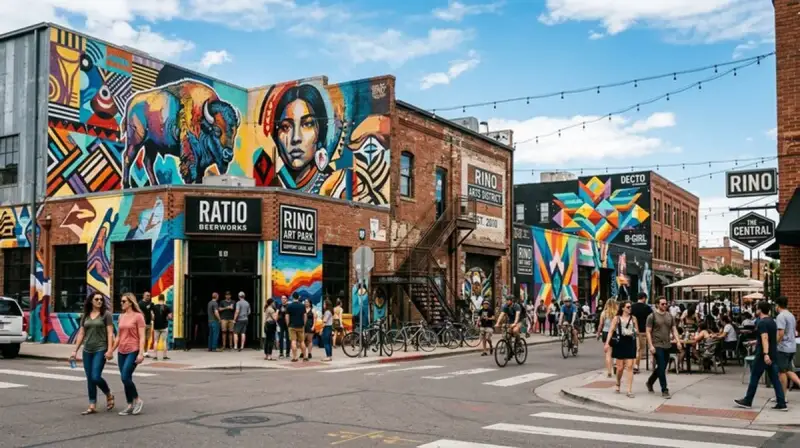
RiNo (River North Arts District): Denver’s arts and culture district has become a secondary cannabis retail hub, with dispensaries integrated into the broader creative-economy neighborhood alongside galleries, restaurants, breweries, and event spaces. RiNo dispensaries tend toward a premium, design-forward aesthetic consistent with the neighborhood’s character. Several cannabis consumption lounges and cannabis-adjacent experiences (puff-and-paint, cannabis yoga, glass-blowing classes) have established themselves in or near RiNo.
Additional dispensary clusters exist in Capitol Hill, Baker, and several suburban Denver neighborhoods, but South Broadway and RiNo are the primary tourist-facing destinations.
Cannabis Tourism Experiences in Denver
Denver has built a genuine cannabis tourism industry beyond simple retail. These are the most established experience categories.
Puff-and-paint: Cannabis-infused art classes that combine BYOC (bring your own cannabis) or on-site consumption lounge use with structured painting instruction. Multiple Denver operators offer these sessions. They’re designed for both cannabis consumers and curious newcomers, and they provide a social, guided introduction to the combination of cannabis and creative activity in a licensed, supervised environment.
Cannabis cooking and chocolate-making classes: Denver has a developed cannabis culinary scene with instructors who teach proper decarboxylation, infusion techniques, and dosing calculation for home cooking. These classes emphasize responsible preparation for personal use rather than commercial production, and they’re among the most popular cannabis tourism experiences for food-oriented visitors.
Dispensary tours: Several Denver companies offer guided dispensary and cultivation facility tours, taking visitors through growing operations, extraction facilities, and retail environments with expert commentary. These educational tours are popular with visitors who want to understand the full cannabis supply chain rather than simply purchasing product.
Glass blowing with cannabis pairing: Denver glass studios have developed a tourism experience combining borosilicate glass blowing instruction with cannabis consumption, drawing on Denver’s established glass art community. The combination has proven popular as a distinctive Denver-only activity.
Licensed Consumption Lounges: HB 1023 and the Denver Model
Colorado House Bill 21-1090 (commonly called HB 1023) created the legal framework for cannabis hospitality businesses — essentially licensed social consumption venues — in Colorado. Denver was among the first municipalities to develop implementing regulations and permit issuance procedures. Denver’s consumption lounges must be licensed by both the state MED and the Denver Excise and Licenses division.
Denver consumption lounges may permit on-site cannabis use in a designated consumption area. They may not sell cannabis on premises (consumers must bring their own, typically purchased from a licensed dispensary), and they may not serve alcohol. Some lounges have associated retail operations in adjacent licensed spaces that allow a combined purchase-and-consume experience under one roof.
The Denver consumption lounge model has become a reference point for other cities developing similar regulations, and the number of licensed venues has expanded steadily since the first licenses were issued. Visitors should verify that a lounge is currently licensed before visiting — the regulatory landscape continues to evolve and licensing status can change.
Denver Cannabis Experience Types
| Experience Type | License Required | Primary Neighborhood | Visitor Notes |
|---|---|---|---|
| Consumption lounge | State + Denver hospitality license | RiNo, Capitol Hill, South Broadway | BYOC (bring your own); ID 21+ required |
| Puff-and-paint class | Event venue or lounge license | RiNo, Five Points | Book in advance; bring own cannabis in sealed dispensary packaging |
| Dispensary retail tour | Tour operator permit | South Broadway, multiple | Educational; includes cultivation visit if booked with grow-tour add-on |
| Cannabis cooking class | Consumption venue or private event | Various private studios | For home-use education; no commercial infusion |
| Cannabis yoga | Event license or lounge | Various studios | BYOC; wellness-focused, low-dose typically recommended |
| Glass blowing class | Art studio + consumption permit | Art District, Sunnyside | Book ahead; genuinely unique Denver experience |
Public Use Laws: The 1-Mile School Buffer and Park Rules
Denver’s public consumption rules are more restrictive than many visitors expect. Cannabis may not be consumed in any public place — this includes streets, sidewalks, parks, vehicles, and any location publicly visible or accessible. The “public place” prohibition is strictly enforced in tourist areas and near schools.
Colorado law prohibits retail cannabis operations within 1,000 feet (approximately 0.2 miles) of a school, daycare, or drug treatment facility. Denver adds additional buffer requirements of 300 feet from parks and recreation centers for retail operations, though this applies to dispensary siting rather than consumption activity per se. The practical consequence is that consumption must happen on licensed private property (consumption lounges, cannabis-friendly accommodations) or in truly private, non-visible spaces.
Fines for public cannabis consumption in Denver are $150 for a first offense, increasing for repeat violations. In tourist areas with visible enforcement, this is actively ticketed — do not attempt to consume cannabis in Civic Center Park, on the 16th Street Mall, or in any other public outdoor space.
Denver Hotel Policies: The Cannabis-Friendly Option
Colorado’s hospitality law (HB 1090) specifically created a license type allowing hotels and B&Bs to permit cannabis consumption in designated outdoor areas of their properties, provided the space is not visible from a public street and is secured from access by minors. Denver has several licensed cannabis-friendly hotels operating under this framework, concentrated primarily in the Capitol Hill, Five Points, and Baker neighborhoods rather than on the tourist-heavy downtown hotel corridor.
Standard downtown Denver hotels — Marriott, Hilton, Hyatt, and similar chain properties — prohibit cannabis use on their properties entirely and will charge cleaning fees for any evidence of cannabis use in rooms. Visitors who wish to consume should specifically book cannabis-friendly properties or plan to use licensed consumption lounges away from their hotel.
Transportation: RTD and the No-DUI Rule
Denver’s Regional Transportation District (RTD) provides light rail and bus service across the metro area, including from DIA airport to downtown. Cannabis may not be consumed on RTD vehicles or at RTD stations. Rideshare services (Uber, Lyft) are abundant in Denver and are the recommended transportation method for cannabis consumers moving between dispensaries, consumption lounges, and accommodations. Colorado’s DUI standard for cannabis mirrors Nevada’s: 5 nanograms/mL of THC in blood is the legal limit, but impairment can be charged even below this threshold. Never drive after consuming cannabis.
Denver International Airport: Federal Property Warning
Denver International Airport (DIA) is federal property. Cannabis possession is prohibited on all DIA property, including the parking structures, terminal buildings, and all airside areas. In the early years of Colorado’s legal market, DIA installed amnesty boxes near security checkpoints where passengers could surrender cannabis before boarding without legal consequence — a pragmatic acknowledgment that many travelers were arriving with legally purchased product. Verify the current status of these programs with DIA directly, as policies have evolved. Regardless, attempting to board an aircraft with cannabis remains a federal crime. See our full traveling with cannabis guide for nationwide airport considerations.
Denver Cannabis Market Quality: What a Decade of Competition Produces
Colorado’s cannabis market is the oldest legal recreational market in the United States, and a decade-plus of competitive pressure has driven meaningful quality improvements. Denver dispensaries generally offer a wider range of product types, testing more consistently for terpene content, and with more extensive staff expertise than markets that have legalized more recently. The Denver market was also the original proving ground for many product categories that have since become standard across the US: live resin concentrates (preserving fresh-frozen terpene profiles), solventless extracts (rosin and bubble hash), and small-batch craft flower grown with careful attention to terpene expression rather than just THC percentage.
Denver’s dispensaries have also developed more sophisticated product recommendation systems than many newer markets. Experienced budtenders at established Denver shops typically ask about your experience level, desired effects, and consumption preferences before making recommendations — a more clinical approach than the “highest THC percentage” recommendations that still dominate some less mature markets. The combination of competitive selection, experienced staff, and mature testing standards makes Denver one of the best cities in the US for cannabis consumers who care about what they’re actually consuming. For deeper strain research, use our strain guide alongside your dispensary visit.
Altitude and Cannabis: The Denver Effect
Denver sits at 5,280 feet above sea level — the exact elevation that gives the city its “Mile High” nickname. Altitude has measurable effects on how cannabis is experienced, and visitors from sea-level cities frequently report that cannabis hits more intensely in Denver than at home at equivalent doses. The primary mechanism is reduced oxygen saturation: at altitude, blood oxygen levels are slightly lower than at sea level, and any inhaled substance — including cannabis smoke or vapor — interacts with a slightly hypoxic respiratory and circulatory system. The practical advice for visitors is straightforward: start with a lower dose than you would at home, give extra time between doses to assess effects, and stay hydrated (altitude increases fluid loss and dehydration compounds cannabis-related impairment). The altitude effect is real but not dangerous for healthy visitors who account for it in their dosing approach. Cannabis-naive visitors or those with cardiovascular or respiratory conditions should be especially conservative with their initial Denver doses.
Denver Cannabis Tourism: Economic and Cultural Context
Denver’s cannabis tourism industry has generated more than $1.5 billion in cannabis tax revenue for Colorado since legalization, funding public school construction, drug prevention programs, and local government services. The normalization of cannabis culture has been one of the more significant cultural shifts in Denver’s recent history — a city already associated with outdoor recreation, craft brewing, and countercultural creative communities has integrated legal cannabis into its identity in ways that distinguish it from cities where legalization occurred more recently and with more political friction.
Visitors who approach Denver cannabis tourism thoughtfully — understanding the rules, choosing appropriate experiences for their tolerance and goals, and engaging with the genuine expertise available at quality dispensaries and consumption venues — will find that Denver offers a cannabis experience that no other US city can currently replicate. The combination of market maturity, cultural integration, mountain environment, and the distinctive experiences that 12+ years of legal market innovation have produced makes Denver uniquely worth visiting for cannabis-curious travelers. See also our Denver Cannabis Travel Guide and Colorado state overview.
Related reading: Colorado Cannabis Laws · Colorado State Overview · Denver Cannabis Travel Guide · Las Vegas Cannabis Tourism · Traveling with Cannabis · Denver Dispensaries
Marcus Webb
Medical Cannabis Writer — ZenWeedGuide
Marcus Webb covers cannabis policy, travel regulations, and the US legal landscape for ZenWeedGuide. He has tracked the Colorado and Denver cannabis market since legalization. Full profile.