









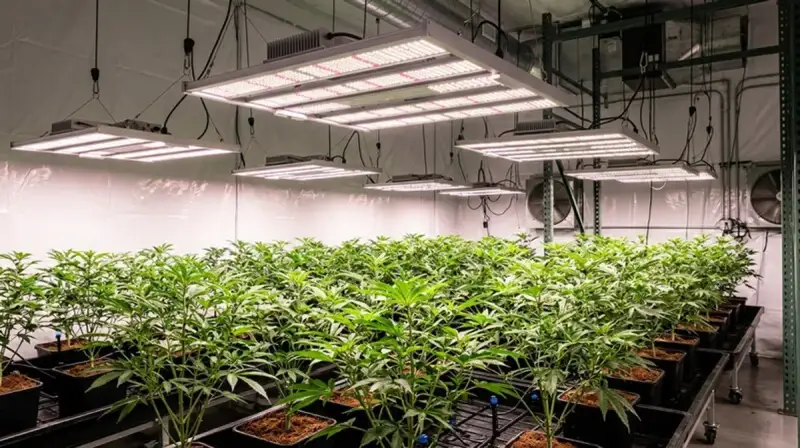
Closet Cannabis Growing: The Complete US Consumer Guide
By ZenWeedGuide Editorial Staff | Updated 2025 | Cannabis laws vary by state — always verify your local regulations before growing. |
- More than 24 US states now allow adults 21+ to cultivate cannabis at home, with most capping plants at 2–6 per person or 6–12 per household.
- Closet growing is one of the most accessible entry points for home cultivators — a 2x4 foot space is enough to produce a meaningful personal supply.
- Key equipment includes an LED grow light, inline fan, carbon filter, growing medium, nutrients, and environmental monitors.
- Autoflowering and feminized seed varieties have dramatically reduced the skill floor for beginner closet growers.
- Even in legal states, rules around plant visibility, canopy size limits, and rental property restrictions can complicate home grows — always check your state's cannabis laws.
- Drug testing remains a concern for home growers who consume their harvest — cannabis metabolites can remain detectable for weeks. See our drug testing guide for details.
- Proper odor control (carbon filters, sealed grow spaces) is both a legal courtesy and a practical necessity in shared living situations.
Background: Why Closet Growing Has Become a Consumer Movement
For decades, growing cannabis at home was an exclusively underground activity in the United States — practiced quietly by dedicated enthusiasts willing to accept significant legal risk. The cultural archetype of the closet grow, a couple of plants hidden behind hanging clothes under a single incandescent bulb, was born of necessity rather than design. Growers improvised with whatever materials they could find, and success was measured more by survival than by yield or quality.
That picture has transformed dramatically over the past fifteen years. The legalization wave that began with Colorado and Washington state in 2012 did not just open dispensaries — it opened the conversation about personal cultivation rights. Home growing advocates, led by organizations like NORML and the Marijuana Policy Project (MPP), argued successfully in many state legislatures that the right to grow a small amount of cannabis for personal use is the logical extension of adult-use legalization, analogous to homebrewing beer or wine.
Today, closet growing sits at the intersection of cannabis culture, consumer rights, and practical economics. Dispensary prices, while lower than the illicit market peak, still represent a significant recurring expense for regular consumers. A well-managed closet grow can produce enough flower to supply a moderate consumer year-round, with ongoing costs limited largely to electricity and nutrients. According to data compiled from multiple state cannabis programs, a single healthy plant in optimal conditions can yield 1–5 ounces of dried flower per harvest cycle — a value of $150–$900 at average retail prices depending on your market.
The technology has kept pace with the law. Modern LED grow lights consume a fraction of the electricity that older HPS (high-pressure sodium) fixtures required, produce far less heat, and deliver full-spectrum light tuned to the specific wavelengths cannabis uses during each growth phase. Autoflowering cannabis varieties — which flower based on age rather than light cycle changes — have made the technical demands of a successful grow accessible to complete beginners. Combine these advances with the wealth of growing information now freely available online and from resources like our own cannabis growing guides, and the barriers to a successful closet grow have never been lower.
Understanding how cannabis works — its growth stages, its relationship with light, water, and nutrients, and the role that terpenes play in determining the quality of the final product — helps growers make better decisions at every stage. And understanding your state's specific homegrow regulations is absolutely essential before purchasing your first seed.
Key Developments: A Timeline of Home Cultivation in the US
| Year | Development | Significance for Home Growers |
|---|---|---|
| 1996 | California passes Prop 215 (Compassionate Use Act) | First state to allow medical cultivation; patients could grow their own medicine |
| 2012 | Colorado & Washington legalize adult use (Amendment 64 / I-502) | Colorado explicitly allowed 3 plants per adult; Washington initially did not permit home grows |
| 2014 | Alaska and Oregon include homegrow provisions in adult-use measures | Normalized personal cultivation as a feature of adult-use legalization |
| 2016 | LED grow light technology reaches consumer price parity | Full-spectrum LED panels become affordable for home growers, reducing heat and power costs dramatically |
| 2018 | Canada legalizes nationwide with 4-plant homegrow right | Demonstrated that regulated personal cultivation could coexist with a legal commercial market |
| 2020 | New Jersey, Arizona, Montana, and South Dakota pass adult-use measures | Homegrow rights included in most new state laws; movement gains momentum |
| 2021–2022 | New York, New Mexico, Connecticut, and Rhode Island legalize with homegrow provisions | Northeast US becomes major homegrow territory; NY allows 6 plants per adult, 12 per household |
| 2023 | Minnesota legalizes adult use; Missouri expands homegrow rights | Midwest joins homegrow movement; consumer cultivation rights increasingly seen as baseline expectation |
| 2024–2025 | Federal rescheduling discussions; DEA proposes Schedule III reclassification | Federal law changes could eventually reduce risk for consumers in non-legal states; state laws still govern homegrow |

Impact on Consumers: What Closet Growing Means for Everyday Users
For the everyday cannabis consumer, the ability to legally grow at home represents a meaningful shift in autonomy and economic power. Dispensary prices in legal states typically range from $8 to $20 per gram for flower, with premium and exotic strains commanding even more. A regular consumer purchasing an eighth ($3.5g) per week spends roughly $1,500–$3,000 annually at retail prices. A successful closet grow — even a modest one — can cover that consumption for a fraction of the cost after the initial equipment investment.
Beyond economics, home cultivation gives consumers direct control over what they consume. Growers know exactly which nutrients touched their plants, whether any pesticides were used, and how the crop was cured and stored. This transparency is particularly valued by medical patients and health-conscious consumers who want to avoid the uncertainties that can exist even in regulated commercial supply chains. Check our medical cannabis guide for more on how home growing intersects with therapeutic use.
Strain selection is another powerful consumer benefit. While dispensaries carry impressive variety, they are ultimately limited by commercial demand and shelf space. A home grower with access to a reputable seed bank can cultivate virtually any cannabis strain available, including rare landrace varieties, craft genetics, and high-CBD cultivars that rarely appear on dispensary menus. Want to explore the specific effects of a particular strain before committing to a multi-week grow? Our strain and effects guides can help you decide.
Consumers should also be mindful of the intersection between home growing and drug testing. Growing cannabis legally does not mean consuming it carries no professional consequences. Employers in most states retain the right to test for cannabis use and make employment decisions based on results. If you are subject to workplace drug testing, review our comprehensive drug testing resource before beginning a home grow and consumption program.
Industry Perspective: How the Homegrow Movement Shapes the Cannabis Market
The cannabis industry's relationship with home cultivation is nuanced. Larger multi-state operators (MSOs) and retail-focused license holders have historically lobbied against broad homegrow rights, citing concerns about quality control, tax revenue, and diversion risk. Some states — notably New Jersey in its early implementation — faced pressure to restrict or delay homegrow provisions even after voters approved them as part of legalization measures.
However, a growing segment of the cannabis industry has recognized that home growers are often their best customers for ancillary products. The market for grow lights, nutrients, growing media, seeds, and cultivation equipment has expanded alongside legal homegrow rights, creating a multi-hundred-million-dollar legitimate industry. Cannabis seed companies — operating legally in many states for adult-use customers — have become significant players, with premium feminized and autoflowering seed packs commanding $10–$20 per seed at retail.
| Grow Setup Size | Typical Space | Recommended Light | Est. Setup Cost | Est. Yield Per Harvest |
|---|---|---|---|---|
| Micro / Beginner | 2×2 ft (0.37 m²) | 100–200W LED | $300–$600 | 0.5–2 oz per plant |
| Small Closet | 2×4 ft (0.74 m²) | 200–300W LED | $500–$900 | 1–4 oz per plant |
| Medium Closet | 3×3 ft (0.84 m²) | 300–400W LED | $700–$1,200 | 2–6 oz per plant |
| Large Closet / Walk-In | 4×4 ft (1.49 m²) | 400–600W LED | $900–$1,800 | 3–8 oz per plant |
| Dedicated Room | 5×5 ft+ (2.32 m²+) | 600W+ LED or multiple fixtures | $1,500–$4,000+ | 4–12+ oz per plant |
Dispensaries in mature markets have responded to homegrow competition by doubling down on experience, curation, and premium products that are difficult to repl …