









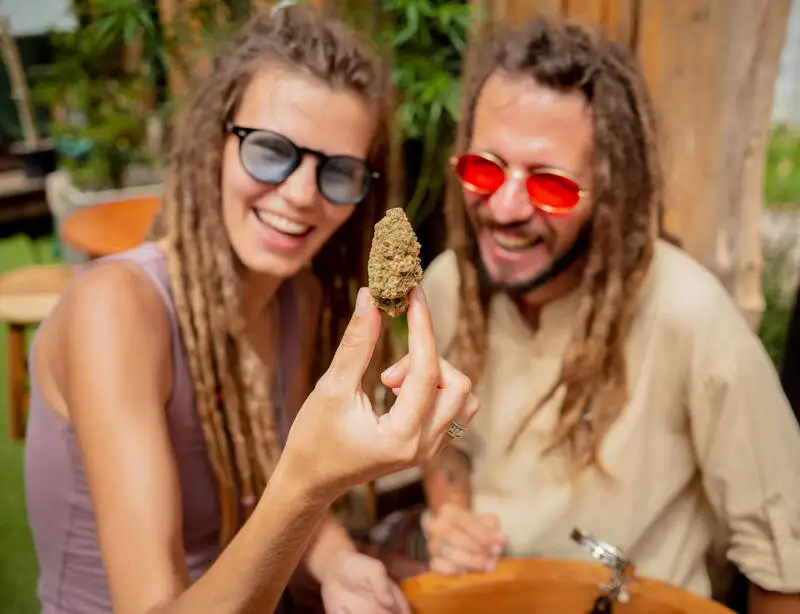
Cannabis Yoga: The Growing Trend of Ganja Yoga in America
Updated 2025 | By the ZenWeedGuide Editorial Team |
- Cannabis yoga — also known as "ganja yoga" — intentionally pairs cannabis consumption with traditional yoga practice to deepen mindfulness and body awareness.
- The practice originated in California around 2009 and has since spread to every major legal-cannabis state, with dedicated studios, retreats, and teacher training programs emerging nationwide.
- Legal complexity remains the biggest barrier: adult-use cannabis is legal in 24+ states, but public consumption restrictions mean most ganja yoga events operate as private gatherings or licensed social-use venues.
- Common reported benefits include reduced performance anxiety, deeper muscle relaxation, and heightened proprioception — though peer-reviewed clinical data remain limited.
- Risks include impaired balance, elevated heart rate, and the potential for anxiety in high-dose situations — all of which instructors are expected to communicate clearly to participants.
- The cannabis wellness sector, projected at $4.2 billion in 2024, is a key growth driver for ganja yoga as brands seek experiential marketing opportunities.
- Cannabis laws vary significantly by state — always check your local state cannabis laws before attending or hosting an event.
Background: Where Cannabis and Yoga Intersect
The pairing of cannabis and spiritual or physical practice is far from a modern invention. Ancient Hindu texts reference cannabis — called bhang — as a sacred plant associated with the god Shiva, and its use in meditative and yogic contexts dates back at least 3,000 years in South Asia. Tantric and Shaivite traditions documented cannabis as a tool for loosening the grip of ego, deepening pranayama (breath work), and facilitating states of samadhi (meditative absorption).
In the Western context, however, ganja yoga is a thoroughly 21st-century phenomenon — born in the legal gray zones of California's medical cannabis era and accelerated by the wave of recreational legalization that began with Colorado and Washington in 2012. The convergence is logical: both yoga and cannabis are associated with stress reduction, pain relief, and introspection, and both have undergone dramatic mainstream acceptance in the United States over the past two decades. According to the Yoga Alliance, Americans spend more than $16 billion annually on yoga classes and products. Layering cannabis onto that infrastructure creates a powerful wellness proposition.
What separates modern ganja yoga from casual pre-workout consumption is intentionality. Dedicated ganja yoga classes typically incorporate education about dosing, strain selection, and harm reduction into the session itself. Instructors — many of whom hold both 200-hour Registered Yoga Teacher (RYT) credentials and cannabis education certifications — guide students through modified sequences that account for impaired balance and altered perception. The sequencing often emphasizes slower, floor-based practices such as yin yoga or restorative yoga rather than vigorous Vinyasa flows. Understanding cannabis terpenes and their calming or energizing effects has become a central part of the ganja yoga educator's toolkit.
The cannabis explainer landscape has also matured considerably, giving curious consumers far better resources than were available even five years ago. This educational foundation is critical: responsible ganja yoga is premised on informed participation, not blind experimentation.
Key Developments: A Timeline of Ganja Yoga
| Year | Milestone | Significance |
|---|---|---|
| 2009 | Dee Dussault launches first public ganja yoga classes in San Francisco | Establishes the template for structured cannabis-integrated yoga instruction |
| 2012 | Colorado & Washington pass recreational cannabis laws (Amendment 64 / I-502) | Opens legal pathway for broader ganja yoga event infrastructure |
| 2014 | Dussault publishes Ganja Yoga — the first book dedicated to the practice | Formalizes the curriculum; reaches international audience |
| 2016 | California passes Prop 64; ganja yoga studios proliferate in LA and SF | Largest US cannabis market opens, massively expanding potential audience |
| 2018 | Colorado issues first social cannabis consumption licenses | Creates the first fully legal venue framework for public ganja yoga events |
| 2019 | Cannabis wellness retreats offering yoga programming debut in Jamaica and legal US states | Luxury positioning elevates ganja yoga's mainstream credibility |
| 2021 | Nevada expands social consumption licensing; New York legalizes recreational use | Two major markets add infrastructure for cannabis event experiences |
| 2023 | Cannabis-integrated teacher training programs certified by independent bodies emerge | Professionalizes the instructor pipeline; raises safety standards |
| 2024 | Multiple cannabis brands launch official ganja yoga sponsorship programs | Mainstream brand investment signals long-term commercial viability |

Impact on Consumers: What Ganja Yoga Means for Everyday Users
For the average cannabis consumer who also practices yoga — or who is yoga-curious — ganja yoga represents a genuinely novel wellness modality, not just a novelty. Here's how the practice affects day-to-day users in concrete terms:
Accessibility and dosing: Responsible ganja yoga classes typically recommend micro-dosing rather than heavy consumption. The goal is a mild, functional effect — just enough THC (or a balanced THC:CBD ratio) to reduce muscular tension and quiet mental chatter without impairing coordination. Most instructors recommend 2.5–5mg of THC for beginners, well below recreational consumption norms. Consumers already familiar with cannabis effects and their personal tolerance will have a significant advantage when calibrating their experience. New users are strongly encouraged to attend introductory sessions where dosing guidance is provided.
Strain and product selection: Choosing the right cultivar matters enormously for ganja yoga. Heavy indica strains with sedating terpene profiles may cause participants to fall asleep during savasana rather than achieving mindful relaxation. Conversely, high-THC sativa-dominant strains may increase heart rate and anxiety in a movement context. Low-THC hybrids, CBD-forward products, or balanced hybrid strains rich in linalool and beta-caryophyllene are widely considered most appropriate. Many sessions now incorporate pre-session terpene education as standard curriculum.
Drug testing considerations: This is a practical concern that many practitioners overlook. Cannabis use of any kind — including in a yoga context — can result in positive results on employer or legal drug screenings. THC metabolites can remain detectable for days to weeks depending on frequency of use, body composition, and the type of test administered. Consumers in safety-sensitive occupations or under legal supervision should carefully review our guide to cannabis and drug testing before participating.
Medical users: For medical cannabis patients managing conditions like chronic pain, PTSD, or anxiety disorders, ganja yoga offers a potentially synergistic therapeutic practice. The combination of gentle movement, breath work, and cannabis may compound the anti-inflammatory and anxiolytic effects of both modalities. That said, patients should consult their recommending physician before adding structured cannabis-yoga practice to their treatment protocol, particularly if their condition affects balance, cardiovascular health, or proprioception.
Industry Perspective: A Growing Market at the Intersection of Wellness Trends
From a purely commercial standpoint, ganja yoga sits at the convergence of three of the most powerful consumer wellness trends of the past decade: cannabis normalization, the mindfulness economy, and experiential spending. Industry analysts at Brightfield Group have consistently ranked "wellness integration" as one of the top drivers of cannabis consumer spending growth, with yoga and meditation representing the highest-growth sub-segment within cannabis lifestyle products.
The business infrastructure around ganja yoga is maturing rapidly. Revenue streams now include ticketed drop-in classes ($25–$75 per session), multi-day cannabis wellness retreats ($500–$3,000+), branded corporate wellness events, and online instructional content. Cannabis brands — particularly in the vape, tincture, and topical categories — have identified ganja yoga as a high-value experiential marketing channel, allowing product sampling in contexts where consumption is legal and the demographic (educated, wellness-oriented adults 25–45) is highly aligned with their target market.

The growing professionalization of ganja yoga instruction is also a significant business development. Independent certification organizations have begun offering cannabis-integrated yoga teacher training modules, typically as add-ons to standard 200-hour RYT programs. These programs command premium pricing ($500–$1,500 for the cannabis-specific module) and create a credentialed instructor pipeline that brands and wellness venues can rely on for quality assurance.
Challenges remain. Zoning regulations, liquor licensing analogs for cannabis consumption venues, and insurance liability for consumption-adjacent wellness events create operational complexity in even the most cannabis-friendly jurisdictions. The patchwork of state cannabis laws means that a business model that works seamlessly in Denver may be impossible in Chicago or illegal in Atlanta. National brand expansion is therefore slow, and most ganja yoga businesses remain hyper-local operations.
| Business Model | Avg. Price Point | Legal Requirement | Growth Status |
|---|---|---|---|
| Drop-in Studio Class | $30–$75 / session | Social consumption license or private venue | Rapidly expanding |
| Cannabis Wellness Retreat | $500–$3,000 / weekend | Private property or licensed resort | Emerging premium segment |
| Corporate Wellness Event | $1,500–$10,000 / event | Private event; employer must permit | Early-stage adoption |
| Online / VOD Content | $10–$30 / month | BYOC (bring your own cannabis); legal state assumed | High growth post-pandemic |
| Teacher Training Programs | $500–$1,500 / module | Must operate in legal state; no consumption required | Professionalizing rapidly |
What Experts Say: Perspectives from the Wellness and Cannabis Communities
"Cannabis, when used mindfully and in appropriate doses, can be a powerful tool for deepening the inward focus that yoga is designed to cultivate — but the key words are 'mindfully' and 'appropriate.' This is not about getting high and doing downward dog. It is about intentional integration of two ancient wellness practices."
Dee Dussault, widely credited as the founder of modern ganja yoga,…