










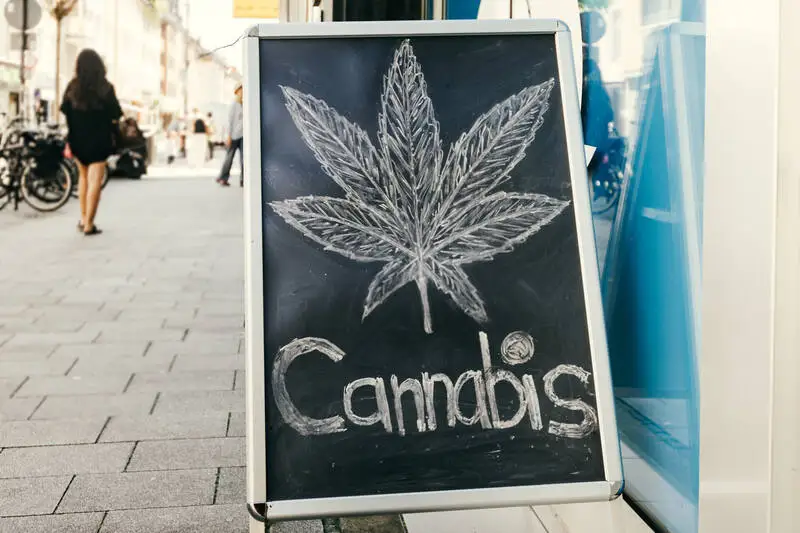
- As of 2024, 24 U.S. states plus Washington D.C. have legalized recreational cannabis, creating a framework where social consumption clubs can legally operate.
- Only 8–10 states have passed explicit legislation permitting licensed cannabis social clubs or on-site consumption lounges.
- Nevada was among the first states to issue consumption lounge licenses, with over 20 licensed venues operating in Las Vegas as of late 2023.
- Colorado's social equity program reserves at least 50% of new consumption space licenses for social equity applicants from communities impacted by prohibition.
- Cannabis social clubs remain federally illegal under the Controlled Substances Act, creating significant banking, insurance, and supply chain challenges for operators.
- Commercial HVAC systems meeting cannabis lounge air quality standards can cost $50,000 to $150,000 for a mid-sized venue, representing a major startup barrier.
- The global cannabis club model, pioneered in Spain and the Netherlands, has directly influenced U.S. legislative frameworks for social consumption spaces.
What Are Cannabis Social Clubs and How Do They Work in the U.S.?
ZenWeedGuide Editorial Team |
Cannabis social clubs are licensed or membership-based establishments where adults can legally purchase and consume cannabis in a communal setting. Unlike traditional retail dispensaries — where consumption on premises is typically prohibited — social clubs and consumption lounges create a regulated, social environment for cannabis use. The concept draws heavily from the coffeeshop model long established in Amsterdam and the cannabis association model developed in Spain, both of which have been adapted to fit U.S. state regulatory frameworks and American consumer expectations.
In the United States, the term "cannabis social club" is often used interchangeably with "consumption lounge," "cannabis lounge," or "on-site consumption facility." The specific legal definitions vary considerably from state to state. Some states require a separate consumption lounge license on top of an existing retail license, while others permit dispensaries to apply for an on-site consumption endorsement. A third category — the private membership club — operates in a legal gray area that differs from both licensed lounges and traditional dispensaries. Understanding these distinctions is critical for both entrepreneurs and consumers navigating this rapidly evolving space. For a broader overview of how cannabis laws differ across the country, review our state-by-state cannabis laws guide.
The Membership Model vs. Licensed Lounges
Two primary structures dominate the U.S. cannabis social club landscape. The first is the licensed commercial lounge, which operates like a regulated business with state-issued permits, zoning compliance, and often a retail component integrated into the experience. These are most common in Nevada and Colorado, where robust licensing frameworks have been established and refined over several years. The second model is the private membership club, where members pay dues and cannabis is nominally "gifted" among members rather than sold outright. This approach has been used extensively in California and Washington D.C. to sidestep certain regulatory requirements, though it carries significant legal risk and is increasingly being scrutinized by local authorities as enforcement priorities evolve.
From real-world experience, the membership club gray area works — until it doesn't. Several high-profile clubs in Washington D.C. and Los Angeles have faced raids, license revocations, and criminal investigations when local authorities determined that the "gifting" model was a thinly veiled retail sale operation. Entrepreneurs seriously considering this path should retain specialized cannabis attorneys before signing leases, hiring staff, or investing in build-out costs. The financial exposure from a forced closure can be catastrophic without proper legal groundwork.
Key Differences from Dispensaries
While dispensaries serve as retail points of sale, cannabis social clubs serve a fundamentally different social function — one closer to a bar, lounge, or social club than a pharmacy or retail store. Key operational distinctions include the following:
- On-site consumption: Clubs allow smoking, vaping, dabbing, or edible consumption on the premises; dispensaries in virtually every state prohibit on-site consumption entirely.
- Social atmosphere: Clubs often feature comfortable seating areas, curated music, live entertainment, educational programming, and community events designed to build a loyal member base.
- Membership requirements: Some clubs require age-verified membership enrollment prior to entry, adding a compliance layer that also creates a trackable customer database for regulatory purposes.
- Product sourcing: In many states, clubs must either be licensed retailers themselves or maintain formal partnerships with licensed dispensaries for all product procurement — no untracked product is permitted.
- Ventilation and zoning: Consumption lounges face stringent air quality standards, industrial HVAC requirements, and proximity-to-schools zoning restrictions that standard dispensaries are not subject to.
- Staffing requirements: Many states require dedicated floor staff trained in responsible service protocols similar to alcohol server certification, adding ongoing training costs.
- Cannabis social clubs allow on-site consumption; dispensaries do not — they serve fundamentally different regulatory and social functions.
- Two primary models exist: state-licensed commercial lounges (Nevada, Colorado) and private membership clubs operating in a gray area (D.C., California).
- Membership clubs using the "gifting" model face increasing legal scrutiny and have been shut down in multiple jurisdictions.
- Industrial ventilation, zoning compliance, and staff training requirements make lounge startup costs substantially higher than standard dispensary buildouts.
- For broader context on how cannabis regulations vary, see our cannabis laws resource hub and cannabis explainers section.
States Where Cannabis Social Clubs Are Legally Permitted
The legal landscape for cannabis social clubs is fragmented and rapidly evolving. While 24 states have legalized adult-use cannabis at the state level, only a subset have taken the additional legislative step of explicitly permitting on-site consumption through dedicated licensing frameworks. This gap often reflects political caution, lobbying pressure from the hospitality and tobacco industries, or unresolved public health debates about secondhand smoke exposure in shared spaces. Below is a detailed analysis of the states with the most developed frameworks as of 2024. For comprehensive state law details, visit our cannabis laws resource hub.
Nevada: The U.S. Leader in Cannabis Lounges
Nevada has emerged as the most commercially developed state for cannabis social clubs, driven in large part by Las Vegas's tourism-dependent economy and its existing regulatory infrastructure for adult entertainment. The Nevada Cannabis Compliance Board began issuing consumption lounge licenses in 2021 following the passage of Assembly Bill 341. There are two license types available: independent consumption lounges — standalone businesses not attached to a dispensary — and retail consumption lounges, which are attached to or co-located with an existing licensed dispensary. As of late 2023, more than 20 consumption lounges are operational in the Las Vegas metro area, with several additional applications in the licensing pipeline. Establishments like Cannabition and various Strip-adjacent lounges have set a national benchmark for what regulated cannabis hospitality can look like at scale, drawing tourists who travel specifically for the experience. Nevada's model is widely cited by other states drafting their own consumption lounge legislation.
Colorado: Social Equity at the Forefront
Colorado passed landmark legislation through HB21-1090 and subsequent regulatory guidance to create its hospitality and social consumption license framework. The Colorado Marijuana Enforcement Division oversees these licenses, which allow businesses to permit on-site consumption of cannabis purchased elsewhere (a BYOC — Bring Your Own Cannabis — model) or sold on premises by a co-located licensed retailer. Crucially, Colorado's framework includes a strong social equity component: at least 50% of new licenses in certain consumption categories are reserved for social equity applicants, defined as individuals from communities disproportionately impacted by decades of cannabis prohibition enforcement. Denver and Boulder have been the most active municipalities in implementing this framework at the local level, with Denver having approved dozens of social consumption licenses since the program's launch. Colorado's approach is frequently cited as a national model for combining commercial viability with equity goals. Learn more about equity-focused cannabis policies in our cannabis policy explainers.
California, Illinois, New Mexico, and Alaska: Emerging Frameworks
California has authorized on-site consumption through a combination of state statute and local ordinances, rather than through a uniform statewide license type. This means the rules differ dramatically between San Francisco, Los Angeles, Palm Springs, and smaller municipalities — some of which have opted out of allowing consumption spaces entirely. West Hollywood's licensed consumption lounges have been among California's most successful, operating with detailed local permits covering ventilation, security, and operating hours. Illinois passed legislation in 2023 allowing consumption lounges as an endorsement to existing dispensary licenses, a rollout that was still in early implementation phases at the time of publication. New Mexico's Cannabis Control Division has issued consumption area permits since 2022, making it one of the more permissive and administratively efficient states for social consumption in the Southwest. Alaska permits on-site consumption at licensed retailers under specific Marijuana Control Board conditions, making it a notable and often overlooked outlier in the Pacific region — several Anchorage establishments have operated consumption areas since 2019.
States With Limited or Pending Frameworks
Several additional states are in various stages of developing consumption lounge frameworks. Michigan allows consumption spaces but requires authorization from individual municipalities, meaning progress has been uneven — Detroit and Ann Arbor are the most active markets, while rural municipalities have largely declined to participate. Maryland, which transitioned to adult-use recreational cannabis in 2023, has opened discussions around consumption space licensing but has not yet finalized regulations. New Jersey and New York, both relatively new to recreational cannabis, have signaled legislative interest in consumption lounges but face significant political and municipal opposition, particularly around proximity restrictions and public health concerns. Most users navigating these emerging markets find that connecting with local cannabis industry associations provides the most current and accurate information about pending regulatory changes.
| State | Legal Framework | License Type | Year Enacted | Estimated Active Venues | Notable Features |
|---|---|---|---|---|---|
| Nevada | Explicit state statute (AB 341) | Independent & Retail Consumption Lounge | 2021 | 20+ | Tourism-driven; most commercially active U.S. market |
| Colorado | Explicit state statute (HB21-1090) | Hospitality License / Social Consumption | 2021 | 15+ | 50% social equity license reservation requirement |
| California | State-authorized local ordinances | Varies by municipality | 2019+ | 30+ (statewide) | No uniform statewide license; West Hollywood leads |
| New Mexico | Explicit state regulation | Consumption Area Permit | 2022 | 10+ | Attached to licensed cannabis retailer; permissive rules |
| Illinois | Dispensary endorsement (2023 legislation) | On-Site Consumption Endorsement | 2023 | 5 (early rollout) | Still in early implementation; dispensary-attached only |
| Alaska | Marijuana Control Board regulation | On-Site Consumption Endorsement | 2019 | 5–8 | Earliest adopter; limited commercial scale to date |
| Michigan | Local authorization required | Varies; municipality-dependent | 2022 | 8–12 | Detroit and Ann Arbor most active; rural opt-outs common |
| Maryland | Pending state regulation | TBD | Est. 2025 | 0 (licensed) | Adult-use launched 2023; consumption lounges in discussion |
- Only 7–8 states have operational cannabis consumption lounge frameworks as of 2024, despite 24 states having legalized adult-use cannabis.
- Nevada leads the U.S. with 20+ active licensed consumption lounges, primarily concentrated in Las Vegas's tourism corridor.
- Colorado's social equity provisions — reserving 50% of new licenses for impacted communities — represent the strongest equity framework nationally.
- California's municipality-by-municipality approach creates significant variation; consumers should verify local licensing before visiting any club.
- Alaska was an early adopter in 2019 but has seen limited commercial development compared to Nevada and Colorado.
Federal Prohibition and Its Impact on Cannabis Social Clubs
Despite meaningful state-level progress, cannabis social clubs operate in direct conflict with federal law. Cannabis remains a Schedule I controlled substance under the Controlled Substances Act (CSA), placing it in the same regulatory category as heroin and above cocaine in the federal scheduling hierarchy — a classification that most scientists and policy researchers consider scientifically outdated. This federal prohibition creates a cascade of operational challenges that have no clean solution under current law. The National Organization for the Reform of Marijuana Laws (NORML) has extensively documented these conflicts and continues to advocate for federal rescheduling and descheduling as primary pathways to resolving the state-federal tension. In 2024, the DEA's proposal to move cannabis to Schedule III — which was still under review at publication — would represent the most significant federal policy shift in decades, though it would not fully resolve the conflict for consumption lounges.
Banking, Insurance, and Financial Hurdles
Federal prohibition means that most traditional FDIC-insured banks and major credit card processors — including Visa, Mastercard, and American Express — refuse to work with cannabis businesses, including social clubs. This forces many lounges to operate as cash-only businesses, creating significant security vulnerabilities, accounting burdens, and an unwelcoming experience for modern consumers accustomed to card payments. The SAFE Banking Act, which would