









Cannabis Seed Banks: History, Legality & What They Mean for US Consumers
Updated 2025 | By the ZenWeedGuide Editorial Team | 10 min read |
- Cannabis seed banks are companies or organizations that collect, preserve, and distribute cannabis genetics — often across international borders.
- Federally in the US, cannabis seeds remain Schedule I controlled substances, making interstate seed commerce technically illegal regardless of state law.
- At least 24 US states now permit some form of adult or patient home cultivation, driving domestic seed market growth.
- Feminized and autoflowering seed technology has dramatically lowered the barrier to entry for home growers over the past two decades.
- Reputable seed banks offer germination guarantees, documented genetic lineage, and lab-tested profiles — key criteria consumers should prioritize.
- The global cannabis seed market is projected to exceed $1 billion by 2030 as legalization spreads across North America and Europe.
Background: The Origins of Cannabis Seed Banks
The concept of a seed bank — an institution dedicated to preserving plant genetics for future generations — is centuries old. But the specialized world of cannabis seed banking emerged from a very specific moment in countercultural history: the late 1970s and early 1980s, when a combination of aggressive law enforcement, habitat destruction, and the rise of indoor cultivation threatened to permanently eliminate dozens of rare landrace cannabis varieties from around the globe.
Landrace strains — cannabis varieties that evolved naturally in specific geographic regions like the Hindu Kush mountains, the highlands of Thailand, or the Rif Valley of Morocco — were being lost at an alarming rate as global prohibition intensified. Recognizing this botanical crisis, a small number of dedicated breeders and activists began systematically collecting and preserving these genetics. The Netherlands, with its relatively tolerant cannabis policy, became the natural home for the world's first commercial seed banks.
In 1985, the Seed Bank of Holland opened its doors, widely considered the world's first commercial cannabis seed bank. Founded by Neville Schoenmakers, it offered an unprecedented catalogue of stabilized cannabis genetics to growers worldwide. This single development triggered an entire industry and fundamentally changed how cannabis breeders, cultivators, and consumers interact with the plant.
For decades, US consumers operated in a legal gray zone — international seed banks shipped seeds to American addresses, often marketed as "novelty collectibles" or "souvenir items" not intended for germination. As state-by-state legalization has expanded across the US, a parallel domestic seed industry has emerged, with licensed retailers and breeders now operating legally within states like California, Colorado, Oregon, Michigan, and others. Understanding how seed banks work — and how to navigate them legally — has become essential knowledge for the modern cannabis consumer and cultivator.
For deeper context on how cannabis cultivation has evolved alongside legalization, see our growing guides and our cannabis explainers section.
Key Developments: A Timeline of Cannabis Seed Banking
The evolution of cannabis seed banking mirrors the broader arc of cannabis legalization and normalization. The following table highlights the most significant milestones in this industry's history:
| Year | Milestone | Significance |
|---|---|---|
| 1985 | Seed Bank of Holland opens in Amsterdam | World's first commercial cannabis seed bank; established the template for the industry |
| 1987 | Sensi Seeds founded by Ben Dronkers | Became one of the world's largest seed banks; began preserving landrace genetics at scale |
| 1994 | Feminized seed technology developed | Dramatically simplified home growing by eliminating male plants; revolutionized the hobby market |
| 2000 | Autoflowering seeds commercialized (Lowryder) | Cannabis ruderalis genetics introduced light-independent flowering; opened cultivation to new climates |
| 2012 | Colorado & Washington legalize adult-use cannabis | First US states to permit recreational use; laid groundwork for legal domestic seed sales |
| 2016 | California passes Prop 64 (adult-use) | World's largest legal cannabis market opens; legal seed retail begins in the most populous US state |
| 2018 | US Farm Bill legalizes hemp; USDA seed rules emerge | Hemp seed commerce opens legally; lines between hemp and cannabis seed markets begin to blur |
| 2020–2022 | Wave of state legalizations (NJ, AZ, IL, NY, VA, NM) | Domestic licensed seed markets multiply; US seed banking industry professionalizes rapidly |
| 2024 | DEA proposes rescheduling cannabis to Schedule III | Potential federal rescheduling could significantly alter interstate seed commerce rules |
| 2025 | 24+ states permit home cultivation; seed retail thriving | Consumer seed market matures; certified genetics, lab testing, and standardization become industry norms |

Impact on Consumers: What Seed Banks Mean for Everyday Cannabis Users
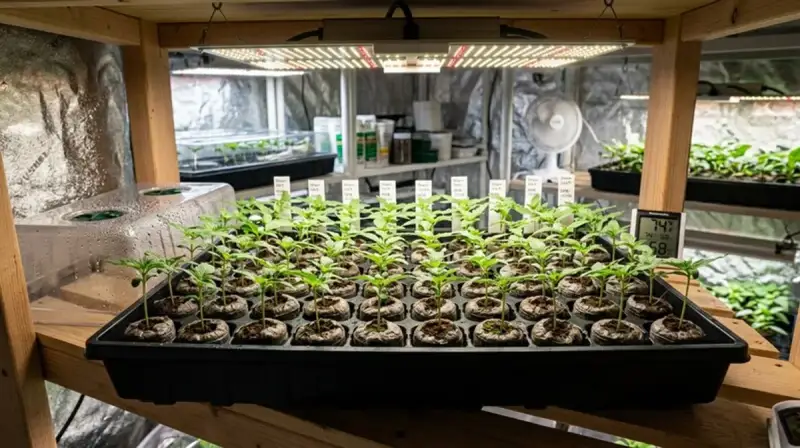
For the average cannabis consumer — particularly those interested in home cultivation — seed banks represent the gateway to an extraordinary diversity of genetics that would otherwise be inaccessible. The modern seed bank market has made it possible for home growers to access the same elite genetics used by commercial cultivators, often at relatively modest cost.
The most immediate consumer benefit is strain diversity. Where dispensaries typically stock a rotating selection of 30–80 strains, major seed banks catalogue thousands of distinct varieties, each with unique terpene profiles, cannabinoid ratios, and effect characteristics. For patients seeking specific therapeutic profiles — high-CBD strains for anxiety management, or terpene-rich varieties for targeted symptom relief — seed banks may offer access to genetics that simply aren't available at local retail.
Home cultivation itself remains one of the most cost-effective ways to access quality cannabis in legal states. A single feminized seed from a reputable bank typically costs $8–$20 and can yield anywhere from 1–5 ounces of dried flower under home growing conditions, representing substantial savings versus retail pricing. For medical cannabis patients on fixed incomes or managing chronic conditions requiring consistent supply, this economic argument is especially compelling.
However, consumers must navigate real legal complexity. Seed possession and cultivation laws vary dramatically across the US — from states where adults can freely grow six plants at home, to states where any cultivation remains a criminal offense. Before purchasing any seeds, consumers should thoroughly review their state's specific cannabis laws. It is also worth noting that even in legal cultivation states, certain restrictions apply: grows must typically be out of public view, secured from minors, and within plant count limits.
Quality assurance is another key consumer consideration. The unregulated international seed market has historically included unreliable vendors offering mislabeled or low-quality genetics. Consumers should prioritize seed banks that offer germination guarantees, third-party lab testing documentation, and verifiable customer reviews on independent platforms.
Industry Perspective: The Business of Cannabis Genetics

From a market standpoint, cannabis seed banking is one of the most intellectually property-intensive sectors within the broader cannabis industry. Unlike flower, oil, or edibles — which are consumed and replaced — genetics have lasting, compounding value. A single elite phenotype, carefully preserved and stabilized, can generate revenue for a seed bank for decades. This has driven an arms race of proprietary breeding programs among both legacy seed banks and newly licensed US operations.
The domestic US seed market has professionalized rapidly since 2016. Licensed seed retailers in states like California, Colorado, Oregon, and Michigan now operate under regulatory frameworks that require truth-in-labeling, germination testing, and in some jurisdictions, genetic verification. This represents a dramatic departure from the unregulated international market that dominated US seed commerce for decades.
Investment in cannabis genetics companies has accelerated alongside legalization. Firms specializing in genomic sequencing, phenotype selection, and intellectual property registration for novel cannabis varieties have attracted significant venture capital. The emerging field of cannabis genomics — applying the same precision breeding tools used in agricultural crops to cannabis — promises to deliver standardized, replicable genetics that the commercial cultivation industry has long sought.
| Seed Type | Typical Cost (per seed) | Skill Level | Avg. Flowering Time | Best For |
|---|---|---|---|---|
| Regular | $3–$10 | Intermediate–Advanced | 8–12 weeks (photoperiod) | Breeders, experienced cultivators |
| Feminized | $8–$25 | Beginner–Intermediate | 8–12 weeks (photoperiod) | Home growers maximizing yield |
| Autoflowering (Fem) | $8–$20 | Beginner | 8–10 weeks from seed | Beginners, outdoor growers, fast harvests |
| CBD / High-Ratio | $10–$30 | Beginner–Intermediate | 8–12 weeks | Medical patients, low-THC preference |
| Elite / Limited Release | $20–$100+ | Advanced | Varies | Collectors, competitive breeders |