









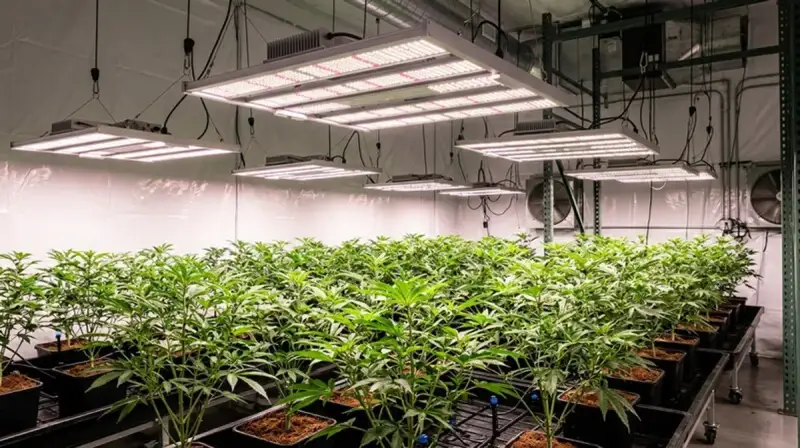
Cannabis Pesticides Safety: The Hidden Risk in Legal Markets
By the ZenWeedGuide Editorial Team | Updated 2025 | 8 min read |
- No EPA-registered pesticide label currently authorizes use on cannabis, creating a regulatory gray zone for growers nationwide.
- State-by-state testing requirements vary dramatically — from screening just a few compounds to over 300 pesticides per sample.
- Myclobutanil, a common fungicide, converts to hydrogen cyanide when combusted — making it especially dangerous for cannabis consumers who smoke or vape.
- Illegal and unregulated cannabis carries the highest pesticide risk because it bypasses all testing and oversight.
- Medical cannabis patients — especially those who are immunocompromised — face elevated health risks from pesticide-contaminated products.
- Third-party Certificates of Analysis (COAs) remain the most reliable tool consumers have to verify product safety.
- Several states have issued product recalls due to pesticide contamination, underscoring the real-world public health stakes.
Background: Why Pesticides in Cannabis Are a Serious Public Health Issue
When most Americans think about cannabis safety, potency, effects, and drug testing tend to dominate the conversation. But one of the most underreported risks in the cannabis supply chain is pesticide contamination — and the consequences for consumer health are far from trivial. Unlike food crops, which are governed by decades of EPA tolerance levels and USDA oversight, cannabis occupies a regulatory no-man's land that has left consumers, growers, and regulators scrambling.
The core problem stems from federal cannabis prohibition. Because cannabis remains a Schedule I controlled substance under the Controlled Substances Act, the EPA has never formally approved any pesticide for use on cannabis crops. There are no official tolerance levels — the maximum residue limits that exist for fruits, vegetables, and grains — meaning states must develop their own standards from scratch. The result is a patchwork of inconsistent, sometimes inadequate safeguards that vary dramatically depending on where you live and where your cannabis was grown.
Cannabis cultivation is uniquely vulnerable to pest and pathogen pressure. The plant is susceptible to spider mites, aphids, thrips, fungus gnats, powdery mildew, botrytis (gray mold), and a host of other threats that can devastate a crop. Without clear legal guidance on approved pesticides, some growers — particularly in the illicit market but also in legal operations — turn to whatever chemical interventions are available, including products never intended for a crop that will be inhaled or ingested. The dense, resinous buds of high-quality cannabis are especially adept at trapping and retaining chemical residues.
The route of exposure matters enormously. When cannabis is smoked or vaped, pesticide residues are not simply consumed the way they might be in a piece of fruit. Combustion and vaporization transform chemical compounds, sometimes producing byproducts far more toxic than the original substance. This pharmacokinetic reality makes pesticide contamination in cannabis a distinct and arguably more serious concern than residues on food. Understanding the science of how cannabis is consumed is essential context for appreciating the pesticide risk.
Key Developments: A Timeline of Cannabis Pesticide Safety
The issue of cannabis pesticide safety has evolved alongside legalization, with major regulatory and public health milestones shaping the current landscape.
| Year | Development | Significance |
|---|---|---|
| 2012 | Colorado & Washington legalize adult-use cannabis | First legal markets prompt urgent need for pesticide testing frameworks — none existed at the federal level |
| 2015 | Oregon Health Authority identifies myclobutanil in dispensary products | Highlights the real-world presence of dangerous fungicides in legal products; triggers first wave of recalls |
| 2016 | Colorado issues major pesticide recall affecting dozens of products | First large-scale state-mandated recall; exposes gaps in pre-sale testing requirements |
| 2017 | California implements Prop 64 testing rules; Oregon tightens standards | Largest cannabis market sets testing benchmarks; Oregon's "Category II" pesticide list becomes model for other states |
| 2019 | EPA clarifies "25(b) minimum risk" pesticides may be used on cannabis in some states | First partial EPA guidance; allows a narrow list of natural substances but leaves most questions unanswered |
| 2021 | New York and New Jersey launch legal markets with stricter testing panels | East Coast markets adopt lessons learned from Western states; 200+ compounds tested pre-sale |
| 2022 | Academic studies confirm pesticide residues survive vaporization | Peer-reviewed data strengthens case for more rigorous standards across all legal markets |
| 2023–2024 | Multiple states recall products for carbofuran, bifenthrin, and other banned chemicals | Ongoing enforcement actions demonstrate that contamination is not a historical problem — it is ongoing |
| 2025 | Federal rescheduling discussions intensify; advocates push for national pesticide standards | Potential reclassification creates opportunity — but not guarantee — for EPA to establish uniform tolerances |

Impact on Consumers: What Everyday Cannabis Users Need to Know
For the roughly 52 million Americans who use cannabis at least occasionally, pesticide contamination represents a genuine but largely invisible risk. Most consumers have no way to detect pesticide residues by sight, smell, or taste. A beautifully trimmed, aromatic flower can harbor dangerous chemical residues while appearing perfectly safe. This information asymmetry is one reason consumer advocacy groups have pushed so hard for mandatory testing and transparent labeling across all legal cannabis states.
The health consequences of pesticide exposure through cannabis are not merely theoretical. Studies have linked myclobutanil exposure to reproductive toxicity, liver damage, and thyroid disruption. Abamectin — a pesticide with neurotoxic properties — has been found in cannabis samples from multiple states. Bifenthrin is classified as a possible human carcinogen by the EPA. When these compounds are inhaled as aerosols or combustion byproducts, they bypass the digestive system's detoxifying mechanisms and enter the bloodstream rapidly through the lungs.
Medical cannabis patients face a compounded risk. Many patients using cannabis for conditions like cancer, HIV/AIDS, multiple sclerosis, or chronic pain are already immunocompromised. For these individuals, exposure to pesticide residues is not merely an abstract concern — it can directly worsen their underlying health condition or interact dangerously with other medications. Some states, recognizing this vulnerability, have established stricter testing standards for medical cannabis than for adult-use products. Patients should consult our medical cannabis guide and speak with their healthcare provider about sourcing clean products.
Consumers who purchase cannabis from unregulated, illegal sources face dramatically higher pesticide risk. Without testing requirements, accountability, or oversight, illicit market products have been found to contain pesticide residues at levels hundreds of times above what legal states permit. This is one of the most compelling public health arguments for robust legal markets with strong testing infrastructure: they give consumers a meaningful — if imperfect — safety net that simply does not exist in the illicit market.
Industry Perspective: The Business of Clean Cannabis
From the industry's vantage point, pesticide safety sits at the intersection of consumer trust, regulatory compliance, and competitive differentiation. Brands that invest in clean growing practices and rigorous third-party testing increasingly market those attributes as premium differentiators — and data suggests this resonates with a growing segment of health-conscious consumers willing to pay more for verified clean products.
The compliance burden, however, is substantial. Mandatory pesticide testing adds cost and complexity to an already heavily regulated supply chain. In California, for instance, mandatory testing requirements that rolled out progressively between 2018 and 2020 resulted in significant product failures and recalls as the industry adjusted. Small and medium-sized cultivators — who often lack the capital to implement sophisticated integrated pest management (IPM) systems — have struggled disproportionately with compliance. This dynamic has contributed to market consolidation as well-capitalized operators outcompete smaller growers.
"Clean cannabis" certification programs have emerged to fill the vacuum left by the lack of federal standards. Organizations like the Clean Cannabis Company, the Cannabis Safety Institute, and state-level certification bodies offer third-party verification programs that go beyond minimum legal requirements. Some dispensary chains have adopted tiered quality tiers that highlight products meeting enhanced pesticide standards, signaling to consumers that not all tested products are equal — some brands voluntarily screen for a far broader panel than state law requires.

The business case for investment in pesticide safety extends to liability. Brands that have faced recalls due to pesticide contamination have suffered severe reputational and financial damage, with some forced out of business entirely. As legal markets mature and consumer awareness grows, the cost of a contamination event — in recalls, lost revenue, regulatory penalties, and brand damage — increasingly outweighs the cost of prevention. Insurance products specifically designed for cannabis businesses increasingly price pesticide risk into their premiums.
What Experts and Advocates Say
"The absence of federal EPA tolerance levels for cannabis creates a public health gap that state regulators are trying to fill with limited resources and no uniform national standard. Consumers deserve the same level of pesticide safety assurance they get from their produce aisle."
NORML (the National Organization for the Reform of Marijuana Laws) has consistently argued that federal descheduling or rescheduling of cannabis is a prerequisite for establishing the kind of comprehensive, science-based pesticide standards that protect consumers. In public comments and policy papers, NORML has highlighted that federal prohibition is the root cause of regulatory fragmentation, and that resolving the scheduling issue would unlock EPA authority to set evidence-based tolerance levels applicable nationwide.
The Marijuana Policy Project (MPP) has similarly called for federal action, specifically urging Congress to include pesticide oversight provisions in any cannabis reform legislation. MPP's policy analysts note that even well-intentioned state programs are undermined by the lack of standardized methodology — two labs in different states may test for different compounds using different detection thresholds, making interstate comparisons meaningless and consumer education nearly impossible.
Academic researchers studying cannabis safety have pointed to the critical need for peer-reviewed exposure data. Toxicologists at institutions including UC San Francisco, Johns Hopkins, and the University of Colorado have published findings on pesticide residue persistence in cannabis products and the toxic transformation of certain chemicals during combustion. Their consensus: current state testing panels, while better than nothing, are insufficient given the diversity…