









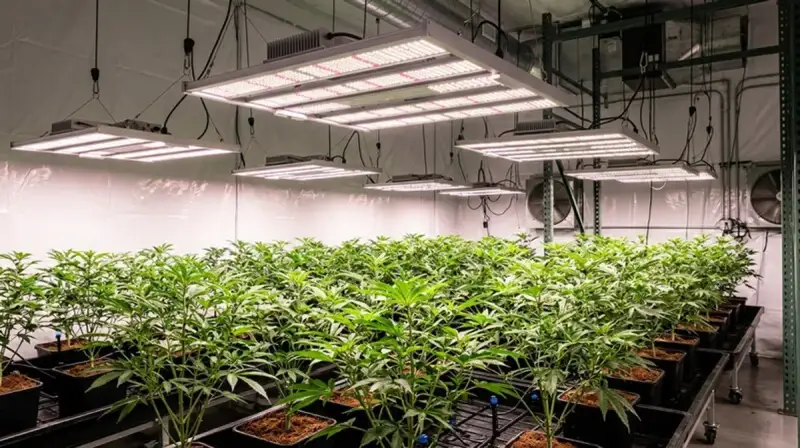
Cannabis Mold Detection: A Growing Safety Issue for US Consumers
By the ZenWeedGuide Editorial Team | Cannabis Safety & Consumer Protection |
- Mold contamination in cannabis — primarily from Aspergillus, Botrytis, and Penicillium species — poses serious health risks, especially for immunocompromised consumers.
- There is no unified federal testing standard for cannabis mold in the US; requirements vary dramatically state by state.
- States like California, Colorado, Oregon, and Nevada require mandatory microbial testing, but many others do not.
- Multiple recalls have been issued in legal markets due to mold contamination, highlighting the real-world frequency of the problem.
- Visual inspection alone is not sufficient — laboratory testing is the only reliable method to confirm mold-free cannabis.
- Immunocompromised patients and medical cannabis users face the greatest risk from exposure to fungal contaminants.
- New rapid-testing technologies, including PCR-based assays and portable spectrometers, are being adopted to improve detection speed and accuracy.
Background: Why Cannabis Mold Is a Serious Public Health Concern
Cannabis, like any organic agricultural product, is inherently susceptible to mold and fungal contamination. The conditions that make cannabis plants thrive — warmth, humidity, and abundant organic material — are also ideal for the growth of molds such as Aspergillus flavus, Aspergillus fumigatus, Botrytis cinerea (commonly known as gray mold or bud rot), and various Penicillium species. These fungi can infect cannabis at any stage: in the field, in the grow room, during harvest, during drying and curing, or in improper storage after packaging.
The public health stakes are significant. Unlike consuming moldy bread or fruit — where the digestive system provides some defense — smoking or vaporizing cannabis delivers mold spores and their toxic byproducts directly into the lungs, bypassing most of the body's natural defenses. For healthy adults, a small exposure may produce mild symptoms. But for medical cannabis patients who are immunocompromised due to HIV/AIDS, cancer chemotherapy, organ transplants, or corticosteroid use, inhaling Aspergillus spores can cause life-threatening invasive aspergillosis, a severe fungal lung infection with high mortality rates.
The problem is compounded by the fragmented regulatory landscape of the US cannabis industry. Because cannabis remains a Schedule I controlled substance under federal law, there is no overarching federal testing standard. The FDA, USDA, and CDC have no formal jurisdiction over cannabis product safety in the way they regulate food, pharmaceuticals, or tobacco. This means that testing requirements — what to test for, at what thresholds, using what methods — are entirely determined at the state level, resulting in a patchwork of standards that range from rigorous to nearly nonexistent.
For consumers navigating this landscape, understanding what mold contamination looks like, how legal markets are (or aren't) protecting them, and what steps they can take to protect themselves is increasingly essential knowledge. Whether you're a recreational user in a mature market like California or a patient relying on cannabis for symptom relief, the quality and safety of what you're consuming should never be an afterthought.
Key Developments: A Timeline of Cannabis Mold Safety Milestones
The history of cannabis mold detection and regulation reflects the broader maturation of the legal cannabis industry — and the persistent gaps that remain. The following table outlines key milestones in the evolution of cannabis mold testing and consumer safety policy in the United States.
| Year | Milestone / Development | Significance |
|---|---|---|
| 2010 | Early peer-reviewed studies document mold contamination in medical cannabis samples in California and other states | First systematic scientific documentation of the contamination problem in legal markets |
| 2012 | Colorado and Washington legalize recreational cannabis; early state regulations begin to address testing requirements | First recreational states begin crafting product safety frameworks that include microbial testing |
| 2015 | Case reports in clinical journals link cannabis use to pulmonary aspergillosis in immunocompromised patients | Medical community begins formally recognizing moldy cannabis as a serious health risk for vulnerable populations |
| 2017 | California's Proposition 64 implementation includes mandatory microbial testing for all commercial cannabis products | Largest legal cannabis market in the world adopts comprehensive safety testing, setting an industry benchmark |
| 2018 | Multiple dispensary recalls occur in California and Nevada due to Aspergillus contamination exceeding state limits | Real-world recalls demonstrate that the problem is not theoretical — and that state testing is finding it |
| 2019 | Cannabis Regulators Association (CANNRA) is founded, begins advocating for harmonized national testing standards | First major regulatory body to formally push for consistent cross-state cannabis testing protocols |
| 2021 | Research published in mSphere (American Society for Microbiology) finds widespread fungal contamination in dispensary cannabis samples in multiple states | Peer-reviewed evidence strengthens the case for mandatory, standardized testing in all legal markets |
| 2022–2023 | New York, New Jersey, and other newly legal states begin rolling out mandatory microbial testing requirements as markets mature | Newer markets adopting lessons from early states; some build stronger consumer protection from the start |
| 2024 | Portable PCR and near-infrared spectroscopy devices begin entering the commercial cannabis testing market, enabling faster on-site detection | Technological advances promise faster, more accessible mold detection throughout the supply chain |

Impact on Consumers: How Mold Contamination Affects Everyday Cannabis Users
For the average adult cannabis consumer, mold contamination can feel like an abstract concern — something that happens to other people, or that the legal market has already solved. The reality is more complicated. Even in states with mandatory testing, contaminated products occasionally reach consumers, either because testing occurred early in the supply chain before mold had fully developed, or because of improper storage after testing was completed. Understanding the full picture helps you make informed decisions.
From a health standpoint, the risks of consuming moldy cannabis vary significantly by consumption method. Smoking combusted cannabis is considered the highest-risk route because smoke can carry spores and mycotoxins deep into the lungs. Vaporization at controlled temperatures is somewhat less risky, as some (but not all) fungal pathogens are destroyed at vaping temperatures. Ingesting mold via edibles may be less immediately dangerous in terms of pulmonary exposure but can still introduce mycotoxins into the body, which are associated with liver toxicity and immune disruption with repeated exposure. Learn more about cannabis consumption methods and safety in our Explainers section.
Knowing how to do a basic visual and olfactory inspection of your cannabis is a practical skill every consumer should develop. Healthy dried flower should have a fresh, complex, terpene-rich aroma — earthy, piney, citrusy, or floral depending on the strain. Mold-affected cannabis often smells musty, mildewy, like wet hay or a damp basement. Visually, look for white, gray, or greenish-black fuzzy spots, powdery coatings that are distinct from normal trichome coverage, or unusual dark discoloration on buds. A jeweler's loupe or basic magnifier can help differentiate healthy trichomes (clear or amber mushroom-shaped structures) from mold hyphae (irregular, hair-like filaments).
Storage practices at home matter too. Mold needs moisture to grow, so keeping cannabis in an airtight container — ideally a glass jar with a humidity control pack maintaining 58–62% relative humidity — at a cool, dark location dramatically reduces the risk of post-purchase mold development. Avoid storing cannabis in plastic bags for extended periods, as static electricity can damage trichomes and the lack of humidity control can create conditions favorable to mold. Refrigerators are generally not recommended due to temperature fluctuations when opened and closed.
If you are a medical cannabis patient, particularly one with a compromised immune system, lung disease, or asthma, the importance of purchasing only from dispensaries in states with rigorous mandatory testing cannot be overstated. Look for Certificates of Analysis (COAs) from third-party laboratories when purchasing — any reputable licensed dispensary should be able to provide this documentation. Pay specific attention to the microbial testing section, which should show results for total yeast and mold (TYM) count as well as specific Aspergillus species, ideally listed as "not detected."
Industry Perspective: Market Implications of Mold Testing Standards

The cannabis industry has a complicated relationship with mold testing. On one hand, rigorous testing standards are widely recognized as essential to building long-term consumer trust and legitimizing the legal market versus unregulated competitors. On the other hand, testing is expensive, time-consuming, and can result in product failures that are financially devastating for small cultivators operating on thin margins.
Third-party laboratory testing for microbial contamination — including total yeast and mold counts, specific pathogen identification, and mycotoxin screening — can add $100–$300 per sample to a cultivator's operational costs. When you factor in the number of batches a mid-size operation produces per year, these costs add up significantly. Some industry observers have argued that the financial burden of testing disproportionately affects small craft growers, potentially accelerating consolidation toward larger licensed operators who can absorb compliance costs more easily.
There is also ongoing debate within the industry about which testing methods should be accepted as the standard. Traditional plate culture methods (growing mold colonies from a sample and counting them) are considered the gold standard for accuracy but take 5–7 days to produce results. Faster PCR (polymerase chain reaction) DNA-based testing can return results in hours but is more expensive and some argue it can return false positives by detecting dead mold DNA. This methodological debate has real economic consequences for cultivators whose product is held in quarantine during testing.
The emergence of portable, on-site testing technology represents a potentially transformative development for the industry. Near-infrared (NIR) spectroscopy devices and handheld PCR units are beginning to enter the commercial market, promising faster detection at multiple points in the supply chain — not just at a third-party lab before sale, but potentially in the grow room, at harvest, and at the dispensary level before products reach shelves. Wider adoption of these technologies could dramatically reduce the window between contamination and detection, protecting both consumers and cultivators from costly product failures.
From a market perspective, the states with the most rigorous testing regimes — California, Colorado, Oregon, Nevada — have also developed some of the most mature…