









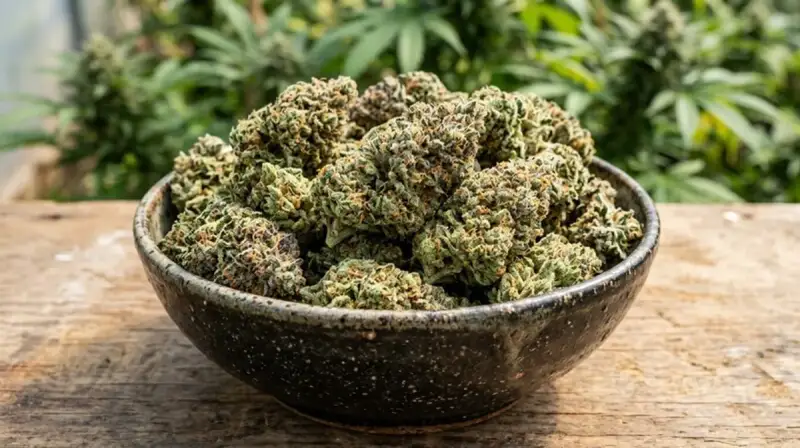
The Rise of Luxury Cannabis: Premium Brands, Craft Flower, and What It Means for Consumers
ZenWeedGuide Editorial Team |
By ZenWeedGuide Editorial Staff | Updated January 2025 | Cannabis News & Analysis
- The luxury cannabis segment is one of the fastest-growing categories in the legal US cannabis market, driven by affluent adult-use consumers and medical patients seeking refined experiences.
- Premium cannabis products — including small-batch flower, live resin, and designer edibles — can command prices 3–5x higher than standard dispensary offerings.
- California, Colorado, and Massachusetts lead the luxury cannabis market; New York and New Jersey are emerging as major players.
- Luxury branding encompasses artisan cultivation, celebrity partnerships, elaborate packaging, and exclusive dispensary experiences.
- Critics argue luxury pricing can widen affordability gaps and disadvantage medical patients and low-income consumers.
- Third-party lab testing, terpene documentation, and transparent supply chains are hallmarks of credible premium brands.
- Consumers should evaluate luxury products on verified quality metrics — not just price or packaging — before purchasing.
Background: How Cannabis Became a Luxury Good
For most of its modern history, cannabis occupied the cultural and economic margins — bought in back alleys, priced for accessibility, and evaluated by feel and smell rather than by verified data. The arrival of state-regulated medical and adult-use markets fundamentally disrupted that dynamic. Beginning with California's Proposition 215 in 1996, and accelerating dramatically after Colorado and Washington legalized recreational cannabis in 2012, legal cannabis operators found themselves in an environment where product differentiation, branding, and consumer experience suddenly mattered.
The emergence of luxury cannabis was not accidental. It mirrored patterns seen in other industries — craft beer displacing mass-market lagers, small-batch bourbon commanding premium shelf space, and artisan coffee reshaping the morning routine of millions. As legal markets matured, cultivators and retailers recognized that a significant consumer segment was willing to pay substantially more for a superior, verifiable, and experiential product. Cannabis explainers and educational resources helped educate buyers on what to look for — from terpene profiles to curing methods — creating a more sophisticated consumer base capable of supporting a luxury tier.
The concept of "craft cannabis" also gained traction as small, independent growers distinguished themselves from large multi-state operators (MSOs) through quality-over-quantity approaches. Regions with deep cultivation heritage — particularly California's Emerald Triangle, comprising Humboldt, Mendocino, and Trinity counties — became the cannabis equivalent of Napa Valley or Champagne, with geographic origin itself carrying premium value. Understanding the strains grown in these regions, and why certain genetics fetch higher prices, became an important dimension of the luxury market.
Cannabis laws vary significantly by state, and the luxury market has developed differently depending on local regulatory frameworks. High-tax environments like California created pressure that paradoxically helped luxury brands, as the illegal market became the primary destination for budget buyers, leaving the legal market to compete on quality and experience for consumers willing to pay the premium. Our state-by-state cannabis guide provides context on how regulation shapes market dynamics in different regions.
Key Developments: A Timeline of the Premium Cannabis Market
The luxury cannabis category has evolved rapidly across a decade of legal market maturation. The following table highlights the major milestones that shaped where the premium segment stands today.
| Year | Milestone | Significance |
|---|---|---|
| 2012–2014 | Colorado & Washington launch adult-use markets | First legal recreational markets create infrastructure for premium retail environments and branded products. |
| 2015–2016 | Craft cannabis branding emerges in California | Small-batch cultivators in the Emerald Triangle begin transitioning to the legal market with heritage genetics and premium positioning. |
| 2017 | California Prop 64 takes effect; luxury dispensaries open | World-class retail environments in Los Angeles and San Francisco set new standards for the in-store cannabis experience. |
| 2018–2019 | Celebrity cannabis brands proliferate | High-profile launches (Jay-Z's Monogram, Seth Rogen's Houseplant, Woody Harrelson's brand) bring luxury positioning into mainstream media. |
| 2020 | COVID accelerates cannabis e-commerce & delivery | Premium brands expand direct-to-consumer delivery; luxury gifting and subscription boxes emerge as new channels. |
| 2021 | Live resin and rosin products reach mass luxury market | Solventless concentrates and live products command $80–$120 per gram, establishing concentrates as the luxury frontier. |
| 2022–2023 | New York & New Jersey adult-use sales begin | Two major metropolitan markets with high-income demographics open, creating instant demand for premium products. |
| 2024–2025 | Luxury infused pre-rolls, beverages & wellness lines surge | Multi-format luxury reaches edibles and beverages; cannabis-wellness crossover drives new premium SKUs appealing to health-conscious consumers. |

Impact on Consumers: What the Luxury Market Means for Everyday Cannabis Users
The luxury cannabis segment has a ripple effect across the entire market, touching both premium buyers and value-conscious consumers in ways that are not always immediately obvious. For consumers who actively choose premium products, the benefits are tangible: higher-quality flower with richer terpene profiles, more transparent lab documentation, better curing and storage, and a more refined retail or delivery experience. Premium brands routinely publish full panel Certificates of Analysis (COAs), including cannabinoid potency, residual solvents, pesticide screens, and microbial testing — a level of transparency that raises the bar across the industry.
The effects of luxury cannabis products can also differ meaningfully from budget alternatives. Entourage-effect-rich flower with high terpene retention, properly flushed nutrients, and careful curing may deliver a more nuanced, complex experience than mass-produced flower. Cannabis effects guides explain how cannabinoid and terpene combinations influence the overall experience — knowledge that helps consumers understand why top-shelf products sometimes justify their price.
However, the premium market is not without pitfalls for consumers. Marketing and branding can substantially inflate prices beyond what is warranted by actual quality. Celebrity-branded products, for example, sometimes command luxury prices while sourcing flower from the same contract cultivators as mid-tier brands. Sophisticated consumers should look beyond packaging to verified third-party COAs, cultivation transparency, and reviews from knowledgeable sources. The presence of luxury positioning does not automatically equal superior quality.
For medical cannabis patients, the luxury market raises important equity concerns. As premium operators capture increasing shelf space and regulatory attention, affordable, high-quality medical options may become harder to find. Organizations like the medical cannabis resource center track how market premiumization affects patient access across different states. Additionally, consumers in all market segments should be aware of drug testing implications — high-potency luxury products may result in longer detection windows due to elevated THC concentration.
| Product Category | Budget Tier (Avg. Price) | Mid-Tier (Avg. Price) | Luxury Tier (Avg. Price) | Key Differentiators |
|---|---|---|---|---|
| 1/8 oz Flower | $20–$30 | $35–$50 | $60–$100+ | Genetics, cure quality, terpene retention, hand-trim |
| Vape Cartridge (0.5g) | $15–$25 | $30–$45 | $55–$80 | Solventless extraction, live resin/rosin, hardware quality |
| Concentrate (1g) | $25–$40 | $45–$65 | $80–$120+ | Live rosin vs. BHO, small-batch, genetics documentation |
| Edibles (10-pack) | $10–$18 | $20–$30 | $35–$65 | Nano-emulsion, chef-crafted, premium ingredients, microdosing precision |
| Pre-roll (1g) | $5–$10 | $12–$18 | $25–$50 | Whole flower (no shake/trim), infused options, glass tips, branded packaging |
Industry Perspective: The Business of Premium Cannabis

From a business standpoint, the luxury cannabis market represents one of the most attractive growth segments in an otherwise challenging industry environment. While the broader legal cannabis market has faced significant margin compression due to overproduction, falling wholesale prices, and ongoing competition from unlicensed sellers, luxury brands have demonstrated stronger pricing power and consumer loyalty. Premium positioning insulates brands from the commodity pricing race to the bottom that has squeezed many multi-state operators.
Craft cultivators and luxury brands typically operate on lower volume but higher margins. A small-batch indoor cultivator growing premium genetics in a tightly controlled environment may produce far less total product than a large commercial greenhouse, but each pound commands significantly higher wholesale prices. This model mirrors the craft spirits and artisan cheese industries, where scarcity and verifiable quality are leveraged as marketing assets rather than liabilities.
Investment in luxury cannabis has also attracted non-endemic capital. Private equity firms, luxury goods veterans, and consumer packaged goods (CPG) professionals have entered the cannabis space specifically targeting the premium segment, bringing sophisticated brand-building expertise that was previously rare in the industry. The result has been a professionalization of cannabis marketing, with luxury brands investing…