










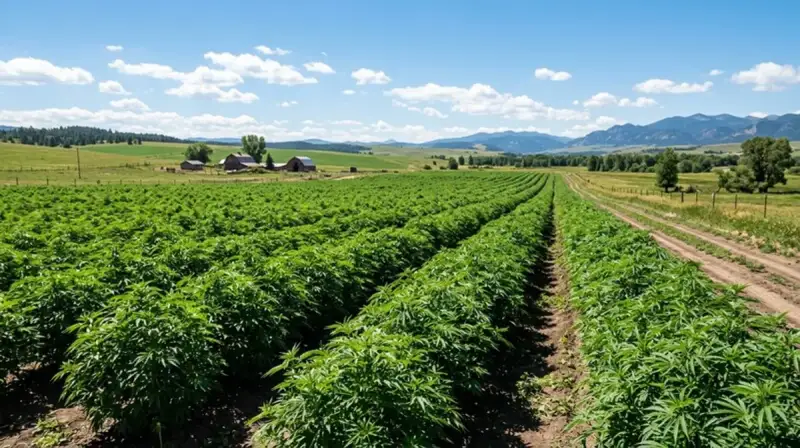
Cannabis & the Farm Bill: What Federal Hemp Law Means for You
Updated 2024 • By the ZenWeedGuide Editorial Team • 8 min read |
- The 2018 Farm Bill federally legalized hemp — cannabis with ≤0.3% delta-9 THC — removing it from the Controlled Substances Act for the first time.
- Marijuana (cannabis exceeding 0.3% THC) remains a Schedule I controlled substance under federal law regardless of state laws.
- The 2018 law created a legal gray area for hemp-derived psychoactive cannabinoids like delta-8 THC, HHC, and delta-10 THC.
- The Farm Bill must be reauthorized every five years; the 2024 reauthorization is expected to include significant hemp product restrictions.
- At least 20 states have independently moved to restrict or ban hemp-derived delta-8 THC products since 2021.
- CBD products derived from hemp are legal federally but lack formal FDA approval as dietary supplements, creating ongoing regulatory uncertainty.
- Consumers subject to drug testing risk positive results even from federally legal hemp-derived products containing trace THC.
Few pieces of legislation have reshaped the American cannabis landscape as dramatically — and unexpectedly — as the Agriculture Improvement Act of 2018, better known as the Farm Bill. By removing hemp from the federal list of controlled substances, Congress ignited a multibillion-dollar hemp industry, accelerated consumer access to CBD and other cannabinoids, and inadvertently opened a regulatory Pandora's box that lawmakers are still scrambling to close. As the next reauthorization cycle comes into focus, understanding what the Farm Bill does, doesn't do, and may soon change is essential for every cannabis consumer, patient, cultivator, and investor in the United States.
Background: From Prohibition to Hemp's Federal Comeback
Hemp and cannabis share the same botanical species — Cannabis sativa — but they were lumped together and federally prohibited under the Marihuana Tax Act of 1937 and, more comprehensively, the Controlled Substances Act of 1970. For decades, even industrial hemp cultivation for rope, textiles, and seeds was effectively illegal in the US, forcing American manufacturers to import hemp from Canada and Europe while domestic farmers watched a potentially lucrative crop pass them by.
The first meaningful shift came with the 2014 Farm Bill, which allowed limited hemp cultivation for research purposes under state pilot programs. That opened the door, but only a crack. It wasn't until the landmark 2018 Farm Bill — signed into law by President Trump on December 20, 2018 — that hemp was formally removed from Schedule I of the Controlled Substances Act and defined as cannabis containing no more than 0.3% delta-9 THC on a dry weight basis.
That single threshold — 0.3% THC — became one of the most consequential numbers in American drug policy. It separated legal hemp from illegal marijuana not by plant genetics or intended use, but by the concentration of one specific cannabinoid. The ripple effects have been enormous. Explore how individual state cannabis laws interact with federal hemp rules, since state-level regulations add another layer of complexity for consumers and businesses alike.
The explainer resources at ZenWeedGuide dig deeper into the science of cannabinoids, but the core issue is this: the 2018 Farm Bill was primarily intended to help farmers grow industrial hemp for fiber, seed, and CBD extraction — not to create a new market for intoxicating hemp-derived cannabinoids. Yet that is precisely what followed, as chemists discovered they could convert legal hemp-derived CBD into delta-8 THC and other psychoactive compounds that technically fell outside the law's intended restrictions.
"The 2018 Farm Bill was written to help farmers, not to create a new psychoactive products marketplace. The loopholes were unintentional, and Congress is now working hard to close them before another five-year cycle passes."
Key Developments: A Timeline of Federal Hemp Policy
The evolution of hemp and cannabis policy under the Farm Bill framework has moved quickly. The table below tracks the most significant legislative, regulatory, and market milestones since hemp's federal re-legalization.
| Year | Development | Significance |
|---|---|---|
| 2014 | 2014 Farm Bill — State Pilot Programs | First federal allowance for limited hemp research cultivation; paved the way for 2018 |
| Dec 2018 | 2018 Farm Bill Signed into Law | Hemp federally legalized; USDA given regulatory authority; CBD market explodes |
| 2019 | FDA Issues CBD Warnings; Declines to Greenlight Supplements | FDA asserts CBD cannot legally be sold as dietary supplement, creating market uncertainty |
| 2020 | USDA Hemp Final Rule Published | Establishes federal licensing framework for hemp farmers; sets testing protocols |
| 2021 | Delta-8 THC Market Surges | Hemp-derived delta-8 THC products flood retail; DEA and states begin crackdown efforts |
| 2022 | Farm Bill Extension — Deadline Missed | Congress fails to pass new Farm Bill; 2018 provisions extended temporarily |
| 2023 | Senate/House Draft Farm Bills Include Hemp Provisions | Competing proposals seek to restrict intoxicating hemp-derived cannabinoids |
| 2024 | Reauthorization Negotiations Continue | Key battleground: how to define "intoxicating hemp" and regulate delta-8, HHC, and THCA |

Impact on Consumers: What Federal Hemp Law Means Day-to-Day
For the average American cannabis consumer, the Farm Bill's effects are both liberating and confusing. On the positive side, it created a nationwide market for hemp-derived CBD products — oils, gummies, topicals, capsules — that are now available in grocery stores, gas stations, pharmacies, and online. Consumers in states where recreational or medical marijuana remains illegal suddenly had access to hemp-derived cannabinoids that could offer relaxation, sleep support, and pain relief without requiring a dispensary visit.
The more complicated reality is that product quality, labeling accuracy, and safety standards vary wildly across the hemp market. Unlike licensed cannabis dispensaries operating under state marijuana regulations, hemp-derived CBD and delta-8 THC products often exist in a regulatory vacuum. Third-party lab testing is voluntary in many jurisdictions, and mislabeling — both under-declaring and over-declaring THC content — is a documented problem. Consumers should always seek products with current Certificates of Analysis (COAs) from accredited labs.
One of the most practically consequential issues for consumers is drug testing. Standard urine drug screens cannot distinguish between THC from a legal hemp CBD product and THC from marijuana. Because CBD can metabolize into THC metabolites in the body, and because delta-8 THC produces identical metabolites to delta-9 THC on immunoassay panels, consumers who use hemp-derived products risk failing workplace drug tests even when those products are technically legal. This is an especially critical consideration for employees in safety-sensitive industries, federal workers, or anyone subject to regular screening.
State law adds another layer. Even though hemp is federally legal, states retain the authority to set their own hemp rules. At least 20 states have restricted or banned delta-8 THC products, meaning a product that's legal to buy online from a hemp retailer may be illegal to possess in your state. Always verify your state's specific rules before purchasing.
| Product Type | Federal Legal Status | Drug Test Risk | State Variation |
|---|---|---|---|
| Hemp CBD Oil (≤0.3% THC) | Legal (federally) | Low–Moderate | Legal in most states |
| Delta-8 THC Products | Gray area / contested | High | Banned in 20+ states |
| THCA Flower | Gray area (converts to THC when heated) | High | Increasingly restricted |
| Hemp Seed/Food Products | Legal (federally) | Very Low | Legal nationwide |
| CBD Topicals | Legal (federally) | Negligible | Legal in most states |
| HHC / Delta-10 Products | Gray area / contested | High | Restricted in several states |
Industry Perspective: Market Implications and Business Stakes
The business stakes of Farm Bill reauthorization cannot be overstated. Hemp legalization created a market that virtually didn…