









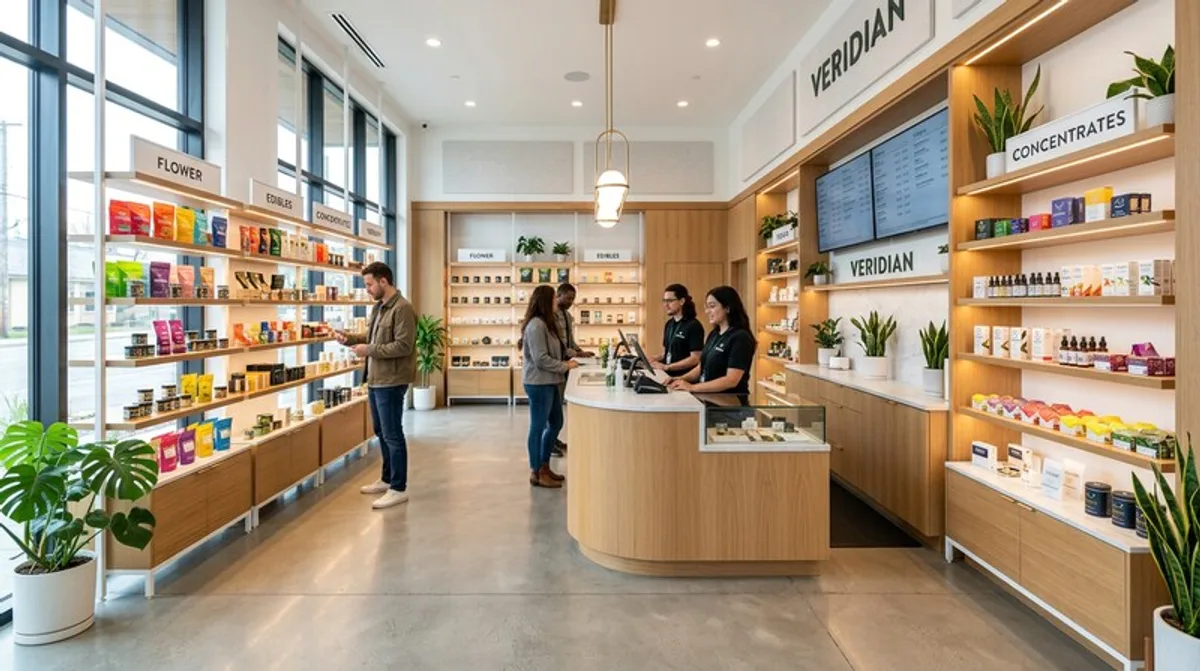
The Evolution From Medical Grey to Architectural Statement
Published June 15, 2023 — By Ann Karim, Senior Cannabis Editor
- Early medical dispensaries were deliberately sterile and institutional in design
- MedMen pioneered Apple Store-style cannabis retail in 2010s
- Planet 13 Las Vegas: 40,000 sq ft experiential cannabis megastore
- Cookies flagship stores now operating in 50+ cities across the US and internationally
- Flagship build-outs range from $500,000 to $5 million-plus
- Design has become a core brand differentiator and cannabis tourism driver
Why the First Dispensaries Looked Like Clinics
The earliest cannabis dispensaries in California’s 1996 medical market were designed to communicate legitimacy above all else. In an environment where landlords were hostile, banks refused accounts, and neighbors organized against them, operators made a calculated choice: make the space look as medical and professional as possible to minimize community opposition and regulatory scrutiny. Frosted glass, white walls, pharmaceutical countertops, and buzzered entry points — the dispensary as a cross between a pharmacy and a security checkpoint — became the dominant template. This was not bad design for its time: it served a purpose and it worked. But it also communicated a kind of shame — an implicit acknowledgment that the product being sold was not quite normal, that the transaction needed to be hidden behind frosted glass and kept clinical and joyless. As medical cannabis expanded to more states and social attitudes shifted, a new generation of operators began to ask a different question: what if the dispensary looked like somewhere you actually wanted to be? The answer transformed an entire retail category. Today, finding the right dispensary has become as much about the experience as the product range.
“We wanted our dispensary to feel like the best retail experience you’ve ever had — not like you were picking up a prescription under fluorescent lights.” — Cannabis retail design pioneer, 2023
MedMen, Cookies, and the Design Revolution
The company most credited with changing cannabis retail aesthetics is MedMen, the Los Angeles-based multi-state operator that built its early brand around an explicitly Apple Store-inspired aesthetic: clean white interiors, iPad-equipped staff, minimalist product display, and retail experiences that communicated premium lifestyle rather than underground medicine. MedMen’s design language normalized cannabis retail in a way that earlier operators had not attempted, inviting first-time and curious consumers who might have been intimidated by the older fortress-style shops. Though MedMen’s financial model ultimately collapsed, its design influence on the industry is permanent. Cookies, the streetwear-meets-cannabis brand founded by Bay Area rapper Berner, took a completely different aesthetic approach: its flagships — now in over 50 cities globally — feel like premium sneaker boutiques, with merchandise walls, bold graphics, and a cultural energy that treats cannabis as lifestyle product rather than medicine. Planet 13 in Las Vegas went further still: a 40,000-square-foot experiential destination combining retail, live entertainment, and immersive lighting installations into what is effectively a cannabis theme park. These flagship concepts have made cannabis dispensaries genuine tourist attractions, destinations that visitors plan trips around rather than simply stumble across.

Architecture as Brand Strategy: What the Best Dispensaries Get Right
The dispensaries generating the most revenue and the most enthusiastic customer reviews share several design principles. First: the welcome. The transition from public street to cannabis retail space — historically marked by buzzers, ID checks, and airlock-style double doors — has been reimagined in the best new-generation shops as a natural, hospitable threshold, similar to entering a well-designed hotel or boutique. Second: the staff experience. The best dispensaries treat the interaction between customer and budtender as the core of the retail experience, designing spaces where consultative conversations are natural rather than transactional. Third: the product display. Cannabis products — from flower jars to concentrate hardware to edibles packaging — are displayed with the care of jewelry or luxury spirits, with lighting, labeling, and arrangement communicating quality rather than quantity. For cannabis tourism, these flagship dispensary experiences are becoming anchor attractions in cities like Los Angeles, Denver, Portland, and Las Vegas. When visiting legal cannabis destinations across the US or internationally, checking our dispensary guide for design-forward options turns a purchase into an experience worth making the trip for.
What Dispensary Design Evolution Means for Global Cannabis Retail
As cannabis retail design has matured in North America, the lessons are being applied globally. New German social clubs, Dutch coffeeshops investing in redesigns, and Australian cannabis clinics all show evidence of the North American design influence: better lighting, better product presentation, more welcoming atmospheres, and a conscious effort to communicate premium quality rather than grey-market hustle. The economic stakes are significant: dispensaries that invest in design consistently report higher average transaction values, stronger customer loyalty, and dramatically better Instagram-driven organic marketing. In a commodity market where product differentiation is difficult, the retail experience is often the most sustainable competitive advantage. For the cannabis tourism industry, design-led dispensaries create destinations with draw independent of the specific product range — people visit Planet 13 the way they visit a flagship Apple Store, for the experience as much as the purchase. Our comprehensive dispensary finder highlights design-forward locations worth visiting across all legal markets, alongside practical tools like the drug test calculator to help you consume responsibly wherever you visit.