









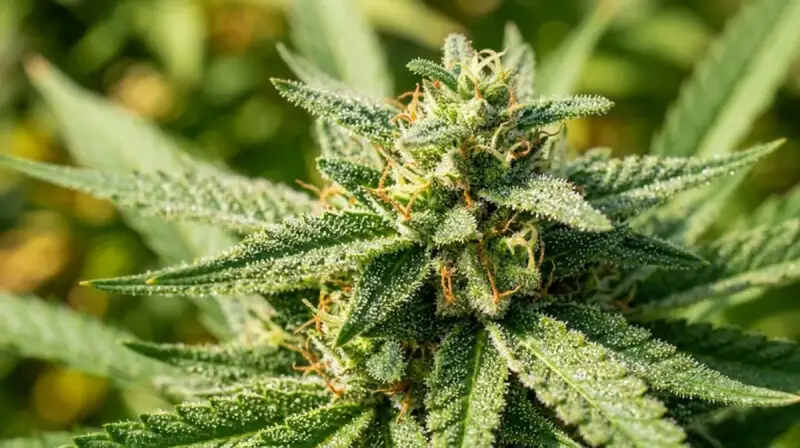
Craft Cannabis: The Rise of Artisan Weed in America
By ZenWeedGuide Editorial Team | Updated June 2024 | Cannabis laws vary by state. This article is for adults 21+ in legal states only. |
- What it is: Craft cannabis refers to small-batch, artisan-grown flower produced with elevated care for genetics, growing methods, and post-harvest handling.
- How it differs: Craft grows are typically hand-trimmed, slow-cured, and cultivated in smaller canopy spaces than large commercial operations.
- State licensing: California, Michigan, Massachusetts, New York, and New Jersey have introduced dedicated craft or microbusiness cannabis licenses.
- Price point: Craft flower generally retails at $50–$70 per eighth, compared to $25–$40 for mass-market options.
- Consumer impact: Buyers gain access to rare genetics, richer terpene profiles, and greater transparency about growing practices.
- Market trend: The craft segment is the fastest-growing niche in the legal cannabis industry, according to several market research firms.
- Social equity: Many state craft programs include provisions specifically designed to support minority-owned and legacy-market operators.
Background: How Craft Cannabis Became a Movement
Long before dispensaries existed, American cannabis culture was defined by small-scale, passionate growers. The legendary cultivators of Northern California's Emerald Triangle — spanning Humboldt, Mendocino, and Trinity counties — spent decades perfecting landrace and hybrid genetics, developing cultivation philosophies rooted in soil health, biodiversity, and terroir. These growers were the original craft producers, even if no legal framework existed to recognize them as such.
When Colorado and Washington became the first states to legalize recreational adult-use cannabis in 2012, the early regulatory frameworks heavily favored well-capitalized commercial operations. Licensing was expensive, compliance costs were enormous, and only entities with significant startup capital could realistically enter the market. The result was predictable: a rapid consolidation toward large greenhouse and warehouse grows optimizing for volume, shelf stability, and cost efficiency rather than complexity or character.
By the mid-2010s, a growing chorus of consumers, legacy cultivators, and cannabis advocates began pushing back. Inspired directly by the craft beer revolution that swept the United States starting in the 1980s, these voices argued that the legal cannabis market was trending toward a Budweiser-ification of weed — uniform, mass-produced, and stripped of the regional and varietal diversity that had made underground cannabis culture so rich. The term "craft cannabis" entered common usage around 2016–2017, and by 2019, several states had begun experimenting with tiered licensing structures to support smaller producers.
Today, understanding craft cannabis requires understanding the full spectrum of the cannabis strain landscape, the science of terpenes and cannabinoids, and the patchwork of state-by-state cannabis laws that govern how these products reach consumers. Craft is not merely a marketing term — it is increasingly a legally defined category with specific canopy limits, licensing requirements, and production standards that vary from state to state.
"The craft cannabis movement is doing for weed what craft beer did for brewing — restoring diversity, quality, and the human story behind what people consume. Consumers deserve to know where their cannabis comes from and how it was grown."
Key Developments: A Timeline of Craft Cannabis Milestones
The emergence of craft cannabis as a recognized industry category has unfolded across a series of regulatory, cultural, and market milestones. The table below traces the most significant developments from the dawn of legalization to the present day.
| Year | Milestone | Significance |
|---|---|---|
| 2012 | Colorado & Washington legalize adult-use cannabis | Creates the first legal commercial cannabis markets; large-scale operators dominate early licensing |
| 2016 | California Prop 64 passes; includes small farm provisions | Explicitly creates Specialty Cottage, Small, and Medium cultivation license tiers to protect legacy farmers |
| 2017 | "Craft cannabis" enters mainstream cannabis media lexicon | Industry publications begin covering artisan producers as a distinct market segment |
| 2018 | Michigan legalizes adult-use; includes microbusiness license | Microbusiness license allows cultivate-process-retail under one license, a model for future craft frameworks |
| 2019 | Emerald Cup introduces Craft Category judging | Major cannabis competition formally recognizes craft as distinct from commercial production |
| 2021 | New York legalizes; prioritizes social equity craft licenses | CAURD program issues first licenses to justice-involved individuals, many operating craft-scale grows |
| 2022 | Massachusetts Craft Marijuana Cooperative rules finalized | Creates co-op model allowing small growers to pool resources while maintaining individual craft identity |
| 2023 | New Jersey opens craft cultivator applications | Caps canopy at 10,000 sq ft; sets a national precedent for formal size-based craft definitions |
| 2024 | Multiple states introduce "craft cannabis" branding standards | Growing regulatory movement to prevent large operators from misusing craft labeling |

Impact on Consumers: What Craft Cannabis Means for Everyday Users
For consumers browsing the shelves of a legal dispensary, the proliferation of craft cannabis represents both an exciting opportunity and a potential source of confusion. Understanding what genuinely distinguishes craft products from commercial alternatives is essential to making informed purchasing decisions.
The most immediate and tangible difference most consumers notice is aroma and flavor. Craft cannabis, particularly when hand-trimmed and properly cured for 4–8 weeks, typically exhibits a far more complex and vibrant terpene profile than mass-market flower. Where commercial flower might smell generically "piney" or "skunky," a well-crafted batch of Runtz, Wedding Cake, or Zkittlez might offer layered notes of tropical fruit, diesel, cream, and earth that evolve as the bowl progresses. This complexity is not accidental — it is the direct result of careful harvest timing, gentle handling, and controlled curing conditions that preserve volatile terpene compounds that would otherwise degrade.
Consumers interested in the full-spectrum effects of cannabis — sometimes called the entourage effect — will also appreciate that craft producers tend to prioritize cannabinoid diversity. Rather than selecting genetics solely for maximum THC percentage, craft growers often seek strains with meaningful levels of CBD, CBG, or THCV alongside rich terpene expression. This approach reflects a more sophisticated understanding of how cannabis works in the body and may produce more nuanced, well-rounded psychoactive and therapeutic effects.
Transparency is another major consumer benefit. Many craft producers publish detailed grow logs, soil amendment lists, and third-party lab results that go beyond the basic COA (Certificate of Analysis) required by state regulations. Consumers interested in medical cannabis applications especially benefit from this level of transparency, as it allows them to make more targeted choices based on specific cannabinoid and terpene ratios.
It is worth noting that for consumers who use cannabis frequently or in large quantities, the craft premium may not always be financially sustainable. Mass-market cannabis has improved significantly in quality over the past decade, and the gap between good commercial flower and entry-level craft is narrower than it once was. Savvy consumers often develop a hybrid strategy — reserving craft purchases for special occasions, specific strains, or medical applications where quality is paramount, while relying on value-tier products for everyday use.
Consumers should also be aware that "craft" labeling is not uniformly regulated across all states. In states without formal craft licensing tiers, large multi-state operators (MSOs) sometimes market products with craft-adjacent language without meeting any objective size or quality thresholds. Reading labels carefully, asking dispensary staff about the actual producer, and checking whether your state has formal craft licensing criteria are all important steps for consumers who want to ensure their money is genuinely supporting small-batch artisan production.
Industry Perspective: The Market Dynamics of Craft Cannabis

From a purely financial standpoint, craft cannabis occupies a fascinating paradox. It commands the highest per-unit retail prices in the market — often $60–$75 for a single eighth-ounce — yet craft producers frequently operate on thinner margins than their large commercial counterparts due to higher per-pound production costs. The economics only work when a producer can consistently command premium pricing and build a loyal customer base willing to pay for provenance and quality.
The comparison to craft beer is instructive but imperfect. The craft beer industry was able to scale by distributing nationally and eventually being acquired by major brewers — a pathway largely unavailable to cannabis businesses due to federal prohibition, which prevents interstate commerce in cannabis products. This means craft cannabis producers are structurally limited to selling within their home state, capping their addressable market in ways that craft beer brewers never faced.
Despite this structural constraint, market research firm New Frontier Data has estimated that the premium/craft segment of the US cannabis market is growing at approximately 18% annually — faster than the overall market — as the consumer base matures and shifts its preferences from quantity to quality. The analogy to the evolution of the wine market is increasingly apt: as legal cannabis normalizes, consumers are developing more sophisticated palates and demanding products that reflect genuine craft and terroir.