









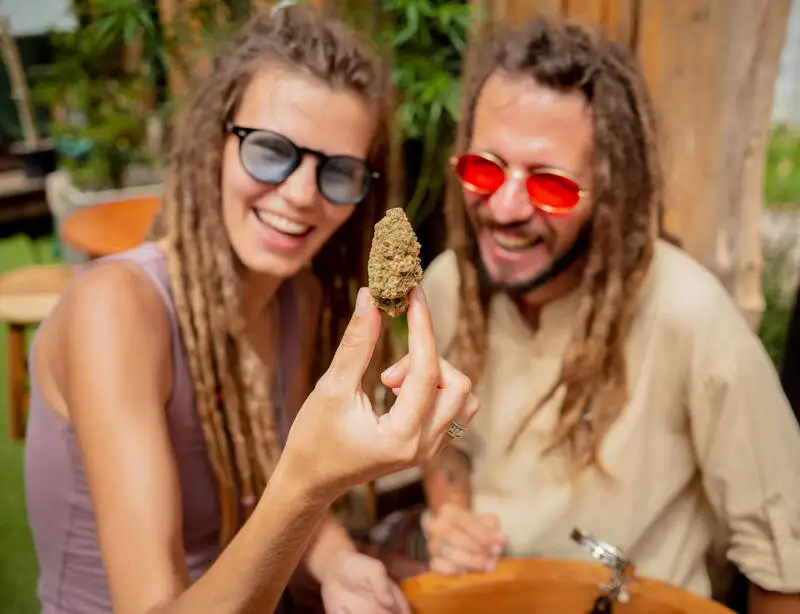
Cannabis Comedy: How Humor Is Reshaping Weed Culture & the Legalization Conversation
By ZenWeedGuide Editorial Team | Updated 2024 | 8 min read |
- Cannabis comedy dates back decades but has exploded into the mainstream since state-level legalization began accelerating after 2012.
- Over 70% of Americans now support cannabis legalization — a shift cultural commentators partly attribute to normalized, humorous representation in media.
- Cannabis-themed entertainment generates an estimated $500 million+ annually across streaming, live events, podcasts, and branded partnerships.
- Comedians including Dave Chappelle, Doug Benson, and Wanda Sykes have built significant portions of their brands around cannabis humor.
- Cannabis consumption lounges in legal states are creating new, dedicated spaces for live comedy events, merging entertainment and the cannabis retail experience.
- Stigma reduction tied to positive media portrayals is cited by organizations like NORML and the Marijuana Policy Project (MPP) as a key driver of public opinion shifts.
Background: A Long, Strange Trip from Counterculture to Comedy Gold
Cannabis and comedy have shared a symbiotic relationship for more than half a century. From the jazz clubs of the 1940s where marijuana was a quiet constant, to the psychedelic humor of the 1960s counterculture, to the stoner comedy explosion of the 1990s and 2000s, cannabis has never been far from the punchline — or the premise — of American humor. But something has fundamentally shifted in the past decade. What was once a niche genre associated with low-budget films and underground stand-up sets has become a mainstream, commercially viable, and even socially meaningful category of entertainment.
The legalization wave that began with Colorado and Washington state in 2012 provided cultural permission that comedians, writers, and entertainers had long been waiting for. Suddenly, joking about cannabis wasn't just countercultural — it was topical, relevant, and increasingly mainstream. Late-night hosts, Netflix specials, and major podcast networks began incorporating cannabis humor with a frequency and openness that would have been unthinkable just fifteen years earlier. Understanding this evolution requires looking at how American attitudes toward cannabis — and toward those who use it — have transformed in real time, driven in part by humor itself.
It's worth noting that cannabis comedy isn't monolithic. It ranges from the broad slapstick stoner humor of films like Pineapple Express and the Harold & Kumar franchise to the deeply political comedy of performers who use cannabis culture as a lens through which to examine racial justice, drug policy, and personal freedom. This range is itself a reflection of how cannabis has moved from a single-note cultural signifier to a complex, multifaceted part of American life. For consumers navigating today's legal market, understanding the cultural context surrounding cannabis — including its comedic representation — adds meaningful depth to the experience. You can explore how cannabis laws vary by state to understand the legal landscape that underpins these cultural shifts.
"Comedy has always been the canary in the coal mine of cultural change. The fact that cannabis jokes land in every ZIP code in America tells you everything you need to know about where public opinion actually is — regardless of what the law says."
Key Developments: A Timeline of Cannabis Comedy Milestones
The trajectory of cannabis comedy mirrors the broader arc of cannabis legalization and cultural normalization in the United States. The milestones below illustrate how humor has tracked — and at times driven — social change.
| Year / Era | Milestone | Significance |
|---|---|---|
| 1971 | Cheech & Chong release their first comedy album | Defined "stoner comedy" as a genre; sold millions of records and reached mainstream audiences |
| 1978 | Up in Smoke theatrical release | First major cannabis-themed film to gross over $100M; legitimized the genre commercially |
| 1992 | Doug Benson begins performing stand-up | Would become the defining cannabis-focused comedian of his generation; later created Super High Me |
| 2004 | Harold & Kumar Go to White Castle released | Broke the "white stoner" stereotype by centering diverse leads; critical and commercial success |
| 2008 | Pineapple Express and Super High Me released same year | Peak of mainstream stoner comedy film era; combined gross exceeded $100M domestically |
| 2012 | Colorado and Washington legalize adult-use cannabis | Cultural permission moment — cannabis jokes move from edgy to mainstream on late night TV |
| 2016 | Cannabis-themed podcasts proliferate (High Times Radio, etc.) | Podcast format allows uncensored, in-depth cannabis comedy content to reach millions |
| 2020–2022 | Netflix, Hulu commission cannabis comedy specials and series | Streaming legitimizes cannabis content; reaches global audiences without broadcast restrictions |
| 2023–2024 | Cannabis consumption lounges host live comedy nights | Legal consumption spaces create new business model merging retail and entertainment |

Impact on Consumers: How Cannabis Comedy Changes the User Experience
For everyday cannabis consumers, the rise of cannabis comedy has tangible, meaningful effects that go beyond entertainment. Most significantly, it has contributed to a dramatic reduction in the social stigma that once surrounded cannabis use. When high-profile comedians joke openly about consuming cannabis on stage, in podcasts, and in interviews, it sends a powerful normalization signal to the general public — including non-users, policymakers, and the families of cannabis consumers who may have harbored concerns rooted in decades of anti-cannabis propaganda.
This normalization has practical consequences. Consumers report feeling more comfortable discussing their cannabis use with healthcare providers, which is critical for those using cannabis for medical purposes. It also reduces the social isolation that many consumers — particularly older adults who grew up during the War on Drugs era — felt around their cannabis use. Comedy, by its nature, creates shared experience and community, and cannabis comedy creates community specifically around a plant that was, for generations, a source of shame and legal peril.
Cannabis comedy also serves an educational function, albeit an indirect one. When comedians riff on terpenes, on the differences between indica and sativa, or on the experience of accidentally consuming too much of a potent edible, they introduce these concepts to audiences who might never have sought out formal cannabis education. Curious listeners then research these topics further — driving traffic to educational resources and building a more informed consumer base. Understanding concepts like terpenes and their effects or the nuances of different cannabis strains is increasingly part of mainstream cannabis culture, and comedy has played a real role in opening that door.
There is also a consumer safety dimension to consider. Comedy specials and podcasts that discuss responsible use — including frank conversations about dosing, the differences between consumption methods, and the reality of drug testing in the workplace — reach audiences that public health campaigns never could. The conversational, non-judgmental format of comedy creates a space for honest discussion of the less glamorous aspects of cannabis use, from anxiety and paranoia to the realities of cannabis dependence, in ways that public health messaging rarely achieves.
Industry Perspective: The Business of Laughing About Weed

The business case for cannabis comedy is increasingly compelling. For cannabis brands, entertainment partnerships represent one of the most effective — and legally navigable — marketing channels available. Traditional advertising avenues remain largely closed to cannabis companies: major broadcast networks won't run cannabis ads, Google and Meta apply significant restrictions to cannabis advertising, and billboard regulations vary chaotically by municipality. Comedy partnerships, branded podcast sponsorships, and event-based marketing at live shows offer brands a way to reach target demographics authentically.
The financial scale of cannabis entertainment is difficult to measure precisely because it spans so many formats — live events, streaming content, podcasts, branded partnerships, and merchandise — but industry estimates suggest the sector generates well over $500 million annually in the United States alone. As more states move toward adult-use legalization, that figure is expected to grow substantially. Cannabis consumption lounges, which exist in a growing number of legal states including California, Nevada, Illinois, and Colorado, are actively programming live comedy nights as a core part of their entertainment offerings, creating a new revenue stream that benefits both the cannabis retail and live entertainment industries simultaneously.
| Revenue Channel | Est. Annual Revenue | Growth Trend | Key Players |
|---|---|---|---|
| Streaming Cannabis Comedy Content | $150M+ | ↑ Strong Growth | Netflix, Hulu, YouTube |
| Cannabis-Branded Podcast Sponsorships | $80M+ | ↑ Rapid Growth | Independent networks, Spotify |
| Live Comedy Events at Consumption Lounges | $50M+ | ↑↑ Emerging Fast | MedMen, local independent lounges |
| Cannabis Brand Comedy Tour Sponsorships | $40M+ | ↑ Moderate Growth | Cannabis brands, comedy promoters |
| Merchandise & IP Licensing | $30M+ | → Steady | Cheech & Chong estate, film franchises |
For investors and operators, cannabis comedy represents what analysts call a "soft power" marketing opportunity — one that builds brand affinity, drives organic word-of-mouth, and reaches consumers in a relaxed, receptive state. The challenge remains navigating the patchwork of state-level advertising and sponsorship regulations, which require careful legal compliance. Brands operating in this space work closely with entertainment lawyers and compliance consultants to ensure their partnerships don't run afoul of restrictions on marketing cannabis to minors or in prohibited media contexts. Understanding cannabis law explainers is becoming essential knowledge for both industry insiders and engaged consumers.
What Experts Say: Normalization, Policy, and the Power of the Punchline
Policy advocates and researchers have increasingly begun to study and acknowledge the role of popular culture — including comedy — in shaping public attitudes toward cannabis. NORML, the National Organization for the Reform of Marijuana Laws, has long argued that media representation matters enormously in the legalization debate. Their research and public communications consistently note that the portrayal of cannabis users as ordinary, functional members of society — rather than the "lazy stoner" caricature — is a prerequisite for sustained majority support for policy reform.
The Marijuana Policy Project (MPP), which has been instrumental in crafting and passing legalization initiatives in multiple states, similarly tracks cultural indicators alongside polling data. MPP policy analysts have noted in public statements that the demographic groups most resistant to cannabis legalization — older, more conservative voters — have shown measurably softening attitudes in states where cannabis has been prominent in local culture and entertainment…