










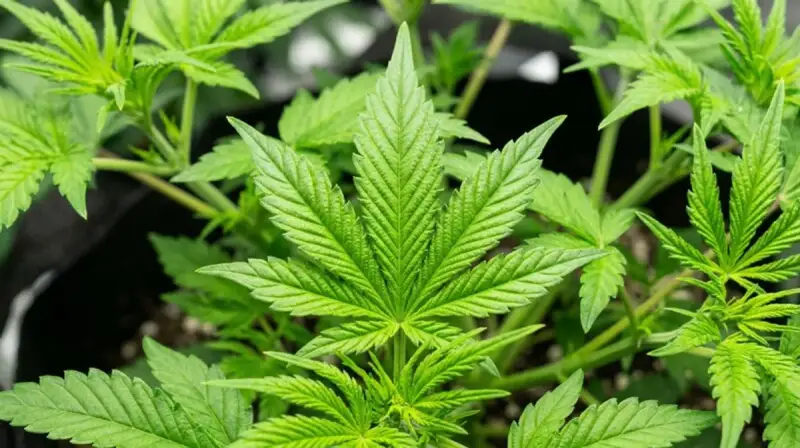
- The cannabis vegetative stage typically lasts 3–16 weeks, depending on the grower's goals, strain genetics, and available space.
- Plants in veg require a minimum of 18 hours of light per day (18/6 cycle) to prevent accidental flowering.
- Optimal vegetative temperature range is 70–85°F (21–29°C) with relative humidity between 40–70%.
- Nitrogen (N) is the most critical macronutrient during veg, with ideal N-P-K ratios around 3-1-2 for most strains.
- Trained plants using LST or topping during veg can yield 20–40% more than untrained plants of the same genetics.
- Cannabis plants can at least double in size during the first two weeks of flowering — known as the "flowering stretch" — making veg size management critical.
- Overwatering is the #1 mistake during the vegetative stage, responsible for a majority of beginner grow failures.
What Is the Cannabis Vegetative Stage?
The vegetative stage is one of the most important phases in a cannabis plant's life cycle. It begins after seedling development and ends when the grower — or the natural light cycle — triggers flowering. During this phase, the plant focuses almost entirely on structural growth: developing roots, stems, branches, and leaves, rather than producing buds. Think of it as the foundation-building period. A stronger, healthier plant in veg almost always translates to heavier, more potent harvests later. Every hour you invest in optimizing the veg environment pays dividends at harvest time.
Understanding the vegetative stage is essential whether you're cultivating indoors under artificial lights or growing outdoors in natural sunlight. The decisions you make during this window — from lighting schedules to training techniques — will define the shape, size, and yield potential of every plant in your garden. For a broader overview of the entire grow cycle, visit our complete cannabis growing guide. If you're also researching which strains perform best in vegetative training, our strain library breaks down growth characteristics by genetics.
How Long Does the Vegetative Stage Last?
For indoor growers, the vegetative stage lasts as long as you decide. You control the light cycle, and as long as your plants receive 18 or more hours of light per day, they will remain in veg indefinitely. Most indoor cultivators veg their plants for 4–8 weeks, though commercial operations or growers seeking very large plants may veg for 12–16 weeks. Autoflowering strains are the exception — they transition to flowering based on age, typically 3–5 weeks from germination, regardless of light schedule. This makes autoflowers an attractive option for beginners or those working with limited space.
Outdoor growers are bound by the natural photoperiod. In most Northern Hemisphere climates, cannabis planted in spring will stay in its vegetative phase from approximately May through late July or early August, when shortening daylight hours naturally trigger flowering. Understanding your local climate and growing season is critical for maximizing vegetative growth time outdoors. According to the National Institutes of Health, photoperiodism in cannabis is a well-documented biological response that governs the plant's entire reproductive cycle.
Seedling vs. Vegetative Stage: Key Differences
Many new growers confuse the seedling stage with the vegetative stage. Seedlings are typically considered a separate phase lasting 1–3 weeks after germination. During this time, the plant has just a few sets of leaves and a fragile root system that cannot yet support aggressive feeding or training. True vegetative growth begins once the plant has developed 3–5 nodes and shows vigorous, rapid new growth. At this point, the plant can handle more aggressive feeding, training techniques, and higher light intensity. The transition is gradual rather than sudden — you'll notice leaf sets growing larger and internodal spacing becoming more consistent. Our cannabis explainers section covers the full plant life cycle in detail.
- The veg stage begins after the seedling phase (once 3–5 nodes are established) and ends when flowering is triggered.
- Indoor growers control veg duration through the light cycle; most run 4–8 weeks of veg.
- Autoflowering strains skip the light-dependent veg phase, flowering by age (3–5 weeks).
- Outdoor plants veg naturally from spring planting until late July/early August in the Northern Hemisphere.
- Every choice made during veg — lighting, training, feeding — directly shapes final yield and potency.
Lighting Requirements During the Vegetative Stage
Light is the single most important environmental variable during vegetative growth. Cannabis is a photoperiod-sensitive plant (for most strains), meaning the ratio of light to darkness determines which growth stage it occupies. Getting your lighting right during veg sets the pace for everything that follows. Too little light leads to stretchy, weak plants with long internodal spacing; too much — or poorly positioned — light can cause light stress, heat damage, and bleaching at the canopy tops. The goal is uniform, appropriately intense light coverage across the entire canopy surface.
Recommended Light Cycles for Veg
The most widely used vegetative light schedule is 18 hours of light / 6 hours of darkness (18/6). This provides ample light for vigorous growth while giving the plant a brief rest period that many cultivators believe benefits overall metabolism and root development. Some growers use a 20/4 or even 24/0 (continuous light) schedule. While continuous light can accelerate growth marginally, some photoperiod strains exhibit stress responses, including abnormal leaf curling, under 24/0 conditions. A consistent 18/6 schedule remains the industry standard and works excellently for nearly all photoperiod strains. If you're growing in a legal state, understanding local cultivation limits may affect how many plants you veg — check our state-by-state cannabis laws guide for specifics.
Best Grow Lights for Veg
Choosing the right grow light during veg significantly impacts your plant's growth rate, canopy development, and energy costs. Modern lighting technology has advanced rapidly, giving growers more efficient options than ever before. Here's a breakdown of the most common options and how they compare:
- LED (Full Spectrum or Veg-Specific): The modern standard. Energy-efficient, low heat output, and effective across all growth stages. Look for lights with a color temperature of 5000–6500K during veg, emphasizing the blue spectrum that drives compact, bushy growth.
- Metal Halide (MH): A classic choice producing a blue-heavy spectrum ideal for vegetative growth. Runs hotter and uses more electricity than LED but remains highly effective and trusted by many experienced cultivators.
- T5 Fluorescent/CFL: Best suited for seedlings and early veg due to low heat output and gentle intensity. Insufficient for large vegetating plants that require higher PPFD levels to reach their growth potential.
- CMH/LEC (Ceramic Metal Halide): A hybrid option offering full-spectrum output, excellent color rendering, and good energy efficiency — popular with mid-level growers who want a step up from fluorescents without a full LED investment.
- HPS (High-Pressure Sodium): Traditionally a flowering light, HPS can be used for veg but delivers a red-heavy spectrum that may promote slightly stretchier plants compared to MH or LED alternatives.
Light Intensity and Canopy Distance
During veg, target a PPFD (Photosynthetic Photon Flux Density) of 400–600 µmol/m²/s at the canopy surface. Keep LED panels at the manufacturer's recommended distance — typically 18–24 inches above the canopy for most mid-power LEDs. Watch closely for signs of light stress: upward-curling leaves (tacoing), bleaching or whitening near the tops, or excessively tight internode spacing can all indicate the light is too close or too intense. Conversely, plants stretching dramatically upward toward the light source signal insufficient intensity or distance that is too great.
From real-world experience, many growers underestimate how much light intensity drops across even a few inches of canopy. A plant at 18 inches from the light panel may receive 600 µmol/m²/s at its top, while lower branching receives only 200–300 µmol/m²/s. This light gradient is one of the primary reasons training techniques like SCROG or LST — which flatten the canopy — produce dramatically better yields.
- The standard veg light cycle is 18/6 (light/dark); 20/4 is also effective but 24/0 may stress some strains.
- Target 400–600 µmol/m²/s PPFD at canopy level during vegetative growth.
- Full-spectrum LEDs and Metal Halide lights are the top choices for veg; both emphasize the blue spectrum.
- Keep LED panels 18–24 inches above the canopy and watch for light stress symptoms.
- Uneven canopy light distribution is a primary reason trained plants outperform untrained ones.
Temperature, Humidity, and Airflow in the Veg Room
Environmental control during the vegetative stage is just as important as lighting. Cannabis plants are remarkably resilient, but they perform best — and grow fastest — within specific temperature and humidity ranges. Getting your climate dialed in during veg not only promotes healthy, vigorous growth but also prevents many common problems like mold, fungus gnats, spider mites, and nutrient lockout that frequently stem from poor environmental conditions. A well-controlled environment is the difference between a plant that struggles and one that thrives.
Optimal Temperature Ranges for Veg
During the lights-on period, maintain temperatures between 70–85°F (21–29°C). The sweet spot for most strains is around 75–80°F, where photosynthesis and metabolic activity run at peak efficiency. During the lights-off period, allow the temperature to drop by no more than 10–15°F to prevent cold stress while still allowing the plant a natural rest cycle. Temperatures consistently above 85°F slow photosynthesis, increase transpiration stress, and create conditions favorable to spider mites and root zone issues. Below 60°F, growth stalls significantly and plants become vulnerable to mold, slow nutrient uptake, and various deficiencies caused by reduced root zone activity.
Humidity and Vapor Pressure Deficit (VPD)
Relative humidity (RH) during veg should be maintained between 50–70%. Young plants with underdeveloped root systems absorb a significant portion of their water through leaf transpiration, making slightly higher humidity beneficial in early veg (weeks 1–3). As plants mature and root systems develop, gradually lower RH toward the 50–55% range to reduce mold and powdery mildew risk while encouraging stronger root uptake.
Advanced growers use Vapor Pressure Deficit (VPD) charts to fine-tune the relationship between temperature and humidity for maximum transpiration efficiency and growth rate. VPD represents the difference between the moisture content the air can hold and what it actually holds — essentially, how "thirsty" the air is for moisture from the plant. Target a VPD of 0.8–1.2 kPa during mid-to-late veg for optimal transpiration without inducing drought stress. The Wikipedia entry on vapour-pressure deficit provides an excellent technical overview of this concept for growers wanting to go deeper.
Airflow, CO₂, and Stem Strengthening
Good airflow serves multiple critical purposes in the veg room: it strengthens stems through a process called thigmomorphogenesis (mechanical stimulation triggering stronger structural growth), prevents humid hot spots that invite mold, replenishes CO₂ near the leaf surface, and helps regulate temperature gradients across the canopy. Use oscillating fans positioned to create a gentle, consistent breeze across the canopy — strong enough to cause slight leaf movement but not so powerful that it causes wind burn or excessive moisture loss.
In sealed indoor environments, supplemental CO₂ enrichment to 1,000–1,500 ppm can accelerate vegetative growth by up to 30% compared to ambient CO₂ levels (~400 ppm). However, elevated CO₂ is only effective when paired with increased temperatures (80–85°F) and higher light intensity to drive the additional photosynthetic activity. CO₂ supplementation is generally recommended only for experienced growers with well-dialed, stable systems — the investment in CO₂ equipment only pays off when all other environmental variables are already optimized.
| Environmental Parameter | Ideal Range (Veg) | Danger Zone | Notes |
|---|---|---|---|
| Temperature (lights on) | 75–80°F (24–27°C) | >90°F or <60°F | Sweet spot for most strains; above 85°F slows photosynthesis |
| Temperature (lights off) | 65–72°F (18–22°C) | <55°F or >80°F | Drop of no more than 10–15°F from lights-on temp |
| Relative Humidity | 50–70% | >80% or <30% | Higher in early veg; reduce to 50–55% by late veg |