










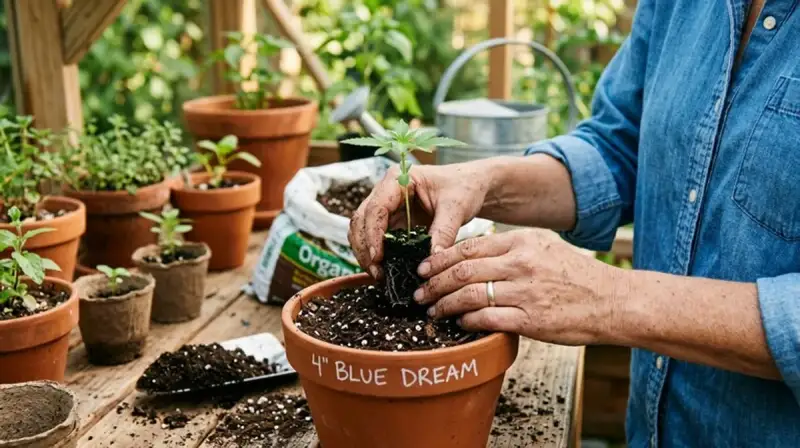
- Living soil = ecosystem, not product: Super soil creates a self-regulating microbial community — bacteria, fungi, protozoa, and nematodes — that makes nutrients plant-available on demand.
- Cooking is non-negotiable: Raw blood meal and bat guano release toxic levels of ammonia. Minimum 30-day cook; 45-60 days is the professional standard before planting.
- Worm castings are the cornerstone: At 25-30 lbs per 50 gallons of base, worm castings deliver billions of beneficial microorganisms and a balanced, non-burning nutrient profile.
- Dolomite lime buffers pH passively: Adding 3-4 lbs of dolomite lime per 50-gallon batch maintains pH in the 6.2-7.0 range without constant intervention.
- Mycorrhizal fungi are a force multiplier: Colonising roots can extend nutrient-foraging surface area by up to 700%, dramatically improving uptake of phosphorus and micronutrients.
- Super soil outperforms bottled nutrients in terpene production: Multiple blind panel studies from cultivators report measurably higher terpene complexity and taste scores in organically grown flower.
- Water-only once established: A properly prepared living super soil fed with plain, unchlorinated water produces excellent results from transplant through harvest with zero additional inputs.
What Is Cannabis Super Soil?
Super soil is a pre-amended, biologically active growing medium engineered to supply every macro and micronutrient that cannabis needs through organic decomposition and a living microbial ecosystem. The concept was popularised by legendary organic cannabis cultivator Subcool (TGA Genetics) in the early 2000s, who published his original recipe online and sparked a global organic growing movement. The core philosophy — called the “build-a-soil” or “no-till living soil” approach — inverts the conventional nutrient paradigm entirely.
In a standard cannabis grow, cultivators manage nutrients externally: mixing liquid formulas, adjusting pH, chasing deficiencies, and flushing at harvest. Super soil eliminates most of that work by front-loading all the nutrition into the medium before planting. A diverse army of soil microorganisms — mycorrhizal fungi that colonise roots and scavenge phosphorus, nitrogen-fixing bacteria, humus-forming actinomycetes, protozoa that liberate nitrogen from dead bacteria — processes the organic amendments you’ve added and delivers nutrients to plant roots in precisely the form and quantity they’re demanded. The plant’s own root exudates feed and direct this community in a feedback loop that synthetic nutrients cannot replicate.
The practical outcome is a growing system that is simultaneously more complex in its biology and simpler in its day-to-day operation. Once the soil is cooked and planted, the grower’s primary job is maintaining moisture and harvesting. The soil does the rest. For growers focused on medical cannabis quality, the terpene and cannabinoid profiles achievable with living soil are widely considered the gold standard. Compare your approach against other methods with our full cannabis growing guides.
Super Soil Recipe: Full Amendment Table
The following recipe produces approximately 50 gallons of finished super soil — enough for two to three large fabric pot grows. All amendments should be thoroughly blended into the base before moistening and covering to cook. Use a particle dust mask and gloves when handling dry amendments.
| Ingredient | Amount per 50 Gal Base | Primary Role | Key Nutrient |
|---|---|---|---|
| High-quality organic compost or potting soil | 50 gallons (base) | Biological foundation, carbon | Balanced N-P-K + microbial life |
| Earthworm castings | 25–30 lbs | Microbial inoculant, gentle nutrition | N-P-K balanced, humic acids |
| Perlite | 20–25% by volume | Drainage, aeration, root oxygen | None (structural) |
| Steamed bone meal | 5 lbs | Slow-release phosphorus for root and flower | Phosphorus 3-15-0 |
| Blood meal (12-0-0) | 2.5 lbs | High-nitrogen veg booster | Nitrogen 12-0-0 |
| Bat guano (high-P bloom type) | 5 lbs | Phosphorus + broad micronutrient spectrum | Phosphorus, calcium, micronutrients |
| Kelp meal | 3 lbs | Potassium + 70+ trace minerals + cytokinins | Potassium, growth hormones |
| Alfalfa meal | 2 lbs | Nitrogen + triacontanol growth stimulant | Nitrogen, trace minerals |
| Dolomite lime | 3–4 lbs | pH buffering (passive, slow-release) | Calcium, Magnesium |
| Glacial rock dust | 2 lbs | Remineralisation, microbial substrate | Silica, 60+ trace elements |
| Azomite | 1 lb | Rare-earth and trace mineral supplementation | 67 trace elements incl. cobalt, selenium |
| Mycorrhizal inoculant | Per label (1–2 oz) | Root colonisation, phosphorus scavenging | Biological — not a nutrient |
Cooking & Preparation Timeline
The cooking phase is where super soil transforms from a pile of amendments into a living ecosystem. Do not rush this stage. Heat from microbial activity will cause the pile to warm to 130-160°F during the first two weeks as the most energy-dense amendments break down. This thermophilic phase kills pathogens and weed seeds. It is followed by a cooler mesophilic phase where the more complex organic compounds are broken down and microbial diversity explodes.
| Week | What Is Happening | Grower Action | Temperature |
|---|---|---|---|
| Week 1 | Thermophilic bacteria begin breaking down blood meal and guano, releasing ammonia and heat | Monitor moisture (wrung-sponge feel). Do not disturb. | 130–160°F (hot) |
| Week 2 | Peak heat. Nitrogen compounds converting. Smell of ammonia normal at this stage. | Turn pile gently. Re-moisten if surface is dry. | 120–140°F |
| Week 3–4 | Heat dropping. Mesophilic bacteria and fungi take over. Fungal mycelium may be visible. | Turn every 7 days. Moisture check each turn. | 90–110°F |
| Week 5–6 | Cooling phase. Microbial diversity peaks. Earthy, sweet forest-floor smell replaces ammonia. | Reduce turning to once every 10 days. Light moisture top-up. | 70–85°F |
| Week 7–8 | Curing complete. Amendments fully integrated. pH stabilising around 6.5-7.0. | Smell test (earthy = ready). Optional pH check of slurry water. | Ambient |
| Week 9+ | Ideal planting window. Microbial life at maximum diversity and population density. | Layer into containers: super soil in bottom third, plain base on top. | N/A |
Super Soil vs. Bottled Nutrients vs. Coco — Comparison
Choosing a growing medium and nutrient system is one of the most consequential decisions a cannabis cultivator makes. Each approach has distinct advantages depending on your goals, experience level, available time, and the physical environment of your grow space.
| Factor | Super Soil (Living) | Bottled Nutrients (Synthetic) | Coco Coir + Nutrients |
|---|---|---|---|
| Setup complexity | High (amendment sourcing, cooking) | Low (pre-formulated) | Medium |
| Daily management | Very low (water-only) | High (pH, EC, feeding schedule) | High (daily feed, pH every water) |
| Yield potential | High (limited by genetics + light) | Very high (dialled-in programs) | Very high (fastest growth rate) |
| Terpene / flavour quality | Excellent (broadly reported) | Good (requires proper flush) | Good (medium-neutral, relies on inputs) |
| Error forgiveness | High (buffered system) | Low (salt buildup, pH crash) | Low (coco dries fast, pH sensitive) |
| Cost per cycle | Low after initial setup | Medium-High (ongoing product cost) | Medium (coco cheap, nutrients ongoing) |
| Ideal grower type | Organic-focused, quality-first | Commercial, yield-focused | Advanced, fast-cycle operations |
The Microbial Ecosystem: What Is Actually in Your Soil
The living component of super soil is what separates it from any inert growing medium. A single teaspoon of healthy living soil contains more organisms than there are humans on Earth — predominantly bacteria, but also a vast array of fungi, protozoa, nematodes, and arthropods that collectively form what soil scientists call the soil food web. For cannabis cultivation, four groups are especially important:
Mycorrhizal fungi form a symbiotic relationship with cannabis roots within days of inoculation. The fungal hyphae extend far beyond the root zone — effectively multiplying the root’s nutrient-scavenging surface area by 700-1,000%. In exchange for plant sugars, the fungi deliver phosphorus, zinc, and copper that roots cannot reach on their own. Cannabis is naturally mycorrhizal-forming; many commercial grows suppress this relationship inadvertently by using high-phosphorus synthetic fertilisers that make the fungi unnecessary.
Nitrogen-fixing bacteria (particularly Rhizobium, Azospirillum, and Bacillus species) convert atmospheric nitrogen into ammonium that plants can absorb. In a well-inoculated living soil, these organisms continuously replenish nitrogen throughout the growing cycle. This is why super soil growers rarely see nitrogen deficiency despite not adding liquid fertilisers during the grow.
Humus-forming organisms — actinomycetes, saprophytic fungi, and decomposer bacteria — break down the complex organic amendments (bone meal, kelp, rock dust) into stable humic and fulvic acids. Humic acids improve soil structure, water retention, and cation exchange capacity (CEC), making nutrients more available and more stable. Fulvic acids chelate micronutrients, keeping them soluble at a wider pH range and increasing their bioavailability to roots.
Predator organisms (protozoa, nematodes, predatory mites) feed on bacteria and release nitrogen in a highly plant-available form as a byproduct of digestion. This predator-prey cycling is one of the primary mechanisms by which living soil delivers nutrients “on demand” in synchrony with plant growth rhythms — a synchrony that no synthetic feeding schedule can fully replicate.
Top-Dressing and Maintaining Living Soil Between Grows
One of the greatest advantages of super soil over any other growing system is its compounding return on investment. After the first grow, rather than discarding the medium, you refresh and re-inoculate it for the next cycle. Done correctly, the soil’s microbial diversity and nutrient-cycling efficiency improve with every successive crop.
After harvest, remove plant material down to the soil surface (do not pull roots — leave them to decompose and add organic matter). Top-dress with a 1/4-inch layer of fresh worm castings, a small amount of compost, and approximately half the original dry amendment rates. Lightly water in and allow 2-4 weeks of rest before replanting. Many experienced no-till growers also plant a cover crop of clover, buckwheat, or mustard greens between cannabis cycles. These plants fix nitrogen, prevent surface compaction, support microbial life, and can simply be cut and left on the surface as mulch before the next cannabis transplant.
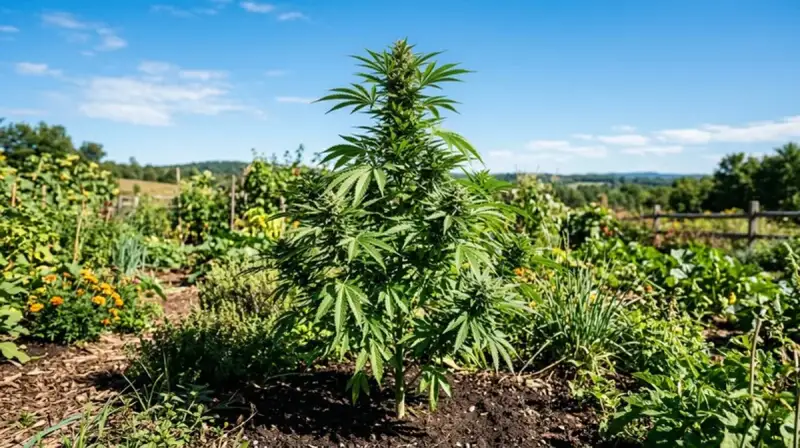
For companion planting during the grow itself, low-growing plants like basil, chamomile, and dill have been used by no-till growers to attract beneficial insects, contribute root exudates that support microbial diversity, and potentially deter pests. While research on companion planting benefits specific to cannabis is limited, the practice is widely used in the organic growing community with broadly reported positive results. Learn more about controlling problems without synthetic inputs in our organic pest control guide.
Common Super Soil Mistakes and How to Avoid Them
| Mistake | What Goes Wrong | How to Avoid |
|---|---|---|
| Using soil before it finishes cooking | Ammonia toxicity, seedling death, nutrient burn on young plants | Wait minimum 45 days. Smell test: earthy = ready, ammonia = not ready. |
| Overloading amendments (doubling recipe) | Phosphorus toxicity, potassium block, micronutrient lockout | Follow recipe ratios precisely. More is rarely better with organics. |
| Skipping perlite | Compaction, anaerobic zones, root rot, poor drainage | Maintain 20-25% perlite minimum. Consider pumice as an alternative. |
| Using chlorinated tap water | Kills beneficial bacteria and mycorrhizal spores over time | Let tap water sit 24h to off-gas, or use filtered/rainwater. |
| Adding synthetic nutrients mid-grow | Salt buildup disrupts microbial life; defeats the purpose of living soil | Trust the system. If deficiency appears, top-dress worm castings only. |
| Planting seedlings directly in hot super soil | Seedling roots overwhelmed by nutrient concentration | Layer: super soil in bottom third of pot, plain base mix on top. Roots grow down into hot zone as plant matures. |
Best Strains for Super Soil Growing
These genetics excel in living soil environments, expressing full terpene complexity when grown organically:
- OG Kush ’s complex terpene profile peaks in premium organic super soil
- Jack Herer — legendary organic soil performer with exceptional flavour expression
- Northern Lights — expresses full terpene complexity in rich living soil
- Blueberry — fruit terpene profile most pronounced in organic grows