










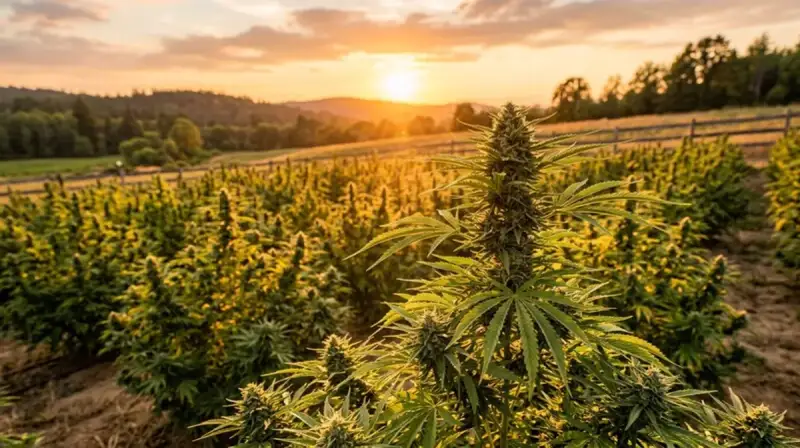
- A perpetual harvest uses separate veg and flower spaces to create continuous harvest cycles
- With two tents, you can harvest every 6–10 weeks indefinitely
- Clones are the key — a mother plant or clone bank feeds the veg tent continuously
- Strains with consistent genetics respond better than highly variable seed phenotypes
- The main challenge is synchronising growth rates and space allocation
Introduction to Cannabis Perpetual Harvest Method
A cannabis perpetual harvest is a cultivation workflow designed to eliminate the long, dry waiting periods between single batch grows. Instead of running one cycle from seed to harvest and then starting again from scratch, you maintain two (or more) growing environments at different developmental stages simultaneously. While one group of plants finishes flowering in the bloom tent, a younger group is vegging in a separate space, ready to be flipped to 12/12 the moment the harvested plants are pulled. The result is a continuous, rolling production line that delivers fresh cannabis on a predictable schedule — typically every four to ten weeks depending on strain and veg length.
For home growers, the most popular implementation is the two-tent perpetual system: a small veg tent paired with a larger flowering tent. This setup is space-efficient, electrically modest, and well suited to a single grower managing a personal supply. The method demands a bit more planning than a one-shot grow — you need a reliable source of clones, a stable mother plant or clone bank, and disciplined scheduling — but once the rhythm is established, the workflow becomes nearly automatic. This guide explains exactly how to design, time, and maintain a perpetual harvest from clone to cure.
How the Perpetual Harvest Method Actually Works
The core principle is space separation by light cycle. Cannabis vegetates under long-day lighting (18/6 is standard) and flowers under short-day lighting (12/12 for photoperiod strains). Because these two phases require incompatible light schedules, you cannot mix vegging and flowering photoperiod plants in the same enclosure. A perpetual system solves this by giving each stage its own dedicated space.
The Two-Tent Architecture
The standard layout uses a small veg tent (commonly 2x2 ft or 2x4 ft) running 18/6 lighting and a larger flower tent (typically 3x3 ft or 4x4 ft) running 12/12. Plants are rooted as clones, vegged for four to six weeks in the veg tent, then transferred to the flower tent on harvest day. The cycle repeats indefinitely: new clones go into the veg tent at the same moment older plants move into flower.
The Clone Pipeline
Clones are the engine that drives perpetual harvest. Unlike seeds, clones are genetically identical to the mother, grow at the same speed, finish at the same time, and produce predictable yields. This consistency is essential — perpetual cycles fail when plant timing drifts. Most growers maintain a dedicated mother plant under 24/0 or 18/6 light, taking cuttings every four to six weeks to feed the veg tent.
The Staggered Cycle Concept
Rather than running one large batch every three months, you run small batches more frequently. If your flowering time is eight weeks and your veg time is six weeks, a new "harvest event" can occur every six weeks — because that is when the veg tent finishes and needs to be cleared to receive new clones. Over a year, this delivers eight to nine harvests instead of three or four.
Designing Your Two-Tent Setup
Space and Equipment Requirements
You do not need an enormous room. A typical home perpetual setup occupies less than 20 square feet of floor space. The veg tent is small because young plants are compact; the flower tent is larger because mature plants stretch and need canopy room. Both tents need their own ventilation, lighting, and ideally separate carbon filters to prevent smell leakage from the bloom tent into the rest of the home.
Lighting Considerations
Veg lighting is forgiving — a 100–150W LED panel covers a 2x2 tent easily, and the spectrum can be cool white or full spectrum. Flower lighting needs more punch: 200–400W of high-efficiency LED for a 3x3 to 4x4 tent. Because the two tents run on different schedules, keep them on separate timers and ideally separate power circuits to avoid accidental light leak or scheduling collisions.
Environmental Control
Vegging plants prefer warmer temperatures (24–28°C) and higher humidity (55–70%), while late-flower plants prefer cooler air (20–24°C) and lower humidity (40–50%) to prevent bud rot. Running two tents lets you tune each environment independently — one of the biggest advantages of the perpetual method over single-tent cultivation.
Timing Your Cycles: A Practical Schedule
The hardest part of perpetual harvest is not equipment — it is timing. Below is a worked schedule for a six-week veg, eight-week flower setup, which produces a harvest every six weeks.
| Week | Veg Tent (18/6) | Flower Tent (12/12) | Action |
|---|---|---|---|
| 0 | New clones rooting | Plants in week 1 of flower | Take cuttings from mother |
| 2 | Clones rooted, transplanted | Week 3 of flower (stretch) | Top/train veg plants |
| 4 | Mid-veg, training continues | Week 5 of flower | Defoliate, prepare clones |
| 6 | Plants ready to flip | Week 7 of flower | Take new cuttings |
| 8 | New clones rooting | HARVEST + clean tent | Move vegged plants → flower |
After week 8, the cycle resets: vegged plants enter flower, fresh clones enter veg, and another harvest occurs eight weeks later. Once two full cycles have run, the system reaches steady state and a new harvest event happens every six to eight weeks.
Strain Selection for Perpetual Grows
Not all genetics suit perpetual workflows. The ideal perpetual strain has three properties: predictable flowering time, consistent stretch, and resistance to common indoor pathogens. Highly variable seed lines — especially F1 hybrids with wildly different phenotypes — break the system because some plants finish weeks before others, fouling the harvest schedule. Stick to stable cuts known for uniformity.
Single-Strain vs Multi-Strain Perpetual
Beginners should run a single strain perpetually until the rhythm is mastered. Once comfortable, you can layer two or three strains with similar flowering times (for example, three indica-dominant cuts that all finish in 8 to 9 weeks). Mixing a 7-week strain with a 10-week strain in the same flower tent forces compromises — either you pull the long-flowering plant early or you delay clearing the tent for new arrivals.
The Role of the Mother Plant
A mother plant is a vegetative plant kept permanently under long-day light, used solely to produce cuttings. A well-maintained mother can supply clones for one to two years before vigour declines. Alternatively, you can run a "rolling mother" system where each cycle's strongest veg plant becomes the next generation's clone source — this avoids dedicating a slot to a non-yielding mother.
Sanitation and Pest Management in Perpetual Systems
The biggest hidden risk of perpetual harvests is pest and pathogen build-up. Because the tents never sit empty for long, there is no natural "reset" period when spider mites, thrips, or powdery mildew would die off. A single infestation can ride through generations of clones and slowly destroy yields. Strict cleaning protocols between cycles — wiping tent walls, replacing reflective film if compromised, sterilising tools — are non-negotiable.
Quarantining New Clones
If you ever bring in clones from outside sources, quarantine them for at least 10 days before introducing them to the veg tent. Outside clones are the single most common vector for spider mites and hop latent viroid in home perpetual systems.
Yield Expectations and Output Math
A well-tuned 4x4 perpetual flower tent producing 400–500 g per cycle every six weeks delivers roughly 3.5 to 4.5 kg per year — significantly more than a single 4x4 tent running discrete batches with 2-week downtime between grows. Below is a comparison of annual output between three approaches.
| Setup | Harvests/Year | Avg Yield/Cycle | Annual Output |
|---|---|---|---|
| Single tent, discrete batches | 3 | 450 g | ~1.35 kg |
| Two-tent perpetual (8wk flower) | 6–7 | 400 g | ~2.6 kg |
| Two-tent perpetual (10wk flower) | 5 | 500 g | ~2.5 kg |
| Autoflower perpetual (single tent) | 5–6 | 250 g | ~1.4 kg |
Common Mistakes to Avoid
- Mixing strains with different flowering times — forces premature harvest or delays the next cycle, breaking the schedule.
- Skipping the mother plant — relying on seeds reintroduces phenotype variation and ruins timing predictability.
- Undersized veg tent — small veg space caps how big plants can get before flipping, hurting flower-tent yields.
- Light leak between tents — even small amounts of 18/6 spill into the flower tent during dark periods can trigger reveg or hermaphroditism.
- Neglecting cleaning between cycles — perpetual systems accumulate pests and pathogens silently; deep clean every harvest.
- Overcrowding the flower tent — squeezing in extra plants reduces airflow and creates bud rot conditions.
- Failing to take clones early enough — cuttings need 10–14 days to root before they can be transplanted, so plan backwards from the harvest date.
- Ignoring environmental drift — veg and flower tents need different temp/RH targets; running them identical compromises both stages.
Scaling Up: Three-Tent and Four-Tent Variants
Once a two-tent perpetual is running smoothly, some growers add a third tent dedicated to clones and mothers. This separates the rooting and mother-maintenance stage from the main veg tent, allowing the veg tent to focus entirely on bulking up plants for flower. Four-tent systems add a dedicated drying tent, ensuring that finished plants do not bottleneck the flower tent's turnover. Each additional tent shortens harvest intervals further but increases complexity, electrical load, and labour.
Frequently Asked Questions
How often can I harvest with a perpetual setup?
With a two-tent perpetual system you can typically harvest every 4 to 10 weeks, depending on your veg time and flowering period. Most growers settle into a 6 to 8 week harvest rhythm for stable, manageable cycles that keep both tents fully occupied without overlap.
Do I need clones for perpetual harvest?
Clones are strongly preferred because they are genetically identical and grow at predictable rates. Seeds introduce phenotype variation that breaks the synchronisation required for staggered cycles. A mother plant or rotating clone bank is the most reliable feeder for the veg tent.
What size tents do I need for a perpetual harvest?
A common setup uses a 2x2 ft or 2x4 ft veg tent paired with a 4x4 ft flower tent. The veg tent only needs to hold small plants for 4 to 6 weeks, while the flower tent must accommodate fully grown plants through 8 to 10 weeks of bloom with proper canopy space.
Can autoflowers be used in a perpetual harvest?
Yes, autoflowers can be run perpetually in a single tent because they do not require a light-cycle change. You simply stagger seed starts every 2 to 3 weeks within the same space, although yields per plant are typically smaller than photoperiod equivalents.