










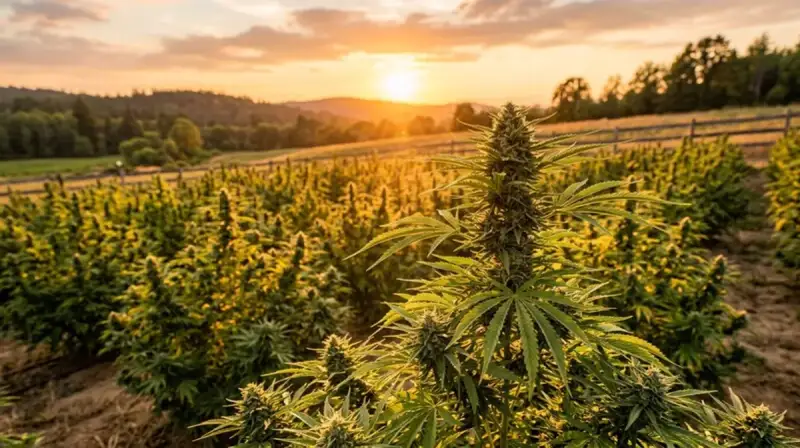
- Greenhouses combine natural sunlight with climate control for optimal year-round growing
- Polycarbonate and glass panels offer different light transmission and insulation trade-offs
- Light deprivation tarps allow photoperiod control in greenhouse environments
- Humidity management is the primary challenge in greenhouse cultivation
- Greenhouse grows typically yield 500–1,000g per plant for outdoor-sized specimens
Introduction to Cannabis Greenhouse Growing
Greenhouse cultivation sits at the productive intersection of indoor and outdoor growing. Plants enjoy the spectral richness and energetic intensity of natural sunlight while the grower retains meaningful control over temperature, humidity, photoperiod, and pest pressure. For commercial producers, greenhouses dramatically lower the per-gram cost of energy compared to fully sealed indoor rooms. For hobbyists, a backyard greenhouse extends the season by two to four months and protects expensive genetics from the worst weather extremes.
This guide walks through the structural decisions that define a greenhouse build — frame material, glazing choice, ventilation strategy — before moving into the environmental systems that turn a passive structure into a high-performance crop facility. We'll cover light deprivation, supplemental lighting, automation, seasonal planning across climates, and realistic yield expectations. Whether you're planning a 3m x 4m hobby tunnel or a 1,000m² commercial range, the same physical principles apply: manage your light, your air, and your water, and the plants will reward you.
Greenhouse Structure Types
The structure dictates everything downstream — how much light reaches the canopy, how easily the air mixes, and how quickly the interior responds to outside weather. Choose based on climate, budget, and whether you plan to run year-round or seasonally.
Hoop Houses and Polytunnels
The lowest-cost entry point. Galvanized steel hoops are spaced 1.2 to 1.8 meters apart and covered with 6-mil polyethylene film. Single-layer poly transmits roughly 85% of photosynthetically active radiation (PAR) but offers minimal insulation. Inflated double-layer poly improves R-value to about 1.5 while sacrificing 10–15% light transmission. Expect 3–4 year replacement cycles on the film.
Polycarbonate Panel Greenhouses
Twin-wall or triple-wall polycarbonate is the workhorse of modern craft cannabis operations. It diffuses light beautifully — reducing hot spots and improving lower-canopy penetration — while delivering R-values between 1.6 and 2.5. Panels last 10 to 15 years and resist hail, falling branches, and UV degradation when properly specified.
Glass Greenhouses (Venlo and Dutch Style)
Single-pane or double-pane horticultural glass transmits 90–92% of PAR and offers the longest service life — often 30+ years. The trade-off is heat loss and capital cost. Venlo-style commercial glasshouses with retractable thermal screens and computerized vents represent the industrial gold standard but require significant investment.
Light-Deprivation Greenhouses
Any of the above structures can be retrofitted with blackout tarps — either manually pulled or motorized — that block light during summer months to force flowering. This is how Northern California's "light-dep" sungrown industry produces premium flower in mid-summer rather than waiting for natural autumn finishing.
Glazing and Frame Comparison
| Covering | PAR Transmission | R-Value | Lifespan | Cost/m² |
|---|---|---|---|---|
| Single poly film | 85% | 0.85 | 3–4 years | $3–6 |
| Double poly (inflated) | 76% | 1.5 | 4 years | $6–10 |
| Twin-wall polycarbonate (8mm) | 80% | 1.6 | 10–15 years | $25–40 |
| Triple-wall polycarbonate (16mm) | 74% | 2.5 | 15+ years | $45–70 |
| Single-pane glass | 90% | 0.95 | 30+ years | $60–100 |
| Double-pane horticultural glass | 82% | 2.0 | 30+ years | $120–180 |
Climate Control Inside the Greenhouse
Cannabis demands a tighter environmental window than most greenhouse crops. Tomatoes will tolerate VPD swings that would crash a flowering Cookies cultivar. Climate control is therefore the single largest determinant of greenhouse success — and the area where most hobby growers underinvest.
Temperature Targets and Heating
Aim for 22–28°C during the day and 18–22°C at night, with the smallest possible diurnal swing. In flowering, the night temperature drop should be no more than 6–8°C to preserve terpene production without inducing stretch. Heating options scale with your structure: propane radiant heaters for hobby tunnels, hydronic floor heat for permanent builds, and reclaimed CHP heat for commercial ranges.
Cooling and Ventilation
Passive ridge vents combined with roll-up side walls can shed enormous heat loads when designed correctly — a 30% vent area to floor area ratio is the rule of thumb. For sealed or semi-sealed operations, evaporative pad-and-fan systems can drop interior temperatures 8–10°C below ambient in dry climates. Exhaust fans should provide one full air exchange per minute during peak sun.
Humidity and VPD Management
Humidity is the perennial greenhouse problem. Plants transpire massive volumes of water, and overnight cooling pushes RH against the dew point — the exact conditions botrytis and powdery mildew exploit. Target 60–70% RH in vegetative growth and 45–55% RH during late flower. Dehumidification, properly sized for transpiration load (roughly 1 liter of water removed per liter applied), is non-negotiable for premium flower.
CO₂ Enrichment
Sealed and semi-sealed greenhouses can run CO₂ at 800–1,200 ppm to accelerate photosynthesis under high light. In passively vented houses, supplementation is wasted the moment the vents open, so it's typically reserved for early morning periods before solar gain forces ventilation.
Supplemental Lighting Strategy
Even in sunny climates, supplemental lighting earns its keep. Winter daily light integral (DLI) at 45° latitude drops below 10 mol/m²/day — less than half what cannabis wants for premium flower production. Three lighting strategies dominate greenhouse cannabis:
Photoperiod Extension
Low-wattage LEDs (10–30 W/m²) on a timer extend the day length to 18 hours during natural-short-day periods, keeping plants in vegetative growth through autumn and winter. This is the cheapest form of supplemental light and the easiest to implement.
Daily Light Integral (DLI) Supplementation
High-output LEDs or 600W/1000W HPS fixtures fire automatically when natural PAR drops below a setpoint, topping up the total daily light integral to 35–45 mol/m²/day. Modern light controllers integrate radiation sensors and only burn electricity when sun isn't doing the job.
Light Deprivation for Out-of-Season Flowering
Motorized blackout systems pull a tarp across the structure at sundown plus a few hours, then retract it at sunup minus a few hours — creating a hard 12/12 cycle in mid-summer. A properly run light-dep house in California or Spain can produce three harvests per calendar year.
Seasonal Planning by Climate
| Climate Zone | Veg Start | Flower Initiation | Harvest | Cycles/Year |
|---|---|---|---|---|
| Mediterranean (no heat) | March | May (light-dep) | July, Oct | 2 |
| Mediterranean (heated) | Year-round | Programmable | Every 90 days | 3–4 |
| Temperate (UK, NL, PNW) | April | August (natural) | Oct | 1–2 |
| Continental (cold winter) | May | August | Oct | 1 |
| Subtropical | Year-round | Light-dep required | Every 80–90 days | 3–4 |
Automation and Monitoring Systems
The defining feature of a modern greenhouse is its environmental computer. Even a $400 controller dramatically outperforms manual management because it responds to changing conditions in seconds rather than waiting for the grower to notice. Critical automated systems include:
- Stage controllers — orchestrate vents, fans, heaters, and shade screens based on temperature, humidity, and outside weather.
- Light-dep automation — motorized tarps pull on astronomical schedules without manual intervention.
- Irrigation and fertigation — drip systems with EC/pH inline monitoring deliver consistent root-zone conditions across hundreds of plants.
- Remote alerting — cellular alarms text you when conditions cross thresholds, especially valuable for off-grid or distant sites.
- Pest monitoring — yellow sticky cards with weekly counts catch thrips and whitefly before populations explode.
Yield Expectations
Greenhouse yields vary wildly with plant size, training method, cycle length, and supplemental input. Outdoor-sized plants (1.8–2.5m tall, full-season vegetative growth) regularly produce 500–1,000g of dried flower. Light-dep operations running 6–8 week vegetative cycles and 9 week flowering cycles typically average 50–80g of dried flower per square meter of canopy per cycle, equivalent to 200–320g/m² annually across 3–4 cycles.
Commercial benchmarks worth knowing: top-tier sungrown light-dep facilities in California average 0.8 lb (≈360g) per light-equivalent square meter per cycle, while hybrid greenhouse operations with full supplemental lighting and CO₂ enrichment can match indoor yields of 1.2–1.5 lb (540–680g) per fixture per cycle at a fraction of the energy cost.
Common Mistakes to Avoid
- Undersizing ventilation — a greenhouse that overheats at noon will stunt growth permanently; aim for vent area equal to 30% of floor area.
- Ignoring humidity in late flower — botrytis ruins more greenhouse crops than any other factor; install dehumidification before you need it.
- Cheap light-dep tarps — pinholes and gaps cause hermaphroditism; spend on commercial-grade blackout fabric.
- No buffer between sets — running back-to-back cycles without sanitation breaks invites pest and pathogen establishment.
- Wrong genetics — mold-prone cultivars that thrive indoors fail in humid greenhouse air; pick mildew-resistant strains.
- Skipping the data logger — without recorded temperature and humidity history, you can't diagnose what went wrong.
- Single-point heating — one heater creates massive temperature gradients; distribute heat with horizontal airflow fans.
- Forgetting the legal perimeter — most jurisdictions require visual screening and security fencing for cannabis greenhouses.
Frequently Asked Questions
Can I grow cannabis year-round in a greenhouse?
Yes. With supplemental lighting, light deprivation tarps, and adequate heating, a greenhouse can produce multiple harvests per year regardless of the season. Heated polycarbonate or glass structures in temperate climates routinely run 3–4 cycles annually.
What is the best greenhouse covering for cannabis?
Twin-wall or triple-wall polycarbonate offers the best balance of light diffusion, insulation, and durability. Glass transmits the most light but loses heat fastest, while polyethylene film is the cheapest option but degrades within 4 years.
How much does a cannabis greenhouse yield?
A mature greenhouse plant typically produces 500 to 1,000 grams of dried flower, though commercial light-dep operations average 0.5 to 1.0 pounds per light-equivalent square meter per cycle.
Do I need supplemental lighting in a greenhouse?
Supplemental lighting is recommended for winter cycles, extending photoperiod during vegetative growth, and boosting DLI on overcast days. A 600W HPS or 400W LED per 4 square meters is a common configuration.