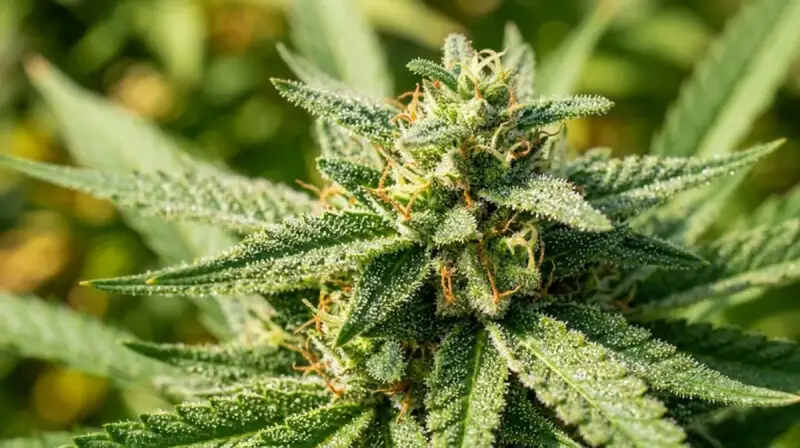
What Is Hemp? Hemp vs. Cannabis, Uses & Legal Status Explained
Hemp is legally Cannabis sativa L. with 0.3% THC or less by dry weight. The same plant species as marijuana — distinguished only by cannabinoid content and regulated as an agricultural crop since the 2018 Farm Bill.
7 Key Findings
Hemp is legally defined as Cannabis sativa L. with 0.3% or less THC by dry weight under the 2018 US Farm Bill — genetically hemp and marijuana are the same species, distinguished only by cannabinoid content
The 0.3% threshold has no pharmacological basis — it was arbitrarily proposed by Ernest Small in a 1976 monograph and has since become international standard
Hemp produces CBD at commercially significant concentrations (6–15% CBD in CBD hemp varieties) — the explosion of CBD products after the 2018 Farm Bill was entirely based on legal hemp cultivation
Industrial hemp fiber is stronger than cotton per weight and requires 50% less water — used for ropes, textiles, building materials (hempcrete), paper, and bioplastics
Hemp seeds contain 25–30% protein (higher than most legumes), omega-3/omega-6 fatty acids at an ideal 3:1 ratio, and all essential amino acids — certified by FDA as GRAS (Generally Recognized As Safe)
Hot climates or stress can cause hemp to “go hot” — producing more than 0.3% THC, making the crop legally required to be destroyed even if already harvested
Hemp is legal in all 50 US states for cultivation with USDA or state licensing, and legal to sell in food/supplement form — but FDA has not approved CBD as a food additive, creating regulatory ambiguity
Hemp vs. Marijuana: The Legal and Scientific Distinction
Both hemp and marijuana are Cannabis sativa L. — the same plant species. Their biological similarity is so complete that a hemp plant and a marijuana plant grown side by side are indistinguishable to the untrained eye. What separates them legally is a single number: 0.3% THC by dry weight.
That number traces to a 1976 monograph by Canadian botanist Ernest Small. Small needed a threshold to define "hemp" for classification purposes and settled on 0.3% arbitrarily. He later acknowledged it was not a pharmacological or agronomic boundary. Despite this, the figure was adopted by the European Union, Canada’s Industrial Hemp Regulations, and ultimately the United States’ 2018 Agriculture Improvement Act (Farm Bill).
Cannabis plants are classified by chemotype based on their cannabinoid profile:
Chemotype I (Drug-type): High THC (15–30%), very low CBD — classic marijuana
Chemotype II (Intermediate): Mixed THC/CBD — common in CBD-rich strains
Chemotype III (Fiber/CBD-type): Low THC (<0.3%), high or negligible CBD — legal hemp
The same genetics can produce different chemotypes depending on growing conditions. High temperatures, UV stress, and late harvest dates all accelerate THC biosynthesis. A crop that tested at 0.25% THC at 30 days before harvest may exceed 0.3% if left in the field through a heat wave — a phenomenon farmers call "going hot." Under US law, crops exceeding 0.5% THC (the negligence threshold) must be destroyed at the grower’s expense.
The USDA’s 2021 Final Rule established that hemp must be tested by DEA-registered labs within 30 days of harvest, using post-decarboxylation or other THC conversion methods. This stricter formula — Total THC = THC + (THCA × 0.877) — catches plants with high THCA that would convert to illegal THC if heated.
Industrial Hemp: Fiber, Construction, and Biofuel
Hemp was among humanity’s first cultivated crops, with archaeological evidence of hemp fiber use in China dating to 10,000 BCE. Modern industrial hemp cultivation focuses on two primary raw materials: bast fiber from the outer stalk and hurds (the woody inner core).
Bast fiber is extracted from the outer layer of the hemp stalk. It’s one of the strongest natural fibers by weight — roughly 8 times the tensile strength of cotton. Applications include rope, canvas, geotextile, industrial fabrics, and increasingly automotive composites (BMW and Mercedes have used hemp fiber panels in door liners and dashboards).
Hurds (also called shives) are the lightweight, absorbent woody core. Mixed with a lime binder, they produce hempcrete — a construction material with an R-value of 2.0 to 2.5 per inch (comparable to standard insulation), excellent moisture-buffering capacity, and the unusual property of actually mineralizing over time, becoming harder with age.
Industrial Hemp Applications by Component
Component
Primary Uses
Key Advantage
Bast fiber
Rope, textiles, automotive composites, geotextile
8× tensile strength of cotton per weight
Hurds / shives
Hempcrete, animal bedding, particleboard
R-value 2–2.5 per inch, mineralizes over time
Flowers / leaves
CBD extraction, phytoremediation
6–15% CBD in specialized varieties
Seeds
Food (hemp hearts), hemp oil, protein powder
Complete protein, ideal omega-3/6 ratio
Whole plant
Cellulosic biofuel, paper pulp, bioplastics
Up to 10–15 tons CO² sequestered per acre/year
Hemp’s carbon sequestration capacity is substantial: a single acre of hemp absorbs 10 to 15 tons of CO² during its growing cycle — more than most forest land on an annual basis. When used in hempcrete, that carbon is locked into the building material indefinitely. The University of Bath’s BioComposites Centre has been a leading research institution on hemp as a construction material, with field projects across the UK dating to the early 2000s.
Hemp Seeds and Nutrition
Hemp seeds (technically achenes — small fruits) are among the most nutritionally complete foods in the plant kingdom. The shelled seed (hemp heart) is approximately 25–30% protein by weight, exceeding soybeans (18–20%) and quinoa (14%). More importantly, hemp protein contains all nine essential amino acids, including adequate levels of lysine, which is typically the limiting amino acid in plant proteins.
The fat profile of hemp seed oil is equally notable. Hemp oil contains omega-6 and omega-3 polyunsaturated fats in approximately a 3:1 ratio — which is the ratio nutritional researchers consider optimal for human health (most Western diets run 15:1 or higher toward omega-6). The primary omega-3 is alpha-linolenic acid (ALA), and the primary omega-6 is linoleic acid (LA). Hemp seed oil also contains gamma-linolenic acid (GLA), an omega-6 with documented anti-inflammatory properties.
The connection to the endocannabinoid system (ECS) is indirect but real: the ECS is partly regulated by the endogenous cannabinoids anandamide and 2-AG, which are themselves synthesized from arachidonic acid, an omega-6 fat. Dietary omega-3/6 balance influences endocannabinoid tone. Supplementing with hemp seed oil does not add cannabinoids to the body — hemp hearts contain no CBD, THC, or other cannabinoids — but the fatty acid profile supports the substrate availability for endocannabinoid synthesis.
The FDA classifies hulled hemp seeds, hemp seed oil, and hemp seed protein powder as GRAS (Generally Recognized As Safe) — a ruling formalized in December 2018 immediately following the Farm Bill. This means these products can legally be sold as food or food ingredients. Hemp-derived CBD, however, is explicitly excluded from GRAS status and remains in regulatory limbo under FDA’s food additive framework.
CBD Hemp: How CBD Is Extracted
The commercial CBD industry is built on hemp. Specialized CBD hemp varieties have been bred to express 8–15% CBD while staying below the 0.3% THC threshold. These varieties — bred primarily in Colorado, Oregon, and Europe — are cultivated for their flowers, which are harvested and processed into extracts.
Two primary extraction methods dominate commercial CBD production:
CO² Extraction (Supercritical CO²) uses pressurized carbon dioxide at specific temperature/pressure combinations to selectively extract cannabinoids and terpenes from plant material. It’s the cleanest method, leaving no solvent residue, but requires expensive equipment (capital costs $50,000–$500,000+). The result is a pure, potent extract with a predictable cannabinoid profile.
Ethanol Extraction uses food-grade ethanol to dissolve cannabinoids from plant material. It’s faster and more scalable than CO² but extracts chlorophyll along with cannabinoids (requiring winterization to remove) and involves solvent handling. Most large-scale CBD producers use ethanol for cost efficiency.
CBD extracts are classified as:
Full-spectrum: Contains all cannabinoids (including trace THC <0.3%), terpenes, and flavonoids from the hemp plant. Thought to produce enhanced effects via the “entourage effect” (Russo 2011)
Broad-spectrum: Full spectrum with THC removed post-extraction via chromatography
Isolate: Pure CBD crystal (99%+), all other compounds removed. No detectable THC, no terpenes, no entourage
Any compliant CBD product should carry a Certificate of Analysis (COA) from a third-party ISO-accredited laboratory. The COA should confirm: cannabinoid potency (including confirmation that total THC ≤0.3%), terpene profile, absence of heavy metals, absence of pesticides, and absence of residual solvents. Without a current-batch COA with a verifiable batch number, product safety and legal compliance cannot be confirmed.
Hemp Legal Status: Federal and State
The 2018 Agriculture Improvement Act (Farm Bill) removed hemp — defined as cannabis with 0.3% THC or less — from the Controlled Substances Act Schedule I classification. This is the single most consequential piece of cannabis legislation in US history, opening the door to regulated hemp cultivation, processing, and interstate commerce in all 50 states.
Key provisions of the 2018 Farm Bill and the USDA’s subsequent implementing rules:
States can administer their own hemp programs subject to USDA approval, or defer to the federal USDA program
Growers must obtain a license from the state or USDA and submit GPS coordinates of cultivation sites
Pre-harvest testing is mandatory, conducted within 30 days of expected harvest, by DEA-registered labs
Crops testing 0.3–0.5% THC (negligence zone) may be remediated or destroyed; crops above 0.5% must be destroyed
Hemp biomass, extracts, and derivatives can be transported across state lines
Hemp Legal Thresholds by Jurisdiction
Jurisdiction
THC Threshold
Status
Notes
USA (federal)
≤0.3% (total THC)
Legal with license
Farm Bill 2018; FDA CBD ambiguity
European Union
≤0.2% (transitioning to 0.3%)
Legal — registered varieties only
Approved variety list; 0.3% adopted 2023
Canada
≤0.3% (Cannabis Act)
Legal — licensed producers
Health Canada variety registry
United Kingdom
≤0.2% (stalk/seed only)
Legal with Home Office license
Flowers cannot be harvested; CBD novel food
Idaho / South Dakota (US)
State restrictions
More restrictive than federal
Idaho: zero THC for in-state products historically
The FDA’s position on CBD remains the biggest unresolved issue in hemp law. The agency ruled in 2019 that CBD cannot be sold as a food additive or dietary supplement because it was previously studied as a drug (Epidiolex). A proposed regulatory pathway for CBD supplements has been under discussion since 2022 but has not produced final rules. Several states have enacted their own CBD food supplement rules in the absence of federal clarity.
Hemp’s Environmental Profile vs. Cotton
Hemp is one of the most ecologically efficient fiber crops in commercial agriculture. The comparison to cotton is particularly striking because cotton currently occupies 2.5% of the world’s agricultural land while consuming 16% of all insecticides globally. Hemp requires none.
Hemp vs. Cotton: Environmental Comparison
Factor
Hemp
Conventional Cotton
Water per kg of fiber
~300–500 liters
~10,000 liters
Pesticides required
None (natural pest resistance)
16% of global insecticide use
Land use (tons fiber/acre)
2–3 tons bast fiber
0.5–1 ton lint
Soil impact
Improves structure; phytoremediation
Degrades soil with monoculture
CO² sequestration
10–15 tons/acre/year
Net neutral or emitting
Crop rotation benefit
Strong (breaks pest cycles, improves next crop yields)
Neutral to negative
Hemp’s root system penetrates 1.5 to 2 meters deep, breaking up compacted soil layers and improving drainage for subsequent crops. The practice of growing hemp as a rotation crop before grains is well-documented in German and French agricultural systems, where wheat yields following hemp rotations consistently outperform wheat-on-wheat. The Rodale Institute has been conducting long-term hemp rotation trials in Pennsylvania since 2019.
Hemp is also a proven phytoremediator: it was planted around the Chernobyl nuclear accident site in the 1990s as part of soil cleanup efforts, absorbing heavy metals including cesium-137 and strontium-90. Obviously, phytoremediation hemp cannot enter the food or CBD supply chain, but the process demonstrates the plant’s capacity to absorb soil contaminants — which is why third-party heavy metals testing is non-negotiable for any hemp extract product.
Frequently Asked Questions
Is hemp the same as marijuana?
Hemp and marijuana are both Cannabis sativa L., but hemp is legally defined as containing 0.3% THC or less by dry weight. Marijuana refers to cannabis plants with higher THC content. Genetically they are the same species — the distinction is purely regulatory.
Can you get high from hemp?
No. Hemp contains 0.3% THC or less, far too low to produce intoxication. Some hemp varieties bred for CBD contain 10–15% CBD but remain below the 0.3% THC legal threshold. The only psychoactive compound in cannabis is THC.
Is hemp legal in all US states?
Hemp cultivation is federally legal in all 50 states under the 2018 Farm Bill with USDA or state licensing. Idaho and South Dakota maintained stricter state laws for several years post-Farm-Bill. Hemp-derived CBD products are sold nationwide, though FDA has not approved CBD as a food additive.
Does hemp contain CBD?
Yes. Hemp is the primary commercial source of CBD. CBD hemp varieties are selectively bred to produce 6–15% CBD by dry weight while staying below 0.3% THC. The 2018 Farm Bill unlocked commercial CBD hemp cultivation.
Reviewed by our editorial team — cannabis researchers, policy analysts, and medical writers with expertise across clinical research, dispensary operations, and US cannabis law. Content is fact-checked and updated regularly.