










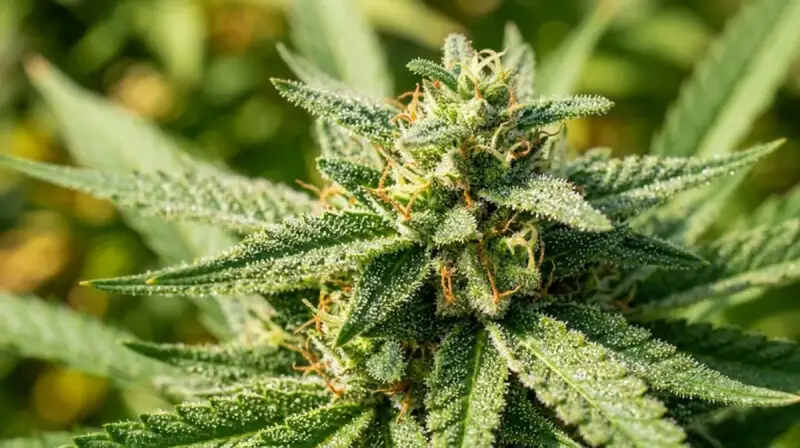
- IRC Section 280E bars cannabis businesses from deducting ordinary expenses, creating effective federal tax rates of 40–70% on economic profit — no other legal US industry faces this burden.
- California’s stacked tax system (15% excise + 7.25–10.25% sales tax + local cannabis tax) pushes total consumer tax burden to 30–40% at the register.
- Washington State has the highest single excise rate at 37% of retail price, one reason its illicit market remains significant.
- States use four distinct tax models: ad valorem (% of price), weight-based (per ounce/gram), potency-based (per milligram THC), or hybrid combinations.
- Cannabis tax revenue topped $3 billion annually in California alone by 2023, yet the state’s legal market still competes with a larger untaxed illicit market.
- Rescheduling cannabis from Schedule I to Schedule III would immediately exempt businesses from 280E, potentially cutting their federal tax burden by 40–60%.
- Municipal taxes layered on top of state taxes can add an additional 5–15%, making some California cities among the most heavily taxed cannabis markets globally.
The Unique Tax Problem: Cannabis vs Every Other Industry
Cannabis is the only legal industry in the United States that is systematically denied the right to deduct ordinary business expenses for federal tax purposes. A liquor store, a pharmacy, a gun shop, a tobacco retailer — all can deduct rent, payroll, insurance, and marketing from their taxable income. A licensed cannabis dispensary operating fully within state law cannot. This anomaly exists because cannabis remains a Schedule I controlled substance under the federal Controlled Substances Act, and Internal Revenue Code Section 280E applies specifically to businesses trafficking in Schedule I or II substances.
The result is an industry that simultaneously generates billions in tax revenue for state governments while being structurally disadvantaged compared to every other retail sector. Understanding cannabis taxation in the US requires separating the federal layer (dominated by 280E) from the state layer (excise and sales taxes) and the local layer (municipal cannabis taxes) — three distinct systems that interact in ways that can make legal cannabis dramatically more expensive than its illicit equivalent.
This guide covers each layer in depth, explains the mechanisms behind them, and examines the reform proposals that could reshape the cannabis tax landscape in the coming years. For context on the broader legal framework, see our federal cannabis law explainer and our guide to cannabis laws by state.
Why Cannabis Taxation Is Structurally Different
In virtually every other industry, businesses pay income tax on profit — revenue minus allowable deductions. For cannabis companies, the inability to deduct expenses means they effectively pay income tax on a much larger base. A dispensary with $1 million in revenue and $800,000 in total costs (COGS + rent + staff + utilities) would have $200,000 in true economic profit. Under normal tax rules, they’d pay roughly $42,000 in federal corporate tax (21% of $200,000). Under 280E, if only $400,000 of costs qualify as COGS, the taxable federal income becomes $600,000 — and the federal tax bill becomes $126,000. The effective tax rate on actual profit rises from 21% to 63%. This is not an edge case; it is the operating reality for every cannabis business in legal states.
Section 280E: The Federal Tax Trap Explained
Section 280E of the Internal Revenue Code was enacted in 1982 following a controversial Tax Court ruling. Jeffrey Edmondson, a drug trafficker convicted of selling cocaine, methaqualone, and marijuana, had attempted to deduct his business expenses as legitimate business costs. The Tax Court allowed the deductions, reasoning that the Internal Revenue Code did not explicitly prohibit deductions for illegal businesses. Congress was outraged and passed 280E within months to close the loophole.
The law states that no deduction or credit is allowable for any amount paid or incurred in connection with the trafficking of a controlled substance. For the next two decades, this provision was largely academic — illegal drug dealers generally do not file detailed expense reports. But starting in the early 2010s, as state-legal cannabis markets emerged, 280E became a live issue affecting thousands of legitimate businesses operating under state licenses.
What Cannabis Businesses Can and Cannot Deduct
The only deduction 280E explicitly permits is cost of goods sold (COGS) — the direct cost of acquiring or producing the cannabis product. For cultivators, this includes seeds, nutrients, growing media, and direct labor involved in production. For dispensaries, this primarily means the wholesale cost of the cannabis they purchased for resale. Everything else is non-deductible at the federal level:
- Rent and occupancy costs for retail, cultivation, and office space
- Payroll for budtenders, managers, security, administrative staff
- Health insurance and employee benefits
- Marketing, advertising, and brand development
- Legal and accounting fees
- Security systems and compliance software
- Utilities (electricity, water, HVAC — critical for cultivation)
- Transportation and delivery costs
Some cannabis businesses have attempted to minimize 280E exposure by separating their cannabis operations from ancillary business lines — a strategy sometimes called “280E mitigation.” For example, a dispensary might operate a separate educational or wellness business sharing some overhead costs, allocating a portion of non-COGS expenses to the non-cannabis entity. The IRS has aggressively challenged these arrangements, and the Tax Court has ruled against them in several landmark cases.
The Path to 280E Relief: Schedule III Rescheduling
The most significant development in cannabis tax policy in decades occurred when the Drug Enforcement Administration (DEA) proposed rescheduling cannabis from Schedule I to Schedule III under the Controlled Substances Act, following a formal recommendation from the Department of Health and Human Services (HHS) based on a scientific review of cannabis’s medical properties. Schedule III substances include anabolic steroids, ketamine, and certain testosterone preparations — substances recognized as having medical use and lower abuse potential.
If rescheduling is finalized, the 280E prohibition would no longer apply to cannabis businesses, because 280E specifically references Schedule I and II controlled substances. The financial impact would be transformative: a business currently paying $126,000 in federal tax on $200,000 of true profit (a 63% effective rate) would instead pay roughly $42,000 (the standard 21% corporate rate). Industry analysts estimated the 280E relief alone could add $2–4 billion in industry-wide profitability annually.
State Cannabis Tax Models: Four Approaches Compared
While 280E operates at the federal level and affects all cannabis businesses uniformly, state-level cannabis taxation varies enormously. Each state that has legalized cannabis has designed its own tax structure, and no two are identical. Understanding the four broad models helps contextualize why a gram of legal cannabis costs dramatically different amounts in different states.
Model 1: Ad Valorem (Percentage of Retail Price)
The most common approach, ad valorem taxes charge a percentage of the retail sale price. California (15% excise), Nevada (15% excise), and Michigan (10% excise) use this model. The advantage is simplicity: retailers collect it at the point of sale, just like sales tax. The disadvantage emerges when wholesale prices collapse — in mature markets like Oregon and Michigan, wholesale cannabis flower prices dropped by 50–70% between 2020 and 2023, squeezing margins and making it harder for legal businesses to compete with untaxed illicit sellers.
Model 2: Weight-Based (Per Gram or Ounce)
Alaska charges a flat $50 per ounce on cannabis flower sold to retailers (approximately $1.75/gram), with lower rates for trim and immature plants. This model provides predictable revenue that does not fluctuate with market prices, but it can become regressive when prices fall significantly. Weight-based taxes also don’t account for potency variation: a 10% THC strain and a 30% THC strain pay identical taxes per gram despite vastly different consumer value propositions.
Model 3: Potency-Based (Per Milligram THC)
Illinois pioneered a tiered potency-based approach: flower under 35% THC is taxed at 10% of retail, flower at 35%+ THC at 25%, and cannabis-infused products at 20%. New York also implemented a per-milligram THC tax: $0.005/mg for flower, $0.008/mg for concentrates, and $0.03/mg for edibles. The rationale is harm reduction-aligned — higher-potency products, which carry greater misuse risk, face higher taxation. Critics argue potency taxes are difficult to administer given natural variation in product THC levels.
Model 4: Wholesale and Cultivation Tax
Some states tax cannabis at the wholesale or cultivation level rather than at retail. California originally taxed cultivators directly per dry-weight ounce but eliminated the cultivation tax in 2022 after industry pressure, consolidating to the retail excise model. Wholesale-level taxes can be advantageous for revenue stability but disadvantageous for cultivators operating in markets with compressed margins.
State-by-State Tax Comparison: Top 10 Markets
| State | Excise Tax | Sales Tax | Avg Local | Total Consumer Burden | Model |
|---|---|---|---|---|---|
| Washington | 37% | 6.5%+ | 3–5% | ~47–50% | Ad valorem |
| California | 15% | 7.25–10.25% | 5–15% | ~30–40% | Ad valorem |
| Illinois | 10–25% | 6.25% | 3% | ~25–35% | Potency-tiered |
| New York | 9% retail | 4%+local | 4% surcharge | ~20–28% | Per-mg THC |
| Colorado | 15% | 2.9% | Up to 8% | ~23–28% | Ad valorem |
| Nevada | 15% | 6.85–8.38% | Included | ~22–25% | Ad valorem |
| Michigan | 10% | 6% | 3% | ~19% | Ad valorem |
| Massachusetts | 10.75% | 6.25% | Up to 3% | ~17–20% | Ad valorem |
| Oregon | 17% | 0% | 3% max | ~17–20% | Ad valorem |
| Arizona | 16% | 5.6% | Varies | ~21–24% | Ad valorem |
Source: State department of revenue data. Total consumer burden is approximate and varies by locality and product type.
Local Cannabis Taxes: The Hidden Layer
Beyond state-level taxes, many municipalities — cities and counties — impose their own cannabis-specific taxes on top of state excise and sales taxes. This local layer is often overlooked by consumers but can add substantial cost. In California, where the state gives local governments broad authority to tax cannabis, some cities have imposed cannabis taxes as high as 15% of gross receipts on top of everything else. Culver City, Los Angeles, San Jose, and Fresno are among the California cities with the highest combined municipal cannabis tax rates.
Denver, Colorado charges an additional 5.5% special cannabis tax on top of the state excise. Chicago adds a 3% home rule tax. These local additions mean that two dispensaries 20 miles apart — one in a city center, one in an unincorporated county area — may charge dramatically different prices for identical products. Smart consumers in high-tax cities sometimes drive to lower-tax jurisdictions to purchase legally, a practice sometimes called “tax tourism.”
The proliferation of local cannabis taxes has also contributed to a patchwork of compliance requirements for multi-location operators. A company operating dispensaries in five California cities may file five different local tax returns with five different rate structures and five different reporting requirements, adding significant administrative overhead. Track-and-trace systems like California’s METRC platform help regulators verify reported sales against tax payments, but the complexity remains substantial.
Tax Revenue Allocation: Where Does the Money Go?
Cannabis tax revenue has become a meaningful budget line for many state and local governments. Common allocations include education funding, social equity reinvestment for communities impacted by the war on drugs, substance abuse treatment, and general government operations. Illinois directs 25% of cannabis tax revenue to a Restore, Reinvest, and Renew (R3) fund for communities disproportionately impacted by drug enforcement. California directs funds to youth programs and school safety. Colorado dedicates a portion to school construction and early childhood education.
| State | Annual Tax Revenue | Primary Allocation | Social Equity Component |
|---|---|---|---|
| California | ~$800M/yr | Youth programs, public safety, environment | 35% to impacted communities |
| Illinois | ~$500M/yr | General fund + R3 program | 25% to R3 (reinvestment) |
| Colorado | ~$380M/yr | School construction, early childhood ed | Limited equity provisions |
| Washington | ~$600M/yr | General fund, substance abuse, prevention | Modest |
| Michigan | ~$270M/yr | School Aid Fund, municipalities, roads | Limited specific carve-out |
The Illicit Market Price Advantage: How Taxes Fuel the Black Market
One of the central paradoxes of legal cannabis markets is that taxation — designed in part to generate public revenue and price the illicit market out of existence — has instead helped sustain it. The illicit market pays zero excise taxes, zero state sales taxes, zero local cannabis taxes, and files no income tax returns. This creates a structural cost advantage that is directly proportional to the tax burden in any given jurisdiction.
In California, where the total tax burden on legal cannabis commonly exceeds 30–35% of retail price, illicit operators can undercut legal dispensary prices by 30–50% while still generating substantial profit margins. Industry surveys have consistently found that a meaningful percentage of cannabis consumers in high-tax states continue to purchase illegally specifically because of price — even consumers who express support for legalization in principle. This dynamic has driven several states to reform their tax structures: California eliminated its cultivation tax in 2022, Oregon reduced its state tax rate from 25% to 17%, and Colorado has allowed local jurisdictions to reduce local cannabis taxes in competitive markets.
Track-and-Trace Compliance: The Administrative Burden
Legal cannabis businesses must operate within comprehensive track-and-trace frameworks designed to ensure tax compliance and prevent diversion to the illicit market. At the heart of these systems is seed-to-sale software platforms that record every transaction from cultivation through final retail sale. California, Colorado, Nevada, Oregon, and many other states use METRC (Marijuana Enforcement Tracking Reporting and Compliance). Every plant, harvest, package, and sale must be logged. Tax authorities cross-reference these records against tax filings to identify discrepancies. For businesses, track-and-trace compliance is a significant operational burden — staff must scan barcodes at each transfer point, reconcile inventory discrepancies promptly, and maintain audit trails for regulators.
Medical vs Recreational Tax Rates: Why Medical Cards Save Money
Medical cannabis programs often operate under different and typically lower tax structures than adult-use recreational markets. This reflects the policy judgment that patients who need cannabis for qualifying medical conditions should not face the same discretionary-purchase tax burden as recreational consumers. In California, medical cannabis patients with a state-issued Medical Marijuana Identification Card (MMIC) are exempt from state sales tax on cannabis purchases (though not from the 15% excise tax or local cannabis taxes). In New Jersey, medical cannabis is exempt from the state’s cannabis excise tax. In Illinois, medical patients pay the lower 1% medical products sales tax rather than the 10–25% cannabis excise tax.
These medical exemptions have created notable market dynamics. In states with significant medical-recreational tax differentials, some consumers obtain medical cards primarily to reduce their tax burden — even when their conditions might not be severe — a practice sometimes called “medical card arbitrage.” States have responded by tightening medical program requirements or reducing recreational tax rates to shrink the differential. Understanding which cannabis products and delivery methods are most appropriate for medical use is discussed in our medical cannabis section.
WATCH: Cannabis Business Taxes Explained
Related Guides
- Federal Cannabis Law — Schedule I Status Explained
- Cannabis Legalization by State — Full Map and Status
- What Is a Dispensary? How Legal Cannabis Retail Works
- Cannabis Drug Interactions — CYP450 and Key Medications
- Cannabis Laws by State — Possession Limits and Penalties
- All 50 States — Is Weed Legal?