










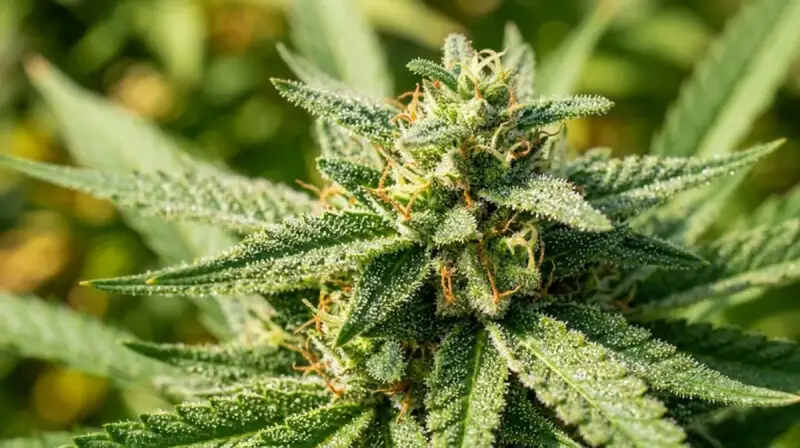
- Terpenes are aromatic compounds that shape cannabis effects beyond just THC content
- myrcene (earthy) promotes sedation; limonene (citrus) elevates mood
- caryophyllene is the only terpene that binds directly to CB2 receptors
- The entourage effect describes how terpenes and cannabinoids work synergistically
- Full-spectrum products preserve terpene profiles; isolates lose them entirely
What Are Cannabis Terpenes?
Cannabis terpenes are aromatic organic hydrocarbons produced by the same resin glands (trichomes) that secrete cannabinoids like THC and CBD. They are responsible for the distinctive smell of every cannabis strain — from the gassy diesel notes of OG Kush to the bright citrus snap of Super Lemon Haze and the deep grape funk of GMO. While many cannabis consumers still buy flower based on THC percentage alone, terpenes are increasingly recognized as the single most important factor in shaping the character of a high: whether it feels uplifting or sedating, clear-headed or dreamy, social or introspective.
More than 200 different terpenes have been identified in cannabis, though only a dozen or so occur in concentrations high enough to matter for the average consumer. These same compounds appear throughout the plant kingdom — pinene in pine needles, limonene in lemon peel, linalool in lavender, myrcene in hops and mango. Cannabis is unusual not because it makes unique terpenes, but because it produces so many of them in such high concentrations and in such varied combinations. A single bud can contain twenty or more terpenes at measurable levels, and the ratio of one to another is what separates a relaxing indica-leaning chemovar from an energizing sativa-leaning one.
Beyond aroma, terpenes are biologically active. They interact with neurotransmitter systems, modulate inflammation, influence the permeability of the blood-brain barrier, and in some cases bind directly to the same cannabinoid receptors that THC and CBD do. This biochemical activity is the basis of the entourage effect — the increasingly well-supported idea that whole-plant cannabis produces effects that pure isolated cannabinoids cannot replicate.
The Major Cannabis Terpenes Explained Step by Step
Learning to recognize the dominant terpenes in a strain is one of the most useful skills a cannabis consumer can develop. Here is a structured walkthrough of the most common terpenes, what they smell like, and what kinds of effects they tend to promote.
1. Myrcene — The Sedative Workhorse
Myrcene is the most common terpene in commercial cannabis, often making up more than half of a strain's total terpene content. It smells earthy, musky, and slightly fruity, with notes reminiscent of ripe mango, cloves, and damp soil. Strains with myrcene above 0.5% tend to produce the heavy, couch-locked "indica" feeling that experienced consumers associate with classic Kush varieties. Myrcene appears to enhance the sedative and muscle-relaxant properties of THC and may increase how much THC crosses the blood-brain barrier.
2. Limonene — The Mood Lifter
Limonene is the second-most-common cannabis terpene and the dominant aroma in strains like Super Lemon Haze, Wedding Cake, and Do-Si-Dos. It smells exactly like its name suggests: bright citrus peel, lemon, orange, and grapefruit. Limonene is associated with elevated mood, stress relief, and anxiolytic effects, and is being researched for its potential in treating anxiety and depression.
3. Caryophyllene — The Anti-Inflammatory CB2 Binder
Beta-caryophyllene smells peppery, spicy, and woody — think cracked black pepper, cloves, and cinnamon. It is also found in hops, rosemary, and black pepper. Caryophyllene is unique among terpenes because it binds directly to the CB2 cannabinoid receptor, which is involved in immune function and inflammation. This makes it the only known dietary cannabinoid receptor agonist, and it is widely studied for anti-inflammatory and analgesic potential.
4. Pinene — The Alertness Terpene
Alpha-pinene smells like a fresh forest walk — bright, sharp, resinous pine. It is one of the few terpenes that may counteract some of the short-term memory disruption associated with THC. Pinene is also a bronchodilator, which helps explain why some pine-forward strains feel surprisingly clear and energizing despite high THC.
5. Linalool — The Floral Calmer
Linalool is the dominant terpene in lavender and gives certain cannabis strains a floral, slightly spicy aroma. It is associated with anti-anxiety, anti-convulsant, and sedative effects, and is one of the gentler terpenes for new consumers seeking calm without heavy sedation.
6. Terpinolene — The Uplifting Wildcard
Terpinolene smells complex — fresh, floral, slightly herbal with a hint of citrus and pine. It is the defining terpene of many classic "haze" sativas like Jack Herer and Dutch Treat. Strains high in terpinolene are typically reported as uplifting, creative, and slightly psychedelic.
7. Humulene — The Earthy Appetite Modulator
Humulene gives hops their distinctive bitter, earthy aroma and is also abundant in cannabis. Unlike most cannabis compounds, humulene is anecdotally associated with appetite suppression rather than the typical "munchies" — making it notable in strains used for weight management contexts.
8. Ocimene — The Sweet Herbal Note
Ocimene smells sweet, herbal, and slightly woody, with parsley and mint undertones. It is less common as a dominant terpene but appears frequently as a supporting note in uplifting daytime strains.
Terpene Effects & Aroma Reference Table
The table below summarizes the dominant terpenes in cannabis, their characteristic aromas, the general effects they are associated with, and a few well-known strains where each is prominent.
| Terpene | Aroma | Reported Effects | Also Found In | Example Strains |
|---|---|---|---|---|
| Myrcene | Earthy, musky, mango | Sedative, relaxing, "couch-lock" | Mango, hops, thyme | OG Kush, Granddaddy Purple |
| Limonene | Citrus, lemon peel | Uplifting, anti-anxiety, mood-boost | Citrus rinds, juniper | Super Lemon Haze, Wedding Cake |
| Caryophyllene | Peppery, spicy, woody | Anti-inflammatory, analgesic | Black pepper, cloves | GSC, Bubba Kush, Original Glue |
| Pinene | Pine, fresh forest | Alert, focused, bronchodilator | Pine needles, rosemary | Jack Herer, Blue Dream |
| Linalool | Floral, lavender | Calming, anti-anxiety, sleep aid | Lavender, mint | Lavender, LA Confidential |
| Terpinolene | Fresh, herbal, piney-citrus | Uplifting, creative, cerebral | Nutmeg, apples, lilac | Jack Herer, Dutch Treat |
| Humulene | Earthy, hoppy, woody | Appetite suppressant, anti-inflammatory | Hops, sage, ginseng | White Widow, Headband |
| Ocimene | Sweet, herbal, parsley | Uplifting, decongestant | Mint, parsley, basil | Strawberry Cough, Clementine |
The Entourage Effect: Why Whole-Plant Matters
The entourage effect is the framework first proposed by Israeli researchers Raphael Mechoulam and Shimon Ben-Shabat in 1998, and later expanded by Dr. Ethan Russo, to explain why whole-plant cannabis produces effects that purified THC alone cannot replicate. The hypothesis is straightforward: cannabinoids and terpenes co-evolved in the same plant, are produced in the same trichomes, and act synergistically when consumed together.
Concretely, this means a strain with 18% THC and a rich terpene profile dominated by myrcene and linalool will feel dramatically different from a strain with 25% THC and a thin, oxidized terpene profile — even though the latter is technically "stronger." Terpenes appear to modulate THC's receptor binding, soften its anxiety-provoking peak, extend its duration, and shape its perceived character. Caryophyllene independently activates CB2 receptors, contributing anti-inflammatory effects without psychoactivity. Pinene may partially offset the short-term memory disruption associated with THC. Limonene appears to dampen the anxious edge that high-THC products sometimes produce.
This is why connoisseurs and serious medical users have largely shifted away from THC-percentage shopping and toward terpene-profile shopping. A 22% THC flower bursting with 3% total terpenes will almost always outperform a 30% THC flower with under 1% terpenes in terms of how good it actually feels.
Common Questions and Misconceptions
Misconception 1: "Indica vs. sativa tells you everything you need to know." The indica/sativa divide is a popular shorthand, but it is largely a relic of plant morphology that has little to do with effects. Modern cannabis genetics are so thoroughly hybridized that the lineage label is nearly meaningless on its own. What actually predicts whether a strain will feel relaxing or stimulating is its terpene profile. A "sativa" loaded with myrcene will sedate you; an "indica" dominated by terpinolene and limonene can feel quite uplifting. Reading the lab-tested terpene panel is far more reliable than reading the strain category.
Misconception 2: "Terpenes are just for flavor." While terpenes do create the smell and taste of cannabis, dismissing them as merely aromatic dramatically understates their biological activity. Many terpenes cross the blood-brain barrier, interact with serotonin and dopamine receptors, modulate GABA activity, and demonstrate measurable anti-inflammatory, anti-anxiety, and analgesic effects in clinical and pre-clinical research. They are bioactive compounds that happen to also smell pleasant — not flavoring agents that happen to also have effects.
Misconception 3: "Higher THC always means a better high." This is perhaps the most expensive misconception in cannabis. THC concentration above a certain threshold (roughly 18–20%) tends to plateau in terms of subjective effect intensity, while the terpene profile continues to differentiate the experience all the way up. Many consumers report that 18% THC flower with a robust 2.5% terpene profile delivers a more satisfying, well-rounded high than 28% THC flower with weak terpenes. Chasing milligrams of THC at the expense of terpene quality is the cannabis equivalent of buying overproof vodka and ignoring everything else about the drink.
Practical Tips for Beginners
- Smell before you buy. If a dispensary allows it, open the jar. A pungent, complex aroma indicates a fresh, terpene-rich product. Faint or hay-like smells suggest oxidized or poorly cured flower with degraded terpenes.
- Ask for the certificate of analysis (COA). Reputable producers test for terpenes, not just cannabinoids. Look for total terpene content above 1.5–2% for a quality product.
- Match the terpene profile to your goal. Use limonene and pinene-dominant strains for daytime and creativity; myrcene and linalool-dominant strains for evening and sleep; caryophyllene for inflammation and physical comfort.
- Store flower correctly. Terpenes are volatile — they evaporate. Keep cannabis in airtight glass jars away from light and heat, ideally with a humidity pack at 58–62%.
- Vape at lower temperatures first. Most terpenes boil between 156°C and 180°C (313–356°F). Vaping at 175°C captures aroma and flavor before combusting them.
- Don't fear lower-THC strains. A 15% THC flower with a powerful terpene profile often delivers a more pleasurable, manageable experience than a 28% THC bud — especially for newer consumers.
- Pay attention to your own responses. Keep a simple log of strains, their dominant terpenes, and how each made you feel. Patterns will emerge quickly.
- Be skeptical of "added terpene" products. Botanically-derived or synthetic terpenes added back to distillate vapes are not the same as live, naturally-occurring cannabis terpenes. Live resin and live rosin preserve the original profile far better.
Frequently Asked Questions
What are cannabis terpenes?
Cannabis terpenes are aromatic organic compounds produced in the same trichomes that produce cannabinoids like THC and CBD. They give each strain its distinctive smell and flavor and influence the overall effects of the plant — including whether a strain feels uplifting, relaxing, focused, or sedative.
Do terpenes get you high?
Terpenes alone do not produce a psychoactive high in the way THC does. However, they modulate how cannabinoids interact with your endocannabinoid system and other receptor networks, meaning they shape the character, duration, and intensity of the experience. They are a key reason two strains with identical THC content can feel completely different.
What is the entourage effect?
The entourage effect is the theory — supported by a growing body of research — that cannabinoids, terpenes, and other plant compounds work synergistically. Together they produce effects that are more nuanced, balanced, and often more therapeutically useful than any single isolated compound on its own.
Which terpene is best for relaxation?
Myrcene and linalool are most strongly associated with relaxation and sleep. Myrcene gives that classic earthy, musky aroma and enhances THC's sedative properties, while linalool offers softer floral lavender notes with anti-anxiety effects. Caryophyllene also contributes to relaxation through its anti-inflammatory action.