










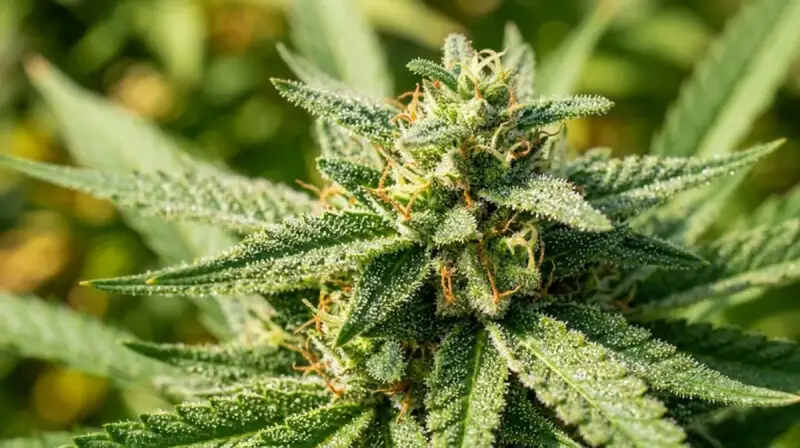
Cannabinoids are a class of chemical compounds unique to the cannabis plant. More than 100 distinct cannabinoids have been identified, each interacting with the body’s endocannabinoid system (ECS) in different ways. THC and CBD are the most abundant and most researched, but the minor cannabinoids — CBG, CBN, THCV, CBC, and others — are gaining significant scientific and commercial attention for their distinct properties.
- Over 100 cannabinoids have been identified in cannabis; only THC and CBD have substantial clinical evidence from human trials
- CBG (cannabigerol) is the biosynthetic precursor to THC, CBD, and CBC — all begin as CBGa in the plant
- CBN is a THC degradation product formed as cannabis ages; it has mild CB1 activity and is marketed for sedation, though direct sleep research is limited
- THCV may suppress appetite at low doses by acting as a CB1 antagonist — the opposite of typical cannabis effects on hunger
- The entourage effect hypothesis suggests multiple cannabinoids and terpenes together produce effects greater than any single compound alone
- Delta-8 THC is a THC isomer with psychoactive effects; most commercial Delta-8 is synthetically derived from hemp CBD, not directly extracted
The Endocannabinoid System
Cannabinoids produce their effects by interacting with the endocannabinoid system (ECS), a regulatory network of receptors, enzymes, and signaling molecules present throughout the human body. The ECS was only discovered in the early 1990s during research into how THC works, and it turns out to be one of the most widespread neurotransmitter systems in the body.
The two primary ECS receptors are:
- CB1 receptors: Concentrated in the brain and central nervous system, particularly in areas governing memory (hippocampus), movement (basal ganglia), pain processing (spinal cord), and mood (prefrontal cortex, amygdala). THC binds directly to CB1, producing psychoactive effects.
- CB2 receptors: Found primarily in immune tissues, peripheral organs, and to a lesser degree in the CNS. CB2 activation is associated with anti-inflammatory and immunomodulatory effects without psychoactivity.
The body produces its own cannabinoids (endocannabinoids) — primarily anandamide (AEA) and 2-arachidonoylglycerol (2-AG) — that activate the same receptors. These are produced on-demand to regulate processes including pain, appetite, mood, memory, immune function, and sleep.
Major Cannabinoids: Complete Reference Table
| Cannabinoid | Full Name | % in Flower | Psychoactive? | Primary Mechanism | Key Effects | Research Status |
|---|---|---|---|---|---|---|
| THC | Delta-9-tetrahydrocannabinol | 15–30% | Yes | CB1 direct agonist | Euphoria, pain relief, appetite stimulation | Extensive human trials |
| CBD | Cannabidiol | 0.1–25% | No | Multi-receptor, not CB1 | Anxiety, anti-inflammatory, anti-seizure | FDA-approved (epilepsy) |
| CBG | Cannabigerol | <1% | No | CB1/CB2 partial agonist | Anti-inflammatory, neuroprotective, antibacterial | Preclinical; early human research |
| CBN | Cannabinol | <1% | Mildly | Weak CB1 agonist | Mild sedation, antibacterial | Limited human data |
| THCV | Tetrahydrocannabivarin | <1% | High doses: Yes | CB1 antagonist (low), agonist (high) | Appetite suppression, clear-headed effect | Preclinical; some human trials |
| CBC | Cannabichromene | <1% | No | TRP channels, weak CB2 | Anti-inflammatory, antidepressant | Preclinical only |
| CBGA | Cannabigerolic acid | Trace | No | Precursor compound | Precursor to THCA, CBDA, CBCA | Early research |
| THCA | Tetrahydrocannabinolic acid | 15–30% (raw) | No (until heated) | Converts to THC via decarboxylation | Anti-inflammatory in raw form | Early research |
| CBDA | Cannabidiolic acid | 0.1–25% (raw) | No | Converts to CBD via decarboxylation | Anti-nausea, precursor | Early research |
| Delta-8 THC | Delta-8-tetrahydrocannabinol | Trace (natural) | Yes (milder than THC) | CB1 partial agonist | Milder euphoria, anti-nausea, appetite | Limited; often synthetic |
THC: The Primary Psychoactive Cannabinoid
Delta-9-tetrahydrocannabinol (THC) is the compound responsible for the characteristic psychoactive effects of cannabis. It is a partial agonist at CB1 receptors, which are concentrated in brain regions governing emotion, cognition, pain processing, and appetite. THC mimics anandamide, the endogenous cannabinoid, but binds with higher affinity and is more slowly broken down.
Medical applications with evidence include: chronic pain (particularly neuropathic pain), chemotherapy-induced nausea and vomiting (FDA-approved as dronabinol), multiple sclerosis spasticity (nabiximols, approved in several countries), and appetite stimulation in wasting conditions. At high doses or in predisposed individuals, THC can cause anxiety, paranoia, and in heavy long-term use, potential cognitive effects.
CBD: Non-Psychoactive, Multi-Target
Cannabidiol (CBD) is the most abundant non-psychoactive cannabinoid in cannabis. Unlike THC, CBD does not directly activate CB1 or CB2 receptors. Instead, it works through multiple mechanisms: it acts on serotonin receptors (5-HT1A), TRPV1 receptors (involved in pain and inflammation), GPR55 receptors, and it inhibits the reuptake of anandamide (the endogenous THC analog), increasing its availability.
CBD has the strongest clinical evidence of any minor cannabinoid: Epidiolex (pharmaceutical CBD) is FDA-approved for two rare pediatric epilepsy conditions (Lennox-Gastaut syndrome and Dravet syndrome). Additional evidence from human trials supports its use for generalized anxiety disorder, social anxiety disorder, and sleep difficulties. CBD also modulates THC activity — products with higher CBD:THC ratios tend to produce less anxiety and paranoia than high-THC-only products.
CBG: The Mother Cannabinoid
CBG (cannabigerol) is nicknamed the “mother cannabinoid” because CBGa (cannabigerolic acid) is the chemical precursor from which THCa, CBDa, and CBCa are all biosynthesized. As the cannabis plant matures, most CBGa is converted to other cannabinoids, which is why CBG is found at very low concentrations (<1%) in mature cannabis. Breeders are developing CBG-dominant strains to harvest it at higher levels.
CBG acts as a partial agonist at both CB1 and CB2 receptors. Research, primarily preclinical (animal models and cell studies), suggests anti-inflammatory properties, neuroprotective activity, and antibacterial effects (particularly against Staphylococcus aureus including MRSA strains). CBG may also reduce intraocular pressure, making it a subject of glaucoma research.
CBN: THC’s Degradation Product
CBN (cannabinol) is not directly synthesized by the cannabis plant but is formed as THC oxidizes and degrades over time when exposed to oxygen, light, or heat. Old cannabis with high CBN content was once thought to be "degraded" product, but CBN is now recognized as a compound with its own properties.
CBN is a weak CB1 partial agonist, approximately one-tenth as potent as THC. The widely repeated claim that CBN is a powerful sleep aid is not well supported by direct clinical evidence. The sedating reputation likely derives from its presence in aged, highly terpene-degraded cannabis where the accumulated sedating terpenes (myrcene, linalool) may be doing more work than the CBN itself. CBN does have antibacterial activity in laboratory studies and may have neuroprotective and appetite-stimulating effects.
THCV: The Appetite-Suppressing Cannabinoid
THCV (tetrahydrocannabivarin) has a structure similar to THC but behaves very differently at cannabinoid receptors. At low doses, THCV acts as a CB1 antagonist — blocking rather than activating CB1 receptors — which can suppress appetite and produce a clear-headed, energetic effect opposite to the typical cannabis munchies. At high doses, THCV becomes a CB1 agonist and produces psychoactive effects similar to THC, though typically with faster onset and shorter duration.
THCV occurs naturally in significant concentrations primarily in African landrace sativa strains such as Durban Poison. Research interest includes potential applications for diabetes and metabolic syndrome management, given its appetite-modulating properties.
Minor Cannabinoids in Products
The cannabis industry has expanded far beyond THC and CBD. Products now label CBG content for its anti-inflammatory positioning, CBN for sleep formulations, and THCV for appetite management. Understanding what each cannabinoid does helps evaluate whether these marketing claims have scientific support.
In practice, most consumers benefit more from understanding total cannabinoid profile composition — CBD:THC ratio, CBG content, terpene profile — than from chasing individual minor cannabinoids at low concentrations. The entourage effect suggests these compounds work better together than in isolation.
The Entourage Effect
The entourage effect, first proposed by researchers Raphael Mechoulam and Shimon Ben-Shabat, describes the hypothesis that multiple cannabinoids and terpenes in combination produce effects and benefits that individual isolated compounds cannot replicate. The best-documented example is the CBD-THC interaction: CBD reduces THC-induced anxiety and may enhance certain of its therapeutic effects at the right ratios.
This is why many patients and researchers favor full-spectrum cannabis products (containing all naturally occurring cannabinoids and terpenes) over CBD isolate or THC distillate alone. The clinical evidence for the entourage effect in human trials is still developing, but the mechanistic rationale is well-supported by pharmacology research.
Frequently Asked Questions
How many cannabinoids are in cannabis?
Over 100 distinct cannabinoids have been identified in the cannabis plant. The most abundant and most studied are THC and CBD. Others including CBG, CBN, THCV, CBC, and Delta-8 THC are present in smaller concentrations and are gaining scientific and commercial attention.
What is the difference between THC and CBD?
THC is the primary psychoactive cannabinoid in cannabis. It binds directly to CB1 receptors in the brain, producing euphoria, altered perception, appetite stimulation, and pain relief — but also anxiety in some users. CBD is non-psychoactive, does not produce intoxication, and does not directly bind CB1 receptors. CBD has FDA approval for epilepsy treatment (Epidiolex) and shows evidence for anxiety and inflammation.
What does CBG do?
CBG (cannabigerol) is called the mother cannabinoid because CBGa is the chemical precursor to THC, CBD, and CBC. CBG is a partial agonist at both CB1 and CB2 receptors. Research suggests CBG has anti-inflammatory, neuroprotective, and antibacterial properties. It may also reduce intraocular pressure, making it a subject of interest for glaucoma research.
Is THCV legal?
THCV derived from hemp (less than 0.3% delta-9 THC) occupies a legal gray area similar to Delta-8 THC in the United States. THCV in cannabis products at dispensaries is federally illegal in the same way as delta-9 THC. Hemp-derived THCV products exist in the market but regulatory status varies by state.