










- CB1 receptors on lacrimal glands directly suppress tear secretion when THC binds them.
- The same CB1 mechanism reduces intraocular pressure (IOP) — the basis for historic glaucoma use.
- Dry eyes from smoking/vaping last 1–3 hours; from edibles 3–6 hours.
- CBD-dominant products cause significantly fewer dry-eye reports due to different receptor targets.
- Preservative-free rewetting drops (hydroxypropyl methylcellulose or sodium hyaluronate) are clinically preferred over vasoconstrictors.
- Genetic variation in CB1 receptor density explains why some users never experience dry eyes.
- Staying well-hydrated reduces severity by supporting systemic tear film osmolarity.
The CB1 Receptor Mechanism in Ocular Tissue
The human eye contains a dense network of cannabinoid receptors, particularly CB1 and CB2 subtypes, expressed on lacrimal gland acinar cells, corneal epithelial cells, trabecular meshwork cells, and conjunctival goblet cells (Yazulla 2008, Progress in Retinal and Eye Research). When THC enters systemic circulation and crosses the blood–ocular barrier, it binds as a partial agonist at CB1 receptors across all these tissues simultaneously.
The lacrimal gland is the primary site of aqueous tear production. Under normal physiological conditions, parasympathetic neurotransmitters (acetylcholine acting on M3 muscarinic receptors and VIP acting on VPAC2 receptors) drive continuous lacrimal secretion at roughly 1.2 µL per minute per eye. THC’s CB1 activation suppresses this parasympathetic signal through Gαi-coupled inhibition of adenylyl cyclase, reducing intracellular cAMP and blocking the calcium influx needed for vesicular secretion. The net result is a measurable reduction in both aqueous and mucin tear components.
| Ocular Structure | CB1 Expression | Normal Function | THC Activation Effect | Clinical Symptom |
|---|---|---|---|---|
| Lacrimal gland (acinar cells) | High | Aqueous tear secretion | Suppresses parasympathetic drive, reduces secretion | Dry, gritty sensation |
| Conjunctival goblet cells | Moderate | Mucin layer production | Reduces mucin output | Tear film instability, blurring |
| Corneal epithelium | Moderate | Barrier integrity, wound healing | Alters ion transport | Burning, light sensitivity |
| Ciliary body | High | Aqueous humour production | Reduces aqueous humour volume | IOP reduction (3–4 h) |
| Trabecular meshwork | Moderate | Aqueous outflow drainage | Modulates outflow resistance | IOP modulation |
| Retinal neurons | Very High | Neuroprotection, visual processing | Neuroprotective signalling | Subtle visual changes at high dose |
The IOP-reducing property shares the identical CB1 mechanism. Historically, studies in the 1970s (Hepler & Frank 1971, JAMA) demonstrated 25–30% IOP reductions lasting 3–4 hours. The American Glaucoma Society currently does not recommend cannabis for glaucoma treatment because continuous 24-hour IOP control requires dosing every 3–4 hours, and the dry-eye side effect worsens the ocular surface over time.
Duration and Dose-Response Timeline
Dry-eye onset tracks closely with THC plasma concentration. With inhalation, peak plasma THC occurs at approximately 9 minutes post-smoking (Huestis 2007, Chemistry & Biodiversity), and lacrimal suppression follows within 5–20 minutes. The effect duration mirrors the primary psychoactive window.
| Method | Onset of Dry Eyes | Peak Severity | Resolution | Management Window |
|---|---|---|---|---|
| Smoking (flower) | 5–15 min | 30–60 min | 1–3 hours | Apply drops at 15 min |
| Vaping (flower) | 5–15 min | 30–60 min | 1–3 hours | Apply drops at 15 min |
| Vaping (distillate/concentrate) | 5–10 min | 20–45 min | 2–4 hours | Pre-apply drops before use |
| Sublingual tincture | 20–45 min | 1–2 hours | 2–4 hours | Apply drops at 30 min mark |
| Edibles | 45–90 min | 2–4 hours | 3–6 hours | Pre-apply drops; redose every 2 h |
| Concentrates (dab) | 2–5 min | 15–30 min | 2–4 hours | Pre-apply drops before session |
Dose matters considerably. At low THC doses (2.5–5 mg), many users report no perceptible dryness. At moderate doses (10–20 mg), the majority of users experience mild dryness. Above 25 mg, dryness is near-universal and often accompanied by eye redness due to conjunctival vasodilation — a separate mechanism involving CB1-mediated smooth muscle relaxation in episcleral blood vessels.
Eye Drop Comparison: What Actually Works
Not all eye drops are appropriate for cannabis-induced dry eyes. Vasoconstrictors (tetrahydrozoline, naphazoline — found in Visine Original and similar products) treat redness by constricting blood vessels but do nothing to address the tear-film deficiency. With prolonged use, vasoconstrictors cause rebound redness when discontinued. Clinical ophthalmologists consistently recommend rewetting drops containing ocular lubricants.
| Drop Type | Active Ingredient | Addresses Tear Deficiency | Reduces Redness | Preservative-Free Option | Clinical Recommendation |
|---|---|---|---|---|---|
| Rewetting / artificial tears (HPMC) | Hydroxypropyl methylcellulose 0.3% | Yes — aqueous layer | No | Yes | First choice |
| Sodium hyaluronate drops | Sodium hyaluronate 0.1–0.2% | Yes — mucin mimic + retention | No | Yes | First choice (longer duration) |
| Carboxymethylcellulose | CMC 0.5–1% | Yes — aqueous layer | No | Yes | Good option |
| Vasoconstrictor drops | Tetrahydrozoline / naphazoline | No | Yes (temporarily) | Rarely | Not recommended — rebound risk |
| Gel-forming drops | Carbomer / polyacrylic acid | Yes — prolonged contact time | No | Yes | Good for longer sessions |
| Lipid-based drops | Mineral oil / phospholipid liposomes | Yes — lipid layer | No | Yes (unit-dose) | Best for meibomian dysfunction |
For users who consume cannabis regularly, ophthalmologists advise against drops containing benzalkonium chloride (BAK) as a preservative — the most common preservative in multi-dose bottles. BAK disrupts the corneal epithelium with frequent use. Unit-dose preservative-free vials of sodium hyaluronate or CMC are the safest option for daily or near-daily cannabis users.
Strain Risk Factors: THC Content, CBD, and Terpenes
The primary predictor of dry-eye risk is THC percentage. CBD does not bind CB1 receptors as an agonist and in fact acts as a negative allosteric modulator of CB1 at higher concentrations (Laprairie 2015, British Journal of Pharmacology), meaning CBD-rich products partially blunt THC’s lacrimal suppression effect. This explains consistent anecdotal reports that CBD-dominant products cause far less eye dryness.
| Product Type | Typical THC | Typical CBD | Dry-Eye Risk | Best For |
|---|---|---|---|---|
| High-THC flower (>20%) | 20–35% | <1% | High | Tolerance users; use drops proactively |
| Mid-range flower (12–19%) | 12–19% | <1% | Moderate | Most recreational users |
| Balanced 1:1 flower | 8–12% | 8–12% | Low | Dry-eye sensitive users |
| CBD-dominant (>10:1 CBD:THC) | <1% | 10–20% | Very Low | Users with chronic dry eye conditions |
| Concentrates / dabs | 60–90% | <1% | Very High | Always pre-apply drops |
| Edibles (standard dose 5–10 mg) | 5–10 mg/dose | Variable | Low–Moderate | Controlled dosing aids management |
Myrcene, the most common cannabis terpene, has independent sedative and mild analgesic properties but does not directly influence tear production. High-myrcene strains at moderate THC levels are not associated with increased dry-eye severity beyond the THC contribution. Terpinolene-dominant strains (Jack Herer, Dutch Treat) with lower THC levels are among the better-tolerated choices for dry-eye-prone users. Explore our terpene profiles to identify low-myrcene, terpinolene-dominant options.
Hydration Protocol and Preventive Strategies
The tear film is approximately 98% water by composition. Systemic dehydration directly increases tear film osmolarity, worsening dry-eye symptoms independently of cannabis use. THC also activates hypothalamic CB1 receptors, reducing antidiuretic hormone (ADH) release slightly and increasing urinary output — a secondary dehydration mechanism at high doses. This compound effect means that even mild dehydration significantly worsens cannabis-induced dry eyes.
| Strategy | Mechanism | Timing | Effectiveness |
|---|---|---|---|
| Drink 500 mL water before session | Pre-loads systemic hydration; maintains tear osmolarity | 30 min before | Moderate |
| Apply preservative-free rewetting drops | Replaces aqueous tear deficiency directly | At first gritty sensation | High |
| Apply sodium hyaluronate drops preventively | Creates viscous retention layer before tear deficiency onset | Just before consuming | High |
| Reduce screen time during session | Reduces blink-suppression; each blink redistributes remaining tear film | During session | Moderate |
| Use humidifier in consumption space | Reduces ambient evaporative tear loss | Ongoing | Low–Moderate |
| Choose lower-THC products | Reduces CB1 activation magnitude | Product selection | High |
| Choose 1:1 or CBD-dominant products | CBD negative allosteric modulation partially blocks CB1 lacrimal effect | Product selection | High |
Genetic Susceptibility and Individual Variation
A notable minority of cannabis users — estimated at 15–25% in consumer surveys — report never experiencing dry eyes even with high-THC products. This likely reflects genetic polymorphisms in the CNR1 gene encoding CB1 receptors, specifically variants associated with lower receptor density in lacrimal tissue. Individuals of East Asian ancestry have been observed in small pharmacogenomic studies to have lower ocular CB1 expression on average, which may partially explain lower self-reported dry-eye incidence in those populations. Research in this area is preliminary, and no clinical genetic testing for cannabis dry-eye susceptibility currently exists.
Pre-existing dry eye disease (DED), contact lens wear, refractive surgery history (LASIK, PRK), and use of antihistamines or antidepressants all create additive dry-eye risk with cannabis. Users with diagnosed DED should consult an ophthalmologist before using high-THC products and should consistently use preservative-free rewetting drops. See our cannabis and glaucoma guide for more on cannabis’ ocular mechanisms.
Related Effects and Medical Context
Dry eyes are one of the most consistently reported mild side effects of cannabis use, alongside dry mouth (cottonmouth) and red eyes. These three symptoms share a unified CB1-mediated mechanism: suppression of secretory gland function across salivary glands, lacrimal glands, and conjunctival vasodilation respectively. Understanding this common mechanism helps users manage all three simultaneously — hydration addresses all three at once.
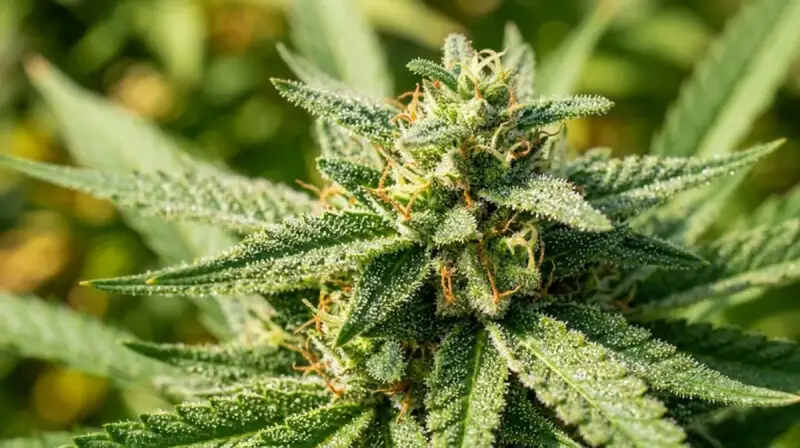
For users seeking the glaucoma-related IOP benefits of cannabis while minimising dry-eye severity, sublingual CBD with small amounts of THC (1:10 ratio) represents a harm-reduction approach. Explore our CBD effects guide for a detailed comparison of CBD and THC eye-related outcomes, and our strain database for filtered low-THC options.