Cannabis and Sports: Athletes, Recovery and the Changing Rules
From NFL locker rooms to Olympic podiums, cannabis has become one of the most debated substances in professional sport. Here is what the science says and how the rules are changing.
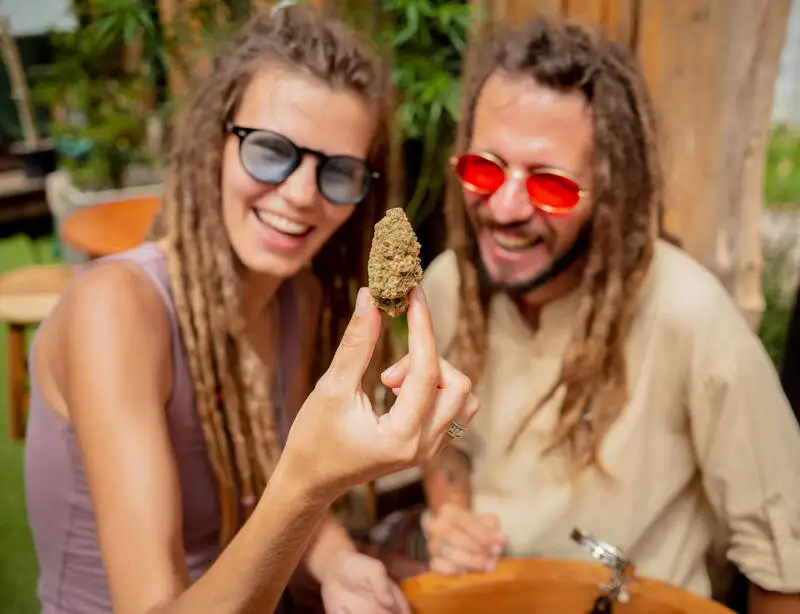
Athletes are among the most vocal advocates for cannabis policy reform, citing its value for pain management and recovery.
Why Athletes Use Cannabis
The primary reasons athletes report using cannabis are pain management, sleep improvement and anxiety reduction. These are precisely the three areas where pharmaceutical alternatives carry significant risks: opioids for pain are addictive and potentially fatal; benzodiazepines for anxiety and sleep are habit-forming. Cannabis, with a well-documented safety profile and no lethal dose from pharmacological mechanism alone, is an attractive alternative for athletes managing the cumulative physical demands of professional sport. Studies show cannabis can reduce inflammation through CB2 receptor activation, which is directly relevant to the inflammatory stress of intense physical training. The relaxation effects and anti-inflammatory properties documented in our CBD guide are particularly relevant to athletic recovery.
CBD specifically — the non-intoxicating cannabinoid — has attracted enormous interest in sports medicine. WADA removed CBD from its prohibited list in 2018, acknowledging that CBD itself has no performance-enhancing properties. This opened the door for athletes to use CBD products for recovery without risking doping violations, provided the products contain no THC above threshold limits. The market for sports-specific CBD products exploded after 2018, with professional athletes endorsing brands and former NFL, NBA and NHL players launching cannabis-oriented wellness companies. The practical challenge is product reliability: many CBD products tested by researchers contain more or less THC than labelled, creating inadvertent doping violation risk for athletes using them. The CBD guide explains what to look for.
NFL Cannabis Policy: The Landmark CBA Change
The National Football League had one of the strictest cannabis policies in professional sport through the 2010s, with fines and suspensions for positive tests. The NFL also had an opioid crisis: an estimated 50-70% of NFL players used prescription opioids during their careers according to a 2011 Washington University study. The contrast between opioid tolerance and cannabis prohibition was not lost on players, former players or the public. The 2020 Collective Bargaining Agreement represented a breakthrough: the NFL raised the THC threshold for positive tests from 35 ng/mL to 150 ng/mL, removed the automatic suspension for first positive tests, and replaced suspension with optional clinical treatment. Effectively, the NFL decriminalised cannabis use during the off-season for most players. The 2020 CBA also established a research study into cannabis for pain management — the first formal NFL engagement with cannabis as a potential medical tool. Read more about the NFL cannabis policy guide.
NBA, NHL and International Sports Policy
The NBA suspended testing for cannabis during the COVID-19 pandemic in 2020 and announced in 2023 that it would not resume random testing for cannabis, effectively decriminalising it for NBA players. The change reflected both the reality that cannabis was legal in most states where NBA teams play and the acknowledgement that cannabis prohibition in professional basketball was not serving any legitimate purpose. The NHL had already taken a similar approach in 2021, removing cannabis from its prohibited substances list and focusing enforcement only on cases where cannabis impairment during play was a safety concern. WADA prohibited THC in competition but not out of competition for Olympic sports, acknowledging that off-season use has no performance-enhancing relevance. American skateboarder Sha Carri Richardson’s suspension from the 2020 Tokyo Olympics for a positive THC test — caused by cannabis she used to cope with her mother’s death — triggered a major public debate about WADA’s approach. Richardson’s case accelerated WADA’s review of cannabis policy.
The Science of Cannabis for Athletic Recovery
The scientific literature on cannabis for athletic recovery is growing but still limited by decades of research prohibition. What is documented: CBD inhibits the uptake of adenosine, a neurotransmitter that promotes sleep, potentially improving sleep quality which is the primary driver of athletic recovery. THC and CBD both show anti-inflammatory properties through CB2 receptor mechanisms in preclinical models. Cannabis has analgesic properties documented in multiple clinical trials for chronic pain. Cannabis improves subjective sleep quality in patient populations. The primary concern for athletic performance is that THC impairs reaction time, coordination and decision-making during acute intoxication — making in-competition use genuinely problematic for most sports. Out-of-competition recovery use presents essentially no performance-enhancing risk and may provide legitimate recovery benefits. The policy direction across major sports leagues reflects this scientific distinction: test for impairment during competition, not residual metabolites from off-season use. See our relaxation and euphoria effects guides for the pharmacological detail.
Policies vary by sport and league. The NFL, NBA and NHL have all significantly relaxed cannabis policies since 2020-2023. WADA prohibits THC in competition but not out of competition for Olympic sports. CBD is permitted across all major sports.
Does CBD help athletic recovery?
Preliminary evidence and widespread athlete reports suggest CBD may improve sleep quality and reduce exercise-induced inflammation. WADA removed CBD from its prohibited list in 2018. Well-designed clinical trials in athletic populations are limited but ongoing.
Which athletes have spoken out for cannabis reform?
Former NFL players Eugene Monroe, Marvin Washington and Kyle Turley have been among the most vocal. NBA players Al Harrington and Kevin Durant have discussed cannabis use openly. Ricky Williams, NFL running back, famously chose retirement over continued cannabis prohibition.
Can cannabis improve sports performance?
No evidence supports cannabis as a performance enhancer in the traditional sense. Some athletes report reduced anxiety before competition. Recovery benefits for pain and sleep may indirectly support performance. WADA does not classify cannabis as a performance enhancer.
What happened to Sha Carri Richardson at the 2020 Olympics?
Richardson tested positive for THC and was suspended from the 100m at the Tokyo Olympics. The test occurred in Oregon where cannabis is legal. The case triggered international debate about WADA cannabis policy and accelerated the ongoing review of out-of-competition cannabis prohibition.