










- Quick verdict: Hemp and marijuana are the same species (Cannabis sativa L.) but are legally and functionally different based on THC concentration — one number (0.3%) separates a federally legal crop from a Schedule I controlled substance.
- Genetic similarity: Genomic studies show that hemp and marijuana share 99.9%+ of their DNA. The legal distinction is purely chemical, not botanical.
- Terpene overlap: Both hemp and marijuana produce the same families of terpenes — myrcene, limonene, pinene, caryophyllene — but marijuana’s more developed trichome structures typically produce higher concentrations.
- Industrial hemp uses: Fiber, textiles, hempcrete, paper, hemp hearts, protein powder, cooking oil, CBD supplements — one of the most versatile crops in agriculture.
- Drug test risk: Full-spectrum hemp products can trigger a positive drug test with heavy use due to trace THC accumulation. CBD isolate carries essentially no risk.
- Cannabis laws vary by country — always verify the legal status of both hemp and marijuana products in your jurisdiction.
Overview: Why the Hemp vs Marijuana Distinction Matters
Walk into any conversation about cannabis and the terms “hemp” and “marijuana” get thrown around interchangeably — yet they represent fundamentally different regulatory, chemical, and practical realities. Understanding the distinction is not just academic. It determines what you can legally buy, grow, transport, and consume depending on where you live, and it shapes what effects you can expect from a product.
Both hemp and marijuana belong to Cannabis sativa L. That taxonomic fact is precisely why the confusion persists. For centuries, humans cultivated cannabis for multiple purposes — rope, textiles, medicine, and ritual — without drawing hard legal lines between plants. The modern legal distinction emerged largely from the 2018 Farm Bill, which defined industrial hemp as cannabis containing no more than 0.3% delta-9 THC on a dry weight basis. Any cannabis plant exceeding that threshold is classified as marijuana and remains a Schedule I controlled substance under federal law, though an increasing number of states have legalized marijuana for medical and adult recreational use.
“The plant doesn’t know what it is legally. What separates hemp from marijuana is chemistry, not botany — and that chemistry was shaped by human breeders over generations of selective cultivation.”
Side-by-Side Comparison
| Criteria | Hemp | Marijuana |
|---|---|---|
| Species | Cannabis sativa L. | Cannabis sativa L. (same species) |
| THC Content | ≤0.3% (dry weight, US federal law) | Typically 15–30%+ in modern cultivars |
| CBD Content | Often high (5–20%+ in CBD-optimized cultivars) | Variable; many strains have low CBD; high-CBD strains available |
| Psychoactive Effect | None — cannot produce intoxication | Yes — euphoria, altered perception, relaxation or anxiety possible |
| US Federal Legal Status | Legal under 2018 Farm Bill | Schedule I controlled substance |
| US State Legal Status | Legal in all 50 states (some product restrictions) | Legal for adult use in 24+ states; medical-only in several others |
| Primary Uses | CBD products, fiber, textiles, food (seeds/oil), building materials | Recreational use, medical treatment, wellness, extracts, edibles |
| Drug Test Risk | Low-to-moderate (full-spectrum products may accumulate trace THC) | High — THC metabolites detectable for days to weeks |
| Plant Morphology | Typically tall, narrow leaves, sparse buds; grown in dense fields | Shorter, bushier with dense resinous flowers; wide variety of phenotypes |
| Terpene Profile | Present but often less concentrated than marijuana | Rich, diverse terpene profiles developed through breeding |
| Genetic Similarity | Over 99.9% identical at the genomic level — the difference is in gene expression, not species | |
The 0.3% THC Threshold: Where the Law Draws the Line
The 0.3% THC threshold that legally separates hemp from marijuana in the United States was not derived from a pharmacological study or safety determination — it was largely an arbitrary number originating from a 1976 academic paper by Canadian botanist Ernest Small. Small used 0.3% THC as a rough statistical dividing line in a taxonomic study of cannabis varieties; decades later, that number was codified into US federal law in the 2018 Farm Bill without any particular scientific basis for that specific threshold.
The practical implication is that a cannabis plant testing at 0.29% THC is federally legal agricultural hemp, while a genetically near-identical plant testing at 0.31% is a federally controlled Schedule I substance. This creates real compliance challenges for hemp farmers, whose crops occasionally “hot” — test above 0.3% — due to weather conditions, soil variations, or genetic drift, requiring destruction of the crop regardless of CBD content or commercial value.
Genetic Similarity: Are Hemp and Marijuana Really Different Plants?
From a botanist’s or geneticist’s perspective, the legal distinction between hemp and marijuana is essentially meaningless. Genomic studies have confirmed that hemp and marijuana cultivars share over 99.9% of their DNA. The key difference lies in the expression of a few specific genes that control the enzymatic pathway governing THC biosynthesis. Specifically, the THCA synthase gene is expressed at high levels in marijuana plants and low levels in hemp — but the two plants are otherwise genetically nearly indistinguishable.
This genetic overlap creates interesting cross-contamination concerns in agricultural hemp production. Hemp fields planted near marijuana cultivation can experience pollen drift, potentially introducing THC-producing genetic material into a hemp crop over time. Certified seed programs and careful geographic separation between hemp and marijuana cultivation are essential for maintaining legal compliance in commercial hemp farming.
Terpene Overlap: Shared Chemistry, Different Concentrations
Both hemp and marijuana produce the same families of cannabis terpenes — the aromatic compounds responsible for the distinctive smells and potential therapeutic effects of different cannabis varieties. Myrcene (earthy, musky), limonene (citrus), pinene (pine), caryophyllene (spicy, peppery), and linalool (floral, lavender) are found in meaningful concentrations in both hemp CBD cultivars and recreational marijuana strains.
The key difference is concentration. Marijuana cultivars have been bred for extensive trichome development — the resin glands where both cannabinoids and terpenes are synthesized. This breeding history has produced marijuana plants with dramatically higher terpene concentrations overall. Hemp CBD cultivars optimized for fiber or seed production often have minimal trichome development and correspondingly lower terpene profiles. However, CBD-specific hemp cultivars like Cherry Wine, Sour Space Candy, and Elektra have been deliberately developed with richer terpene profiles that rival lower-tier marijuana flowers for aromatic complexity.
Industrial Hemp: A Versatile Agricultural Powerhouse
Hemp is one of humanity’s oldest cultivated crops, with archaeological evidence of hemp cultivation in China dating to approximately 8,000 BCE. Hemp played a foundational role in early American agriculture — George Washington and Thomas Jefferson both grew it, and hemp rope and canvas were critical to the American colonial economy. The plant’s remarkable versatility spans fiber, food, construction, and wellness applications.
Industrial and Agricultural Uses
- Fiber and textiles: Hemp bast fibers are strong, durable, and naturally resistant to mold and UV light. Used in rope, textiles, canvas, and increasingly in automotive composite panels and insulation materials.
- Hempcrete: A biocomposite building material made from hemp hurds (the woody inner core of the hemp stalk) mixed with lime. Carbon-negative, breathable, and moisture-regulating — increasingly used in sustainable construction.
- Hemp seeds and food products: Hemp hearts (shelled seeds) are a nutritional powerhouse containing complete protein (all 9 essential amino acids), an ideal 3:1 ratio of omega-6 to omega-3 fatty acids, and significant zinc and magnesium. Sold as hemp hearts, protein powder, hemp oil, and hemp milk.
- Paper: Hemp produces 2–4 times more pulp per acre than trees and can be harvested annually rather than after decades of tree growth. Hemp paper was used for the first two drafts of the US Declaration of Independence.
- CBD products: The hemp CBD supplement market generates billions annually, with products ranging from tinctures and capsules to topicals and pet supplements.
Global Legality Comparison
| Country / Region | Hemp (CBD <0.3%) | Marijuana (THC) |
|---|---|---|
| United States | Federally legal (Farm Bill 2018); state-level product restrictions vary | Federal: Schedule I. State: legal for adult use in 24+ states |
| Canada | Legal under Cannabis Act | Fully legal nationwide since October 2018 |
| European Union | Legal with <0.2% THC (some EU states use 0.3%) | Varies by member state; medical programs in Germany, Netherlands, Italy, others |
| United Kingdom | Legal with <0.2% THC; novel food regulations for CBD ingestibles | Class B controlled substance; medical cannabis legal by prescription |
| Germany | Legal — same regulations as EU (<0.2% THC) | Limited adult-use legalization from April 2024; medical program established |
| Netherlands | Legal with <0.2% THC | Tolerated under gedoogbeleid in licensed cannabis clubs and coffee shops |
| Australia | Legal — low-dose CBD approved OTC by TGA | Medical-only (TGA); state-by-state decriminalization varies |
| Japan | Hemp fiber legal; CBD products allowed only from certain hemp parts; highly restricted | Strictly illegal; among the strictest cannabis laws in developed world |
Drug Test Risk: Hemp vs Marijuana
This is one of the most practically important aspects of the hemp vs marijuana distinction for consumers. Standard urine drug tests used by most US employers do not screen for CBD — they screen for THC-COOH, the primary urinary metabolite of THC. Marijuana use will almost certainly produce a positive result, with THC-COOH detectable for 3–30+ days depending on use frequency, body composition, and metabolism.
Hemp and hemp-derived CBD products are more nuanced. The FDA-mandated limit of 0.3% THC in hemp means most hemp products contain only trace amounts. For most users taking typical doses of hemp CBD tinctures or capsules, the accumulated THC exposure falls below the 50 ng/mL cutoff threshold used in standard SAMHSA urine immunoassay tests. However, several circumstances can increase risk:
- Heavy or high-dose full-spectrum CBD use: Consuming 1,000mg+ of full-spectrum CBD daily over extended periods can accumulate sufficient trace THC to trigger a positive test
- Mislabeled products: The Penn Medicine study finding significant mislabeling in the CBD market means some “hemp” products may contain far more THC than claimed
- High body fat percentage and slow metabolism: THC is lipophilic and accumulates in fat tissue, slowing clearance in people with higher body fat
- Using CBD isolate products instead of full-spectrum eliminates virtually all drug test risk
Which Should You Choose?
| Your Situation | Recommended Choice |
|---|---|
| You want CBD wellness without intoxication | Hemp-derived CBD oil |
| You are subject to drug testing | Hemp CBD isolate — minimal THC risk |
| Cannabis is illegal in your state | Hemp CBD oil — legal in all 50 states |
| You want recreational effects or strong pain relief | Marijuana (in legal states) |
| You want fiber, food, or industrial products | Industrial hemp products |
| You are building with sustainable materials | Hempcrete and hemp fiber composites |
| You want the full entourage effect | Full-spectrum marijuana products at licensed dispensaries |
Frequently Asked Questions
Can you smoke hemp flower? What does it feel like?
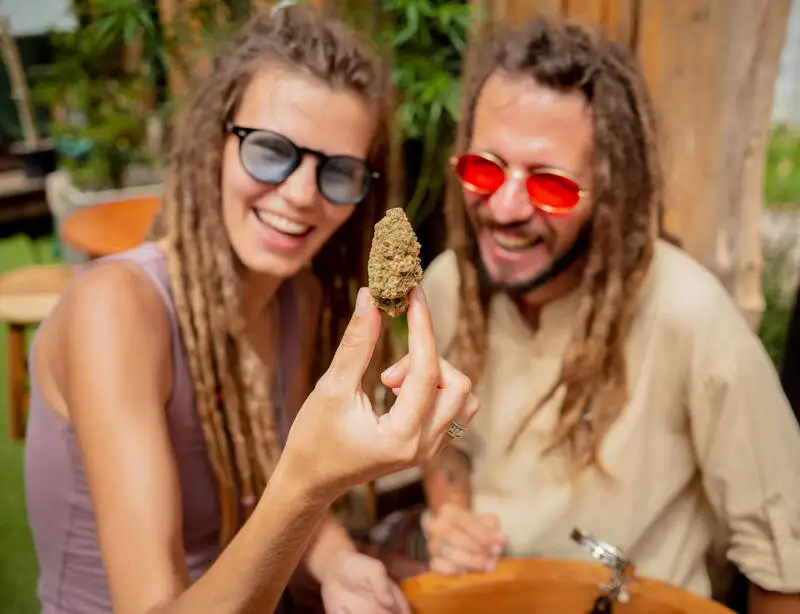
Smokable hemp flower — dried hemp buds sold specifically for smoking or vaping — is a legal product in most US states and has become increasingly popular as a tobacco alternative and CBD delivery method. Hemp flower looks and smells very similar to marijuana flower (they are the same plant after all) and can be rolled into joints or packed into a pipe. The experience feels relaxing and mildly calming due to CBD’s effect on the endocannabinoid system, but produces no intoxication. Terpene-rich hemp cultivars can be quite aromatic and deliver a pleasant smoking experience without the high or impairment associated with THC-rich marijuana.
Is hemp better for the environment than marijuana?
Industrial hemp has significant environmental advantages in large-scale agricultural contexts. It requires substantially less water than many comparable crops, can be grown without pesticides in many conditions, improves soil health through phytoremediation (absorbing heavy metals and toxins from soil), and produces a carbon-negative building material in hempcrete. Marijuana cultivation, particularly indoor cultivation which dominates legal markets, is energy-intensive due to high-powered lighting, climate control, and ventilation — with a substantial carbon footprint per gram of product. However, outdoor and greenhouse marijuana cultivation is considerably more sustainable than indoor growing.